

Vintage Serviette Holders
When you search for vintage serviette holders, you are looking at table accessories spanning from the Victorian period through the mid-twentieth century.
Vintage Serviette Holders
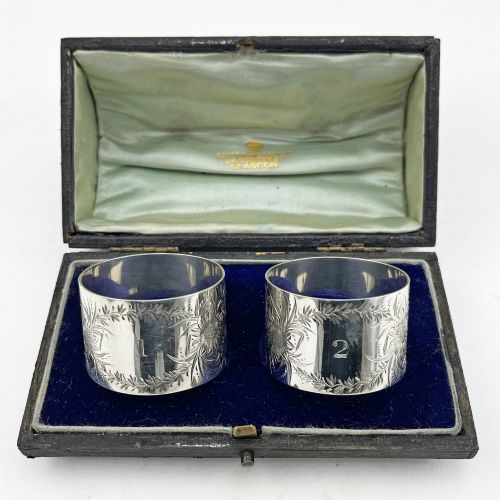
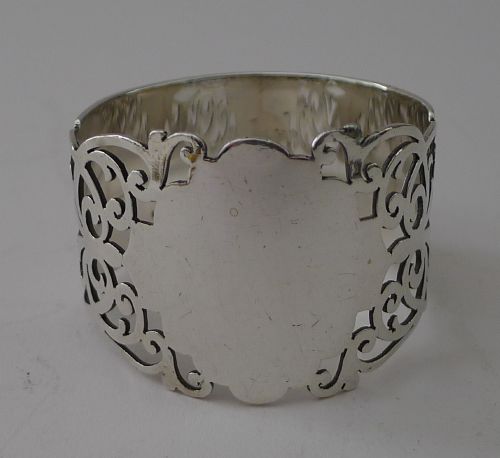
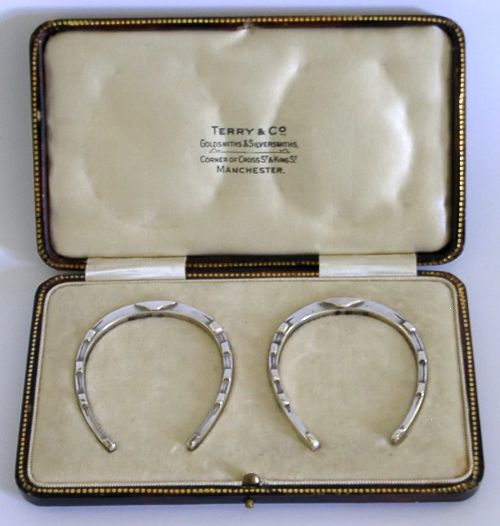
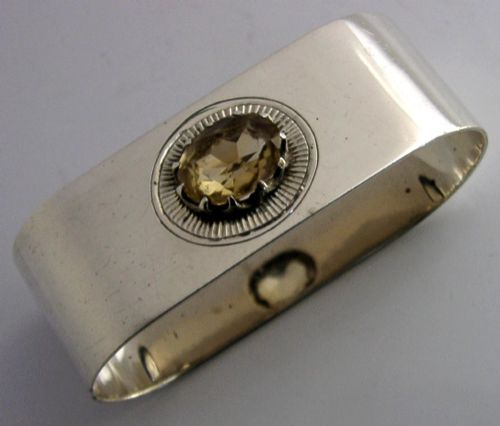
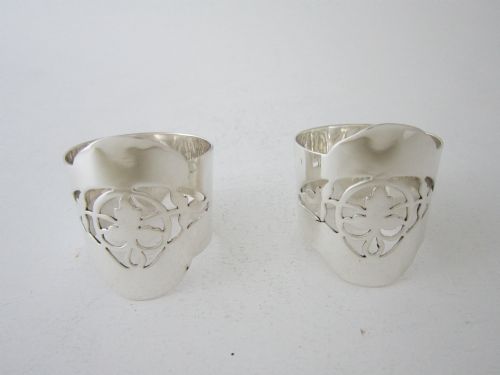
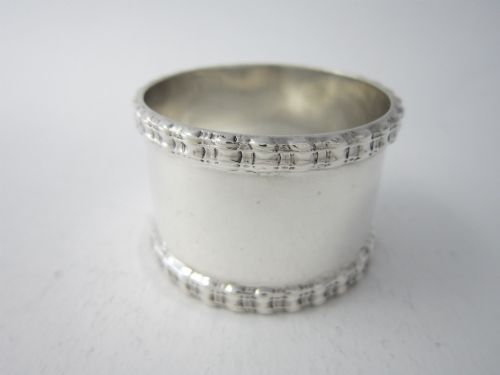
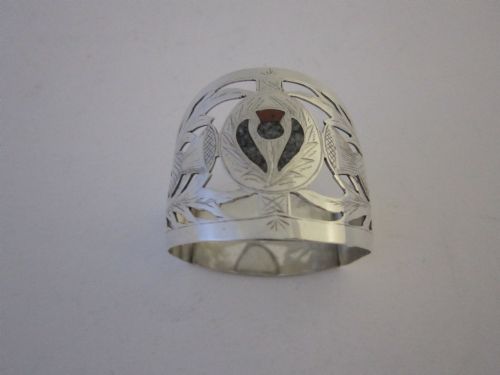
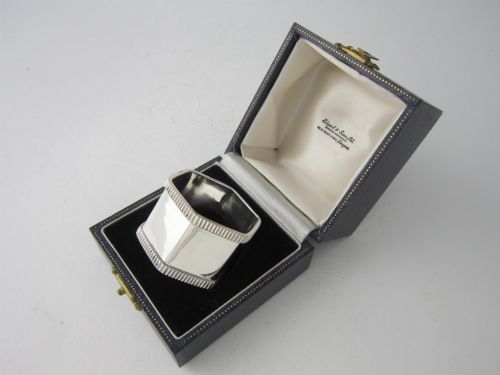
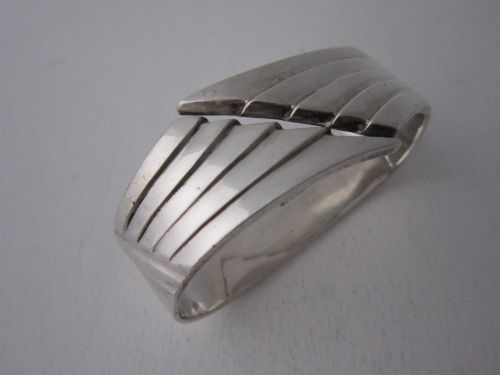
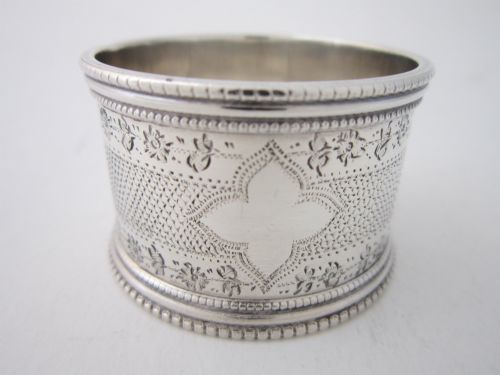
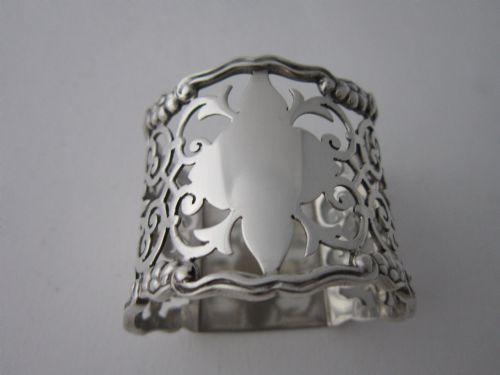
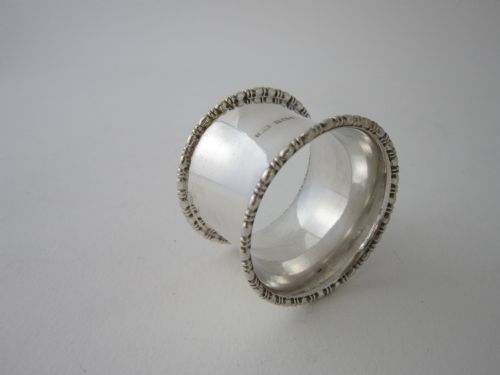
Vintage serviette holders appear primarily as individual rings or spring clips designed to mark table napkins during meals. The examples on this page cover forms ranging from plain circular bands to novelty shapes.
Most pieces date from the Edwardian and George V eras, though Victorian and mid-century items also feature. Sterling silver and silver plate dominate the selection, accompanied by occasional pewter and turned hardwood.
How They Were Made
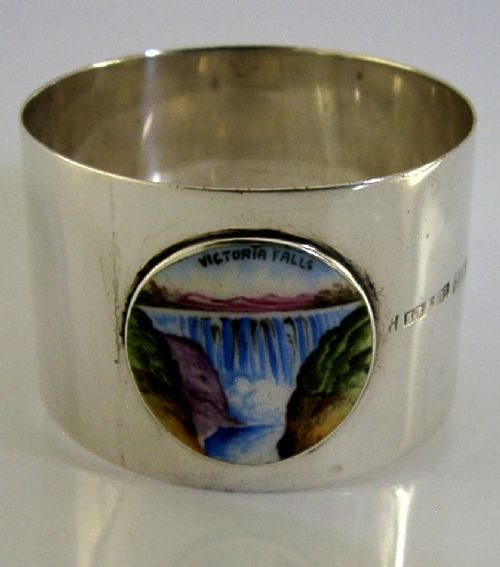
Silversmiths formed the metal rings through sheet rolling, hammering, and soldering, applying hallmarks to certify metal purity and origin. Enamel work, gilding, and inset stones such as citrine and agate decorated specific silver pieces.
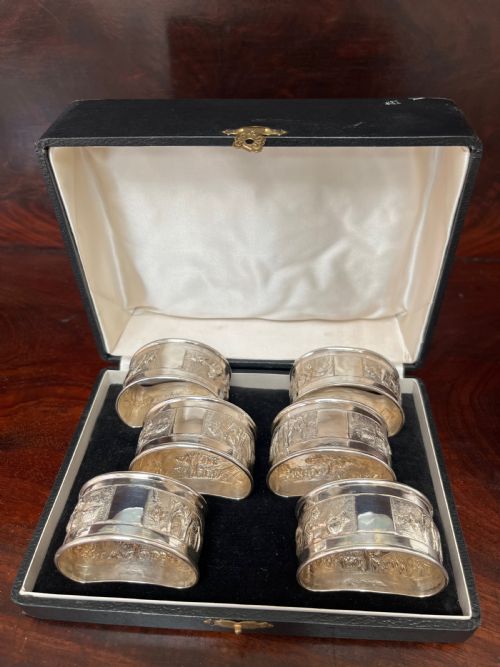
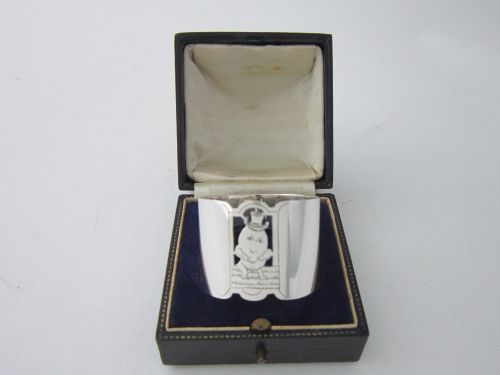
Makers utilised woodturning for mauchline ware variants, while other items incorporated leatherette and silk within fitted presentation cases.
Vintage Serviette Holders Retail Price Guide 2026
Typical asking prices for vintage serviette holders among the pieces listed under this phrase on Sellingantiques today, from the lower quarter to the upper quarter. They describe what is for sale here now, not the wider market.
The listings span from 1890 to 1950, encompassing Victorian, Edwardian, George V, and Mid-Century Modern design styles.
What Varies in Quality
Quality rests upon the weight of the metal, the crispness of chased or hammered surface details, and the integrity of applied enamel. Maker attribution to notable workshops elevates specific examples above standard production pieces.
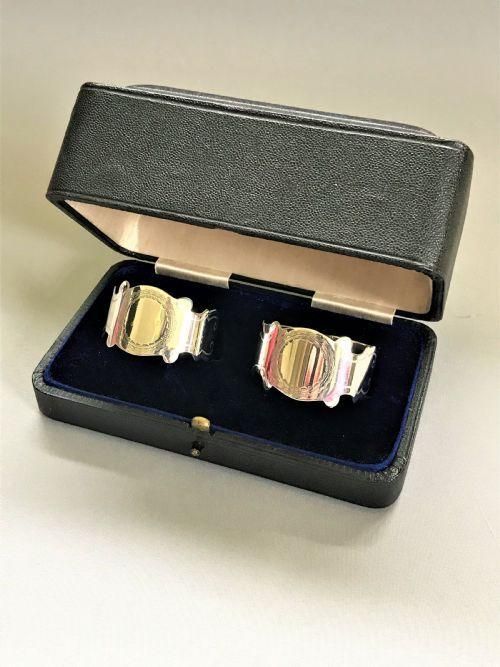
The presence of original fitted cases and complete sets of matching rings differentiates individual finds from assembled groups.
Albert Edward Jones·R. E. Stone·Georg Jensen·Hermes, Paris·C.T. Burrows & Sons·Liberty & Co·Mappin & Webb·Guild of Handicraft·David Andersen·Henry Wilkinson
The Vintage Serviette Holders Glossary
- Hallmark
- Official stamps pressed into precious metals indicating the standard of purity, the assay office, and the date letter. These marks help establish the exact year of manufacture.
- Silver Gilt
- Silver that has been coated with a thin layer of gold on the surface. This technique provides a dual-tone appearance.
- Guilloche
- An intricate decorative technique where a precise repeating pattern is mechanically engraved into a metal surface. Enamel is frequently applied over this engraving to create translucent depth.
- Napkin Clip
- A spring-loaded device that fastens a serviette to a diner's clothing during a meal. They served as an alternative to the traditional closed ring.
Vintage Serviette Holders: Frequently Asked Questions
What is the difference between a napkin ring and a clip?
Napkin rings are small bands that encircle a folded serviette to identify it between meals at the dining table.
Napkin clips instead attach the cloth directly to clothing to protect garments during dining.
How can I tell the date of a silver ring?
British silver pieces carry hallmarks that include a specific date letter corresponding to the year the item was assayed.
Additional style indicators, such as Art Deco geometric lines or Victorian chased flora, help narrow the period.
Were these items sold in sets?
Makers produced both individual rings and matched sets, frequently numbering four or six pieces.
Many of these multi-piece collections survive inside fitted velvet or silk-lined presentation cases.
What materials are used besides silver?
While sterling silver and silver plate form the majority of the selection, alternative materials appear across the periods.
Examples include pewter, turned hardwood, and metalwork accented with enamel, citrine, and agate.