
Vintage Regency Chairs
These vintage regency chairs bring classic elegance and striking proportions to any room, offering a seat in history.
Vintage Regency Chairs
When you search for vintage regency chairs, you encounter seating that spans formal dining sets, library armchairs, and decorative hall chairs. The pieces available here include items from the actual period alongside later revivals from the nineteenth and early twentieth centuries.
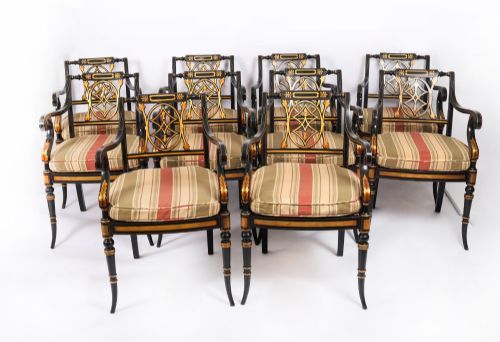
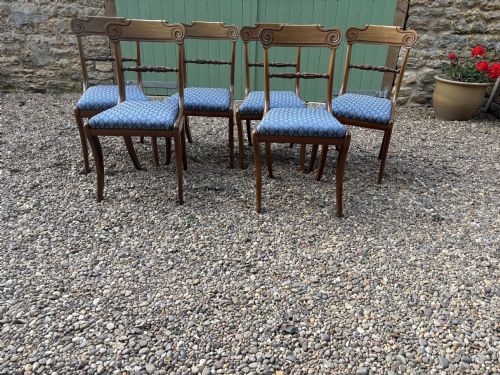
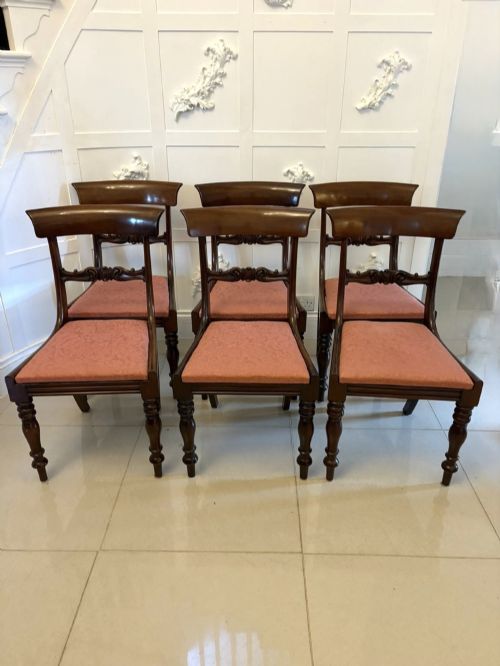
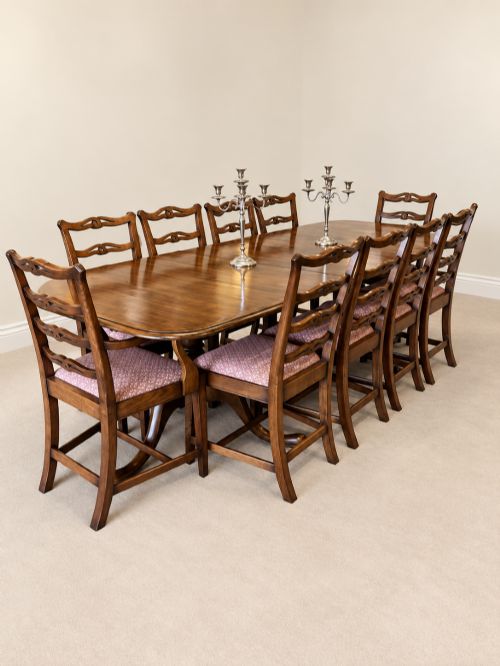
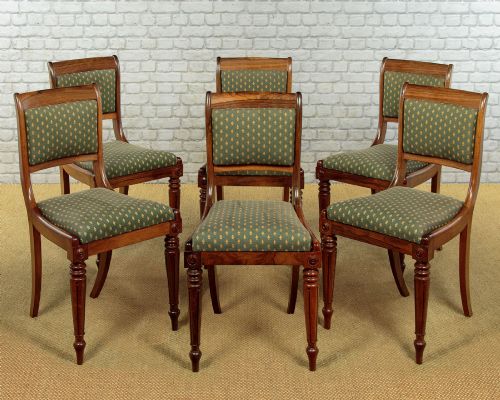
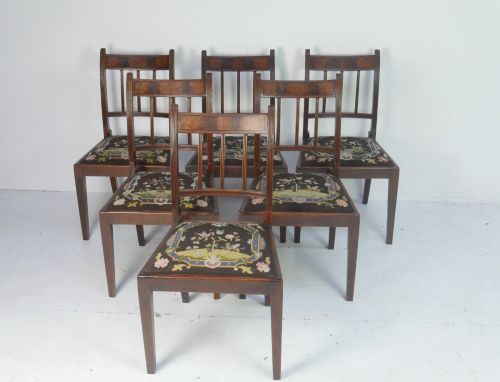
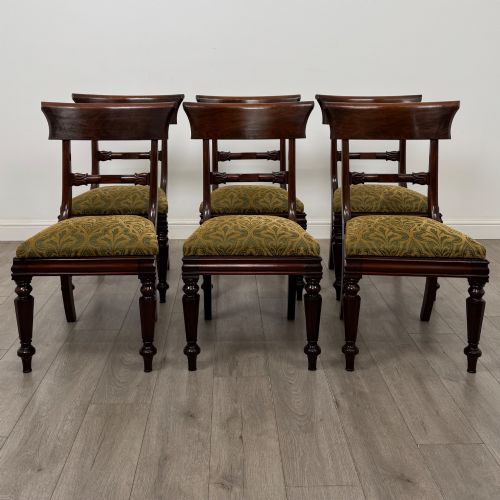
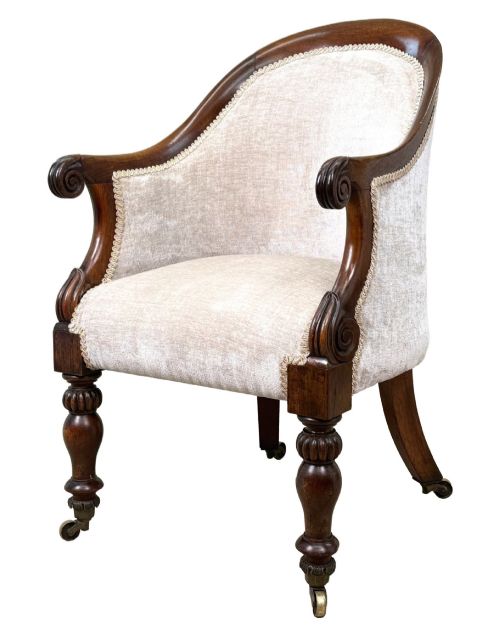
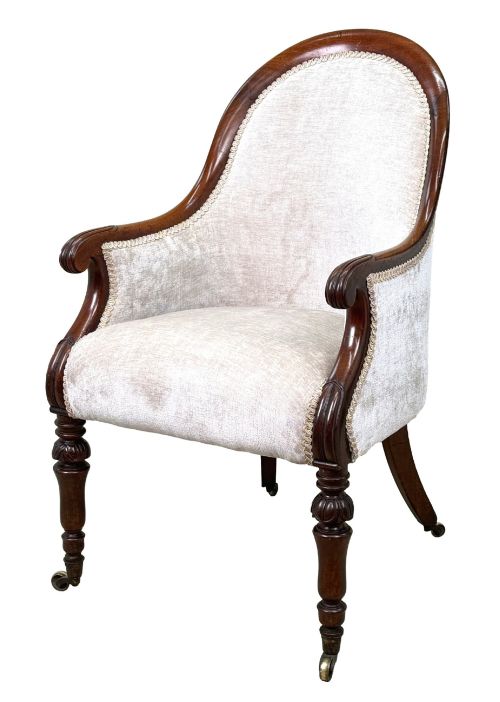
Dining chairs and side chairs form the largest group on this page, often appearing in sets of four, six, or eight. Alongside these sit tub armchairs, library bergères, and occasional garden benches.
The aesthetic draws on styles such as Regency, William IV, and Georgian, with origins recorded across English, Scottish, Irish, and Anglo-Indian workshops. Most examples date from the nineteenth century, supplemented by twentieth-century revivals.
Materials and construction
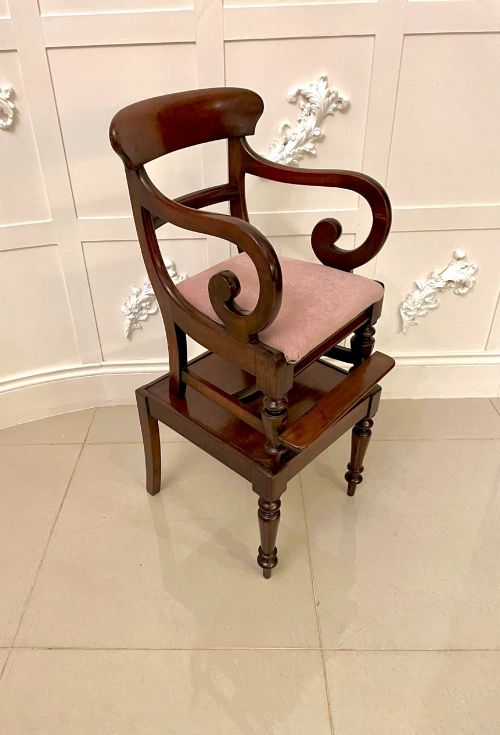
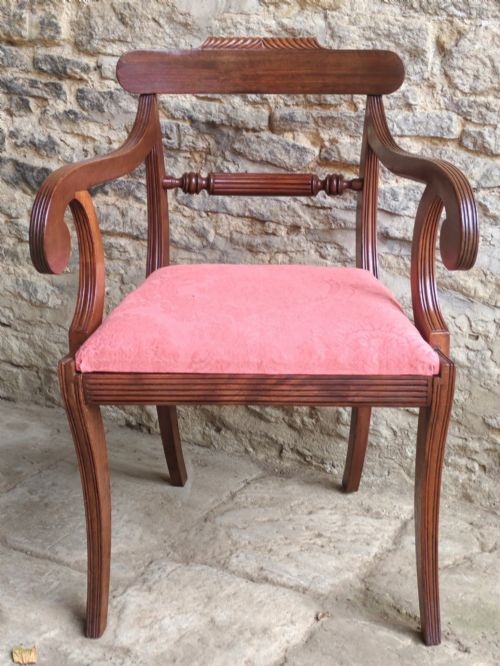
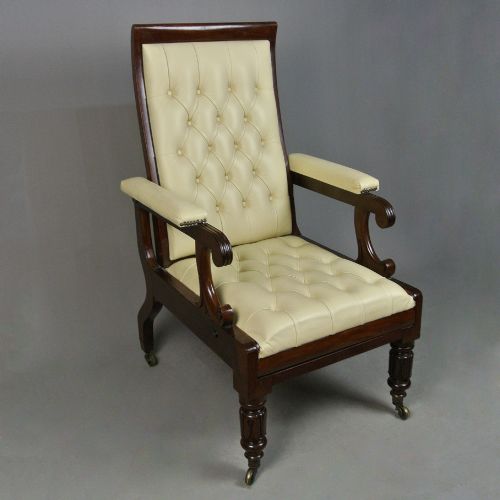
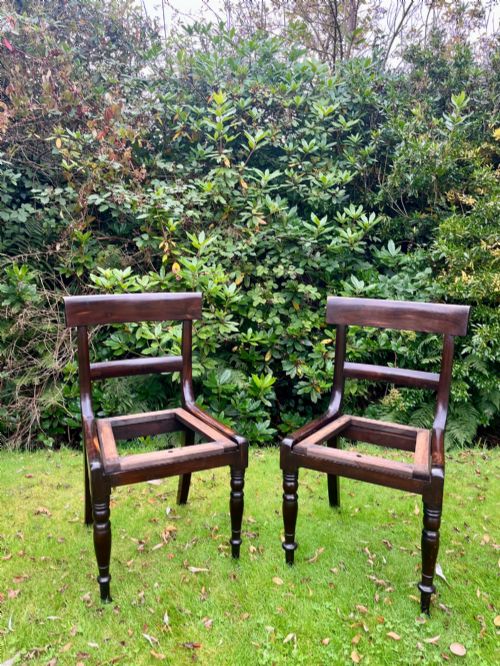
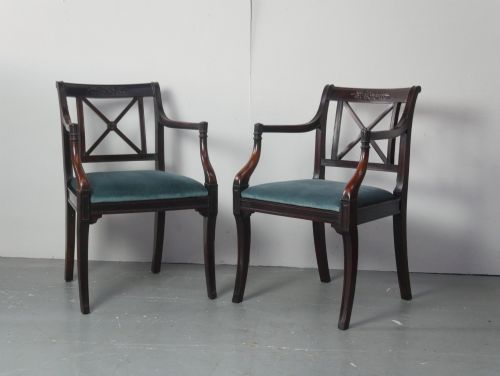
Seating surfaces utilise woven cane, supple leather, and traditional fabric upholstery, sometimes paired with velvet. Structural elements often incorporate turned legs, sabre legs, and elaborate carved details like lyre backs.
Listings feature mahogany, rosewood, and laburnum timbers, alongside cane, leather, and brass inlay details across multiple nineteenth-century styles.
Distinguishing quality across the range
The caliber of a piece rests on the precision of its joinery, the crispness of its carved or inlaid decoration, and the selection of timber figures. Richly grained rosewood and figured mahogany denote higher ambition in the workshop.
Original elements, such as surviving cane work, brass stringing, and early surface finishes, separate simpler vernacular pieces from finer examples made for prominent nineteenth-century interiors.
Strahan And Co
The Vintage Regency Chairs Glossary
- Bergère
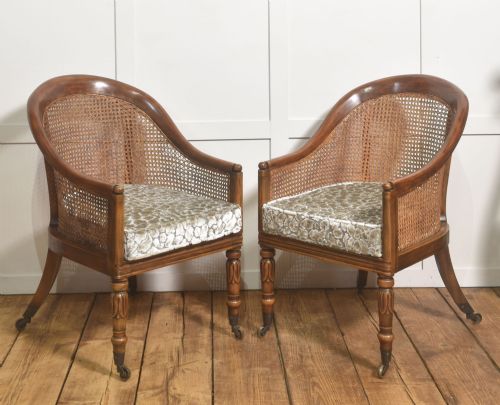
- An enclosed upholstered armchair with a wooden frame, frequently featuring cane panels on the back and sides. This form appears across the nineteenth century in library settings.
- Sabre leg
- A curving, outward-splaying furniture leg that tapers toward the foot, characteristic of the classical revival. It provides both stability and visual lightness to side chairs.
- Lyre back
- A chair back featuring an open splat shaped like an ancient musical instrument. This motif is typical of formal dining and elbow chairs.
- Hall chair
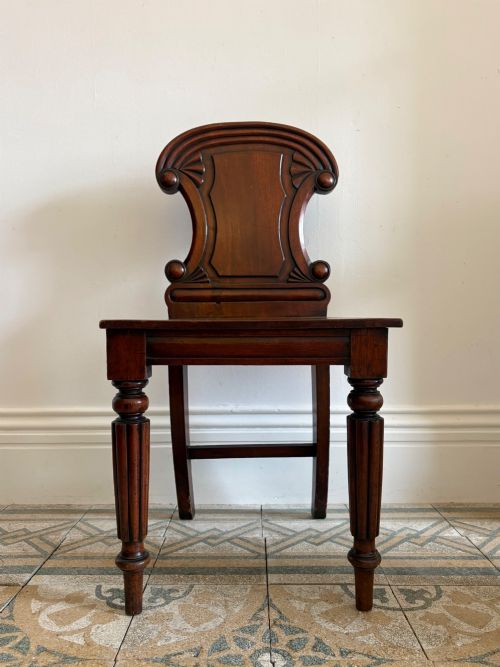
- A rigid wooden seat intended for an entrance hall or reception space, often featuring a painted or carved family crest and a solid wooden seat.
- Tub chair
- An armchair with a continuous curved back and arms forming a single semi-circular enclosure. These pieces frequently incorporate cane or leather upholstery.
Vintage Regency Chairs: Frequently Asked Questions
How do I identify a true period chair?
Examine the timber construction, joinery methods, and wear patterns beneath the frame. Nineteenth-century examples display traditional hand-cut joints and timber ageing consistent with early production.
Compare the specific silhouette and decorative motifs against known style milestones from the Regency and William IV eras. Documentation or estate labels can also confirm the origin.
Are these chairs suitable for daily dining?
Many dining chairs and sets are structurally robust enough for regular use around a dining table. Solid mahogany frames offer lasting stability when properly maintained.
Consider the seat height and upholstery condition before daily integration. Cane seats require careful treatment to support regular weight over time.
How should I care for antique leather and cane?
Keep leather supple by applying appropriate conservation balms and avoiding direct sunlight. This prevents the surface from drying out and cracking.
Maintain cane panels by keeping them clean and lightly hydrated with damp cloths, ensuring the natural material retains its flexibility.
What is the difference between Regency and William IV styles?
Regency designs lean toward slender proportions, classical restraint, and delicate brass inlays. Pieces often feature sabre legs and lighter woods.
William IV furniture tends toward heavier, sturdier proportions with bolder turned legs and robust mahogany construction. The aesthetic shifts from classical neoclassical grace to substantial Victorian precursor forms.