



Vintage Prism Pendants
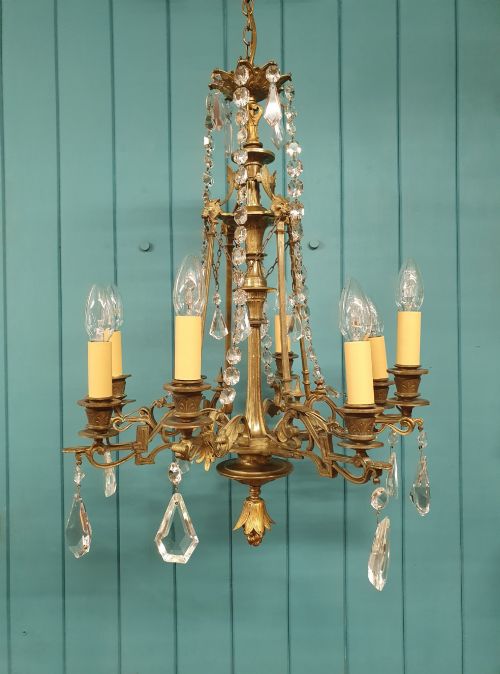
Vintage prism pendants bring a brilliant sparkle to a room through their cut glass drops and period metal frames.
Vintage Prism Pendants
Vintage prism pendants encompass ceiling lights, chandeliers, and smaller hall lanterns defined by hanging glass and crystal drops. These fixtures draw upon Edwardian, Art Deco, and French Empire styles, spanning the nineteenth century through the 1930s.
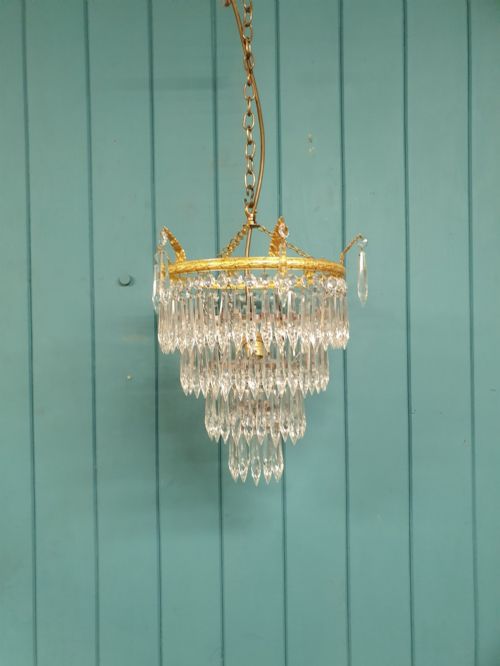
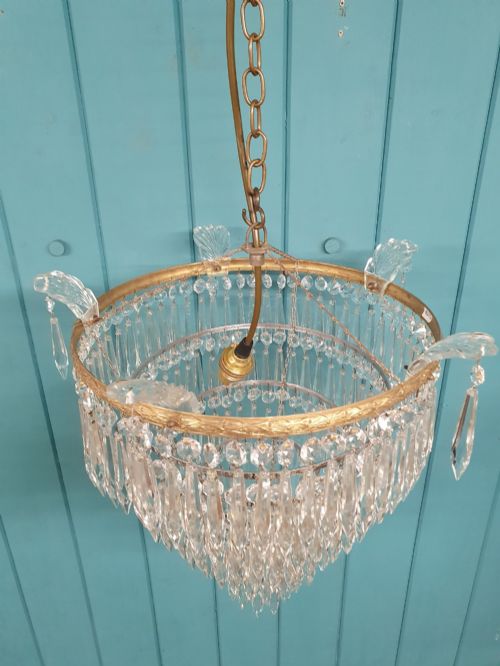
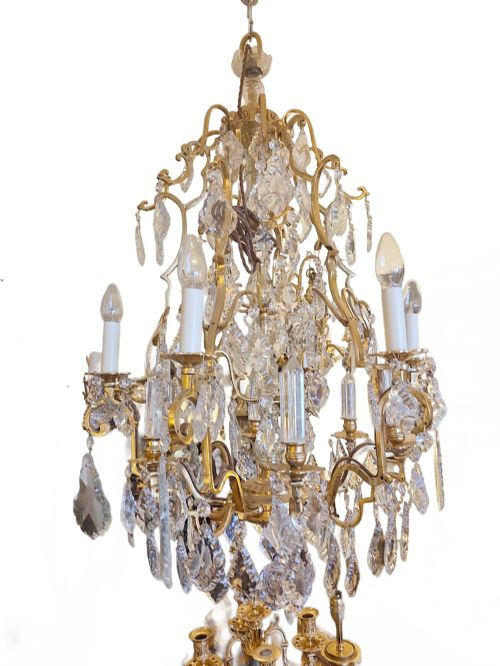
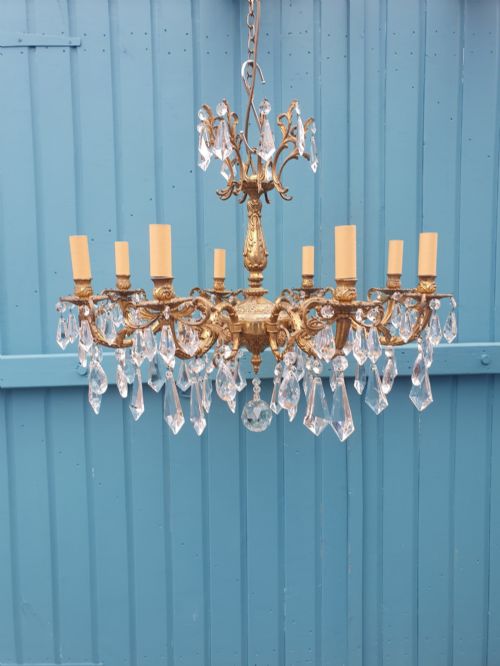
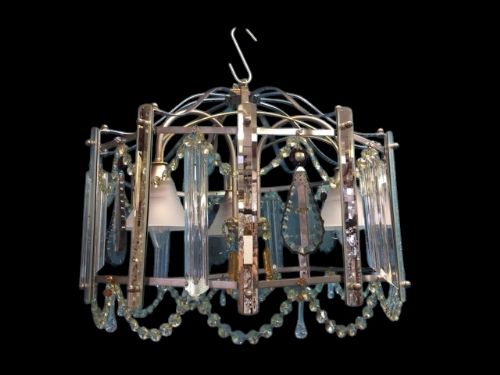
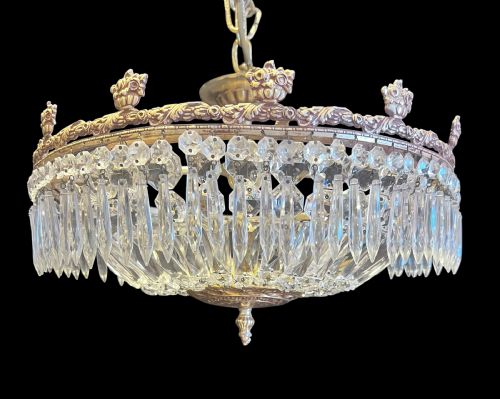
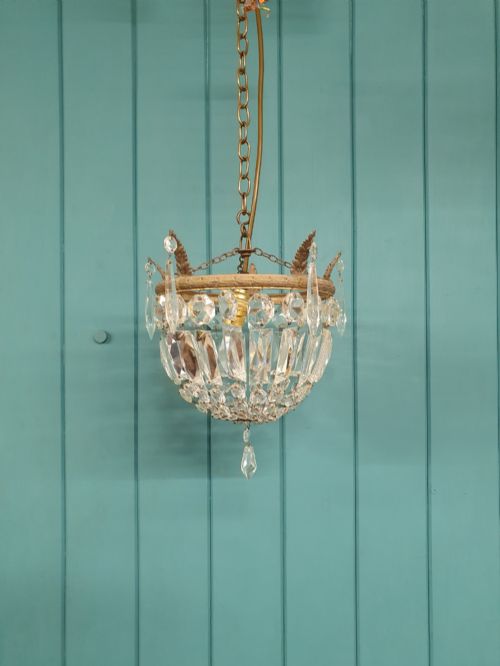
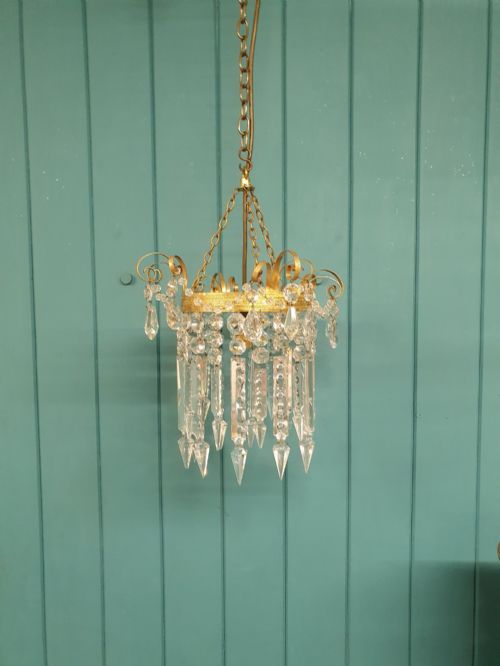
The most common variants on this page include compact spike chandeliers, bag chandeliers, and tiered waterfall designs in brass and cut glass. Buyers often find smaller Edwardian examples alongside larger French gilded bronze and gilt brass fixtures.
These ceiling lights function as both utilitarian illumination and decorative focal points, utilising cut crystal, glass drops, and bead arrangements to refract light across a space.
Materials and construction
Metalwork relies on brass, gilt brass, gilded bronze, and gilt metal to form the structural cages, frames, and arms of the pendants. These metals provide sturdy support for the extensive weight of the glass components.
Glass elements utilise cut glass, crystal, and crystal glass shaped into specific forms such as coffin prisms, spikes, lustres, and oblong drips. These individual drops attach to the frames via wire or pins, creating draped swags and waterfall effects.
Vintage Prism Pendants Retail Price Guide 2026
Typical asking prices for vintage prism pendants among the pieces listed under this phrase on Sellingantiques today, from the lower quarter to the upper quarter. They describe what is for sale here now, not the wider market.
Listings span from the 19th century through the 1930s, featuring Edwardian and Art Deco aesthetics alongside French Empire and Rococo styles.
Evaluating the range
Quality separates fixtures by the clarity and depth of the cut crystal drops and the intricacy of the metal casting. Superior examples feature sharper facet cutting in the glass and more elaborate frame details such as lion masks or multi-tiered structures.
The integrity of the construction, including the matching of original glass prisms and the weight of the bronze or brass framework, distinguishes standard production pieces from finer antique lighting.
The Vintage Prism Pendants Glossary
- Prism
- A cut glass or crystal pendant designed to refract light. Prisms hang from the frame in various shapes such as coffin or long formats.
- Lustre
- A glass pendant or drop suspended from a chandelier. These items catch and reflect light from the central bulbs.
- Plafoniere
- A ceiling-mounted lighting fixture set flush or close to the ceiling. These fixtures often incorporate brass frames and glass drops.
- Waterfall
- A tiered arrangement of glass drops cascading downward. This style creates a dense, layered curtain of crystal.
- Bag chandelier
- A light fixture featuring a flattened or rounded base of gathered glass beads and drops resembling a bag. They typically direct light outward through dense crystal arrays.
Vintage Prism Pendants: Frequently Asked Questions
How do I hang a prism pendant?
These ceiling lights mount directly to electrical junction boxes in the ceiling using standard mounting hardware.
Heavier bronze and brass fixtures require secure ceiling joist anchorage to support their combined metal and crystal weight.
What rooms suit these fixtures?
Compact spike and bag chandeliers fit well in hallways, entryways, and smaller bedrooms where ceiling height is limited.
Larger tent and waterfall chandeliers suit principal living spaces or dining rooms requiring a distinct decorative focal point.
How do I clean vintage crystal?
Remove dust gently using a soft feather duster or microfiber cloth while the chandelier remains hung.
For deeper cleaning, detach individual glass prisms and wash them in warm soapy water before drying thoroughly.
How do I identify Edwardian pieces?
Edwardian fixtures often feature brass frames paired with specific prism cuts like spikes, coffin shapes, or simple swags.
They generally date from the early twentieth century and frequently present in smaller scales compared to grander nineteenth-century French designs.