


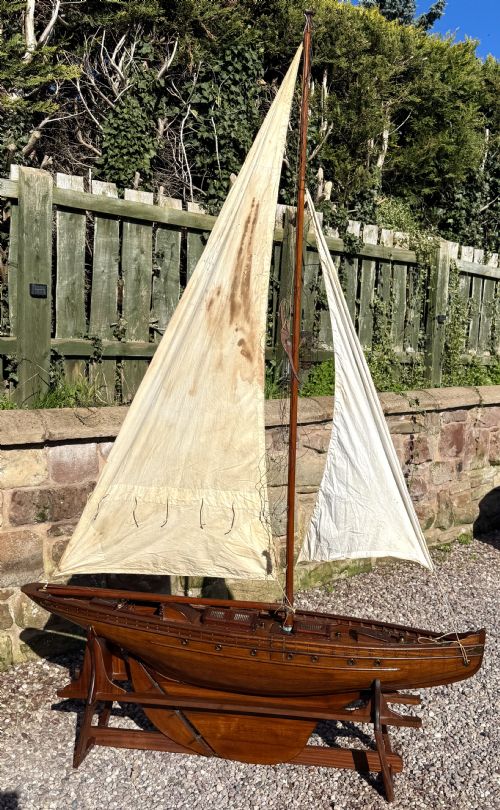
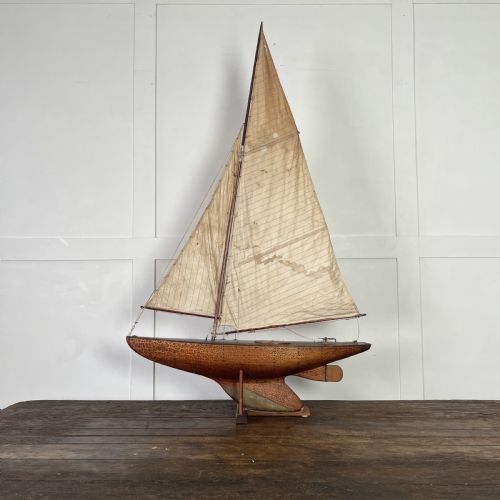


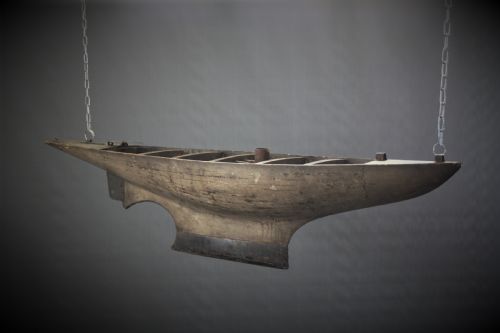
Vintage Pond Yacht Model
A vintage pond yacht model is a tactile piece of maritime history that brings authentic coastal character and traditional craftsmanship into a room.
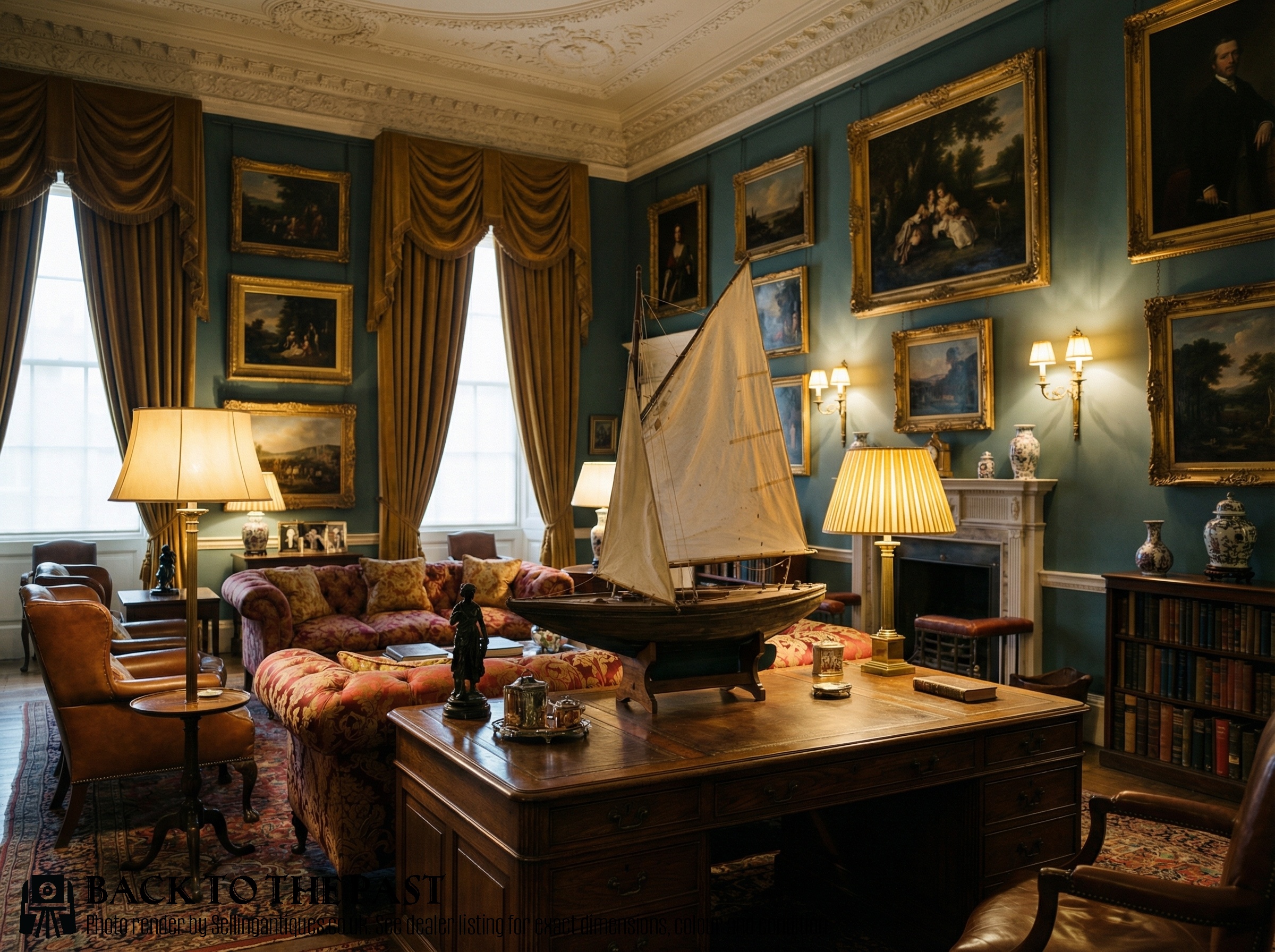
Vintage Pond Yacht Model
A vintage pond yacht model represents a longstanding tradition of sailing miniature vessels on park waters and garden lakes. These decorative objects span periods from the late nineteenth century through the Edwardian era and into the early twentieth century.
Originating across Victorian and Edwardian Britain, these pieces capture the evolving design of recreational sailing craft through distinct historical periods. Each model preserves the nautical aesthetic of its era, whether built for actual leisure sailing or displayed as a detailed ship model.
Materials and construction methods
Makers constructed these hulls primarily from solid wood and pine, often utilising carvel hull techniques to achieve a smooth and seaworthy exterior shape. Metal fittings, brass components, and lead ballasts provided structural weight and functional detail to the miniature rigging.
The rigging and sails incorporated canvas, cotton, and cordage to replicate the functional cordage of full-sized sailing vessels. Artisans completed scratch-built examples with meticulous attention to scale, combining traditional woodworking with durable textile elements.
The site listings feature pieces spanning the late nineteenth century, the Edwardian period, and the 1920s, constructed from wood, pine, brass, and canvas.
Distinguishing quality in traditional boat models
Quality rests heavily on the integrity of the wooden hull construction and the survival of original rigging elements like cordage and canvas sails. Scratch-built examples from the nineteenth century often display superior hand-carved detailing compared to later production pieces.
The presence of period-appropriate metal and brass fittings, alongside a stable wooden display stand, elevates a piece within its category. Preserved surface finishes and honest patination reflect the age and authenticity of Victorian and Edwardian maritime models.
The Vintage Pond Yacht Model Glossary
- Carvel hull
- A method of boat construction where planking is laid edge-to-edge over a supporting frame to create a smooth surface. This technique was standard for larger model boats.
- Ketch-rigged
- A two-masted sailing vessel configuration where the smaller mizzen mast is stepped forward of the rudder stock. This specific rigging appears on several period models.
- Scratch-built
- A model constructed entirely from raw materials and components by a maker rather than assembled from a commercial kit. These pieces show individual craftsmanship.
- Ballast
- Heavy material placed low in the hull of a boat to improve stability and control. Lead was frequently utilised for this purpose in pond yachts.
Vintage Pond Yacht Model: Frequently Asked Questions
How were old pond yachts actually sailed?
Owners launched these vessels into park ponds and allowed natural crosswinds to push them across the water. Clever rudder settings and self-steering gear helped the boat reach the opposite bank without human intervention.
After a run across the water, the owner retrieved the craft and adjusted the sails for the return journey. This made pond yacht sailing a popular outdoor hobby for enthusiasts across the Victorian and Edwardian eras.
What is the best way to display a large model?
Large models require a sturdy wooden display stand to support the weight of the lead ballast and wooden hull. Placing the vessel away from direct heat sources prevents the old wood and canvas from drying out.
Many collectors position these substantial items on low tables or dedicated floor stands where the full height of the masts and rigging can be appreciated.
How can I tell a Victorian model from a later piece?
Nineteenth-century models often feature heavier carvel hull construction and specific rigging styles associated with working vessels of the period. The type of metal fittings and the specific cut of the canvas sails also offer clues to the manufacturing decade.
Examining the wood species and the style of the handmade components helps place the object within the Victorian, Edwardian, or early twentieth-century timelines.
Did these boats originate in Britain?
The tradition of recreational model sailing flourished across British public parks during the Victorian period. Local craftsmen and enthusiastic amateurs built sophisticated scale models for both competitive racing and leisure.
Surviving examples reflect the distinct maritime tastes and woodworking traditions prevalent in Britain during the late nineteenth and early twentieth centuries.