

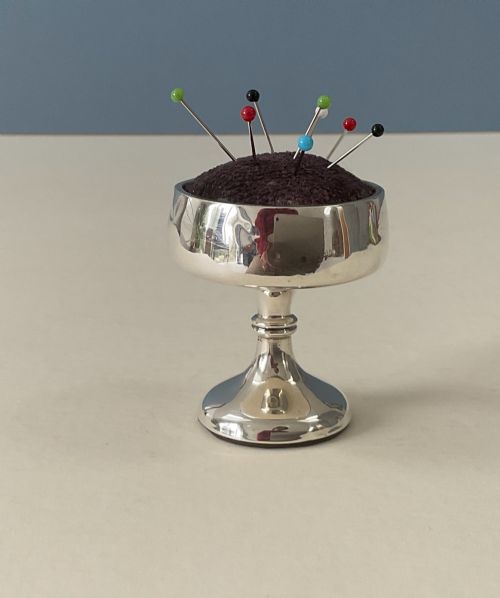

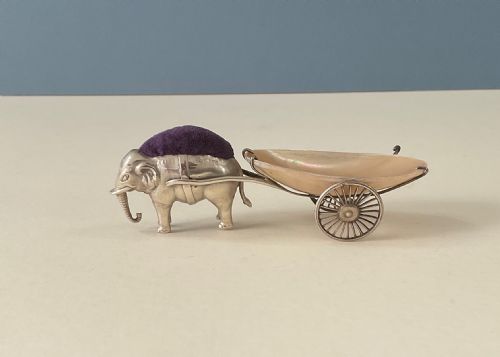


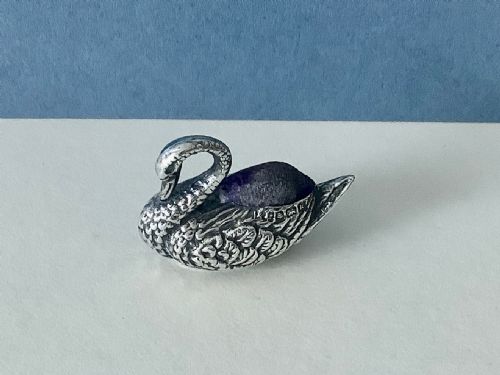
Vintage Pin Holder
These vintage pin holder examples bring practical vanity elegance to a dressing table.
Vintage Pin Holder
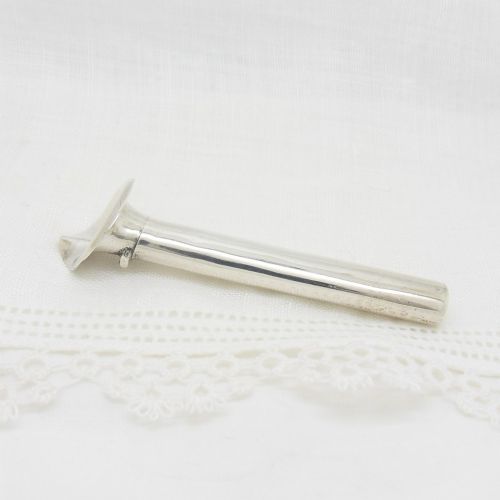
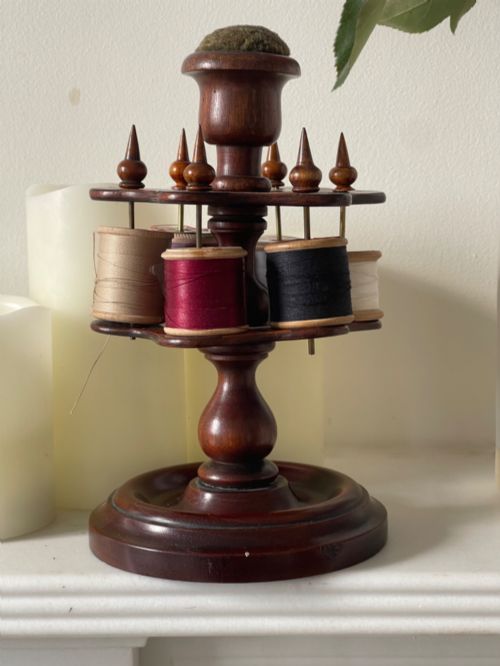
When you search for a vintage pin holder, you enter the refined world of dressing table accessories and sewing tools designed to keep pins and hatpins orderly. These pieces range from upright stands and shallow dishes to novelty forms shaped as animals and objects.
The Edwardian period and the 1920s dominate the selection, bringing silver work and novelty designs to the table. You will frequently encounter sterling silver frames paired with velvet or fabric cushions, alongside glass and mother-of-pearl items.
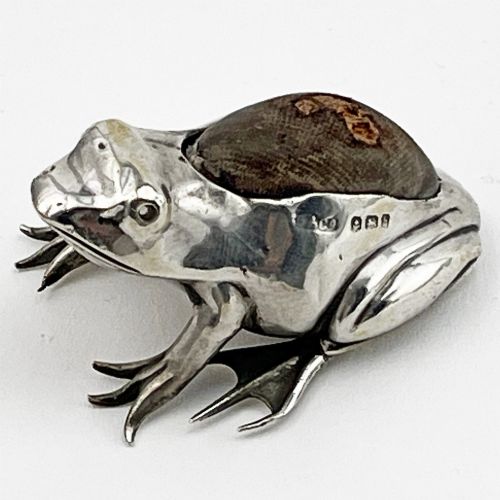
Forms span from simple stands for hatpins to whimsical novelty animal pin cushions depicting bears, frogs, and birds. Each piece reflects the detailed vanity culture of the late nineteenth and early twentieth centuries.
Materials and construction
Silversmiths shaped sterling silver into novelty figures, baskets, and goblets using casting and hammering techniques. Delicate details on animal figures and figural stands demonstrate skilled metalwork from periods such as the Edwardian era.
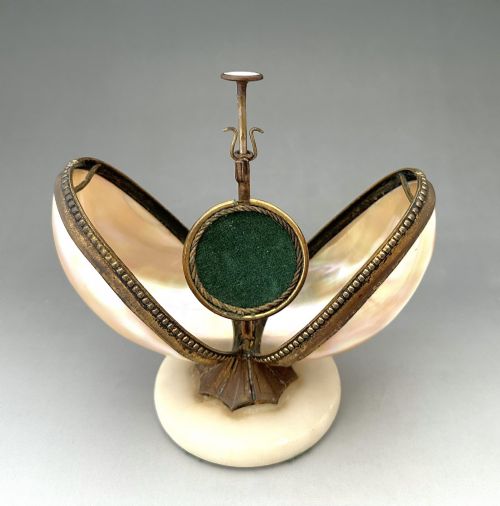
Makers integrated tactile materials like velvet and fabric into silver frames to create functional cushions for pins. Other pieces combine mother-of-pearl, alabaster, and gilt bronze, showcasing diverse material combinations across the selection.
Vintage Pin Holder Retail Price Guide 2026
Typical asking prices for vintage pin holder among the pieces listed under this phrase on Sellingantiques today, from the lower quarter to the upper quarter. They describe what is for sale here now, not the wider market.
Victorian ducks and Edwardian policemen stand ready to guard your stray pins with surprising dignity.
Distinguishing quality
The distinction between standard pieces and exceptional items rests in the sculptural ambition of the silver work. Novelty pieces shaped as animals or figures require precise detailing to elevate them beyond simple utilitarian objects.
Maker attribution plays a role in quality, with works associated with known workshops or specific silversmiths showing superior finishing. The crispness of hallmarks and the weight of the silver reflect the standards of the original maker.
Material integration defines the upper range, where velvet or fabric inserts remain secure within well-proportioned silver frames. The quality of glass moulding in pieces like pin dishes similarly separates standard domestic items from artistic productions.
Crisford and Norris·George W Shiebler·Artificer's Guild·René Lalique
The Vintage Pin Holder Glossary
- Novelty pin cushion
- A pin cushion shaped to resemble an animal, person, or object rather than a standard geometric form. These figural pieces often command strong interest from collectors.
- Hatpin stand
- An upright holder designed to store long hatpins vertically on a dressing table. They frequently feature weighted bases and slender shafts of silver or ceramic.
- Etui
- A small decorative case used for holding needles, pins, or small sewing implements. They appear in materials like mother-of-pearl.
- Hallmark
- An official mark stamped on precious metals indicating the standard of purity and the assay office. British silver pieces typically display these indicators of origin.
- Pin dish
- A shallow dish intended for holding loose pins and small trinkets. These items appear in moulded glass as well as metal.
Vintage Pin Holder: Frequently Asked Questions
What is a vintage pin holder used for?
These pieces served as functional dressing table accessories for holding sewing pins, brooches, and hatpins in domestic settings. They kept sharp items organised and accessible during daily grooming.
Today, they function primarily as decorative cabinet pieces or vanity displays that showcase period metalwork and miniature sculpture.
How do I date an Edwardian pin cushion?
Dating relies on identifying official silver hallmarks, which record the assay office and year of manufacture. Stylistic markers such as Edwardian design motifs also help establish the era.
Comparing the weight, material quality, and construction techniques provides further context for the period of production.
What materials are common in these holders?
Sterling silver and silver plate form the primary structural elements for many stands and novelty cushions. Velvet and fabric provide the soft insert for pinning.
Other examples incorporate mother-of-pearl, alabaster, gilt bronze, and moulded glass to achieve varied visual effects.
How do I care for antique silver pin cushions?
Gentle dusting with a soft cloth preserves the surface of the silver without harming delicate details or hallmarks. Avoid aggressive chemical polishes that can strip patination.
Keep fabric and velvet cushions dry and away from direct sunlight to prevent degradation of the textile elements.