

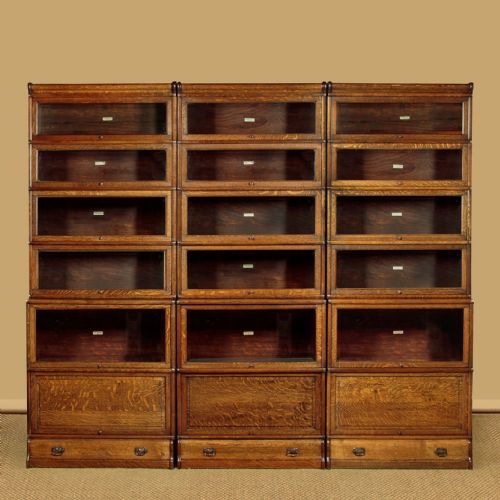


Vintage Office Shelving
Vintage office shelving delivers modular utility and period character, bringing sectional bookcases, tambour cabinets and pigeon holes into the modern workspace.
Vintage Office Shelving
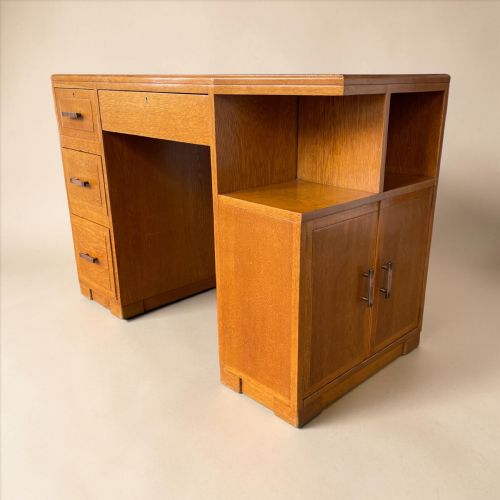
Vintage office shelving encompasses practical working furniture from the nineteenth century up to the Art Deco period, designed for paperwork, books and ledgers. Buyers searching for vintage office shelving will encounter modular barrister bookcases, sectional units and wall-mounted or tabletop pigeon holes.
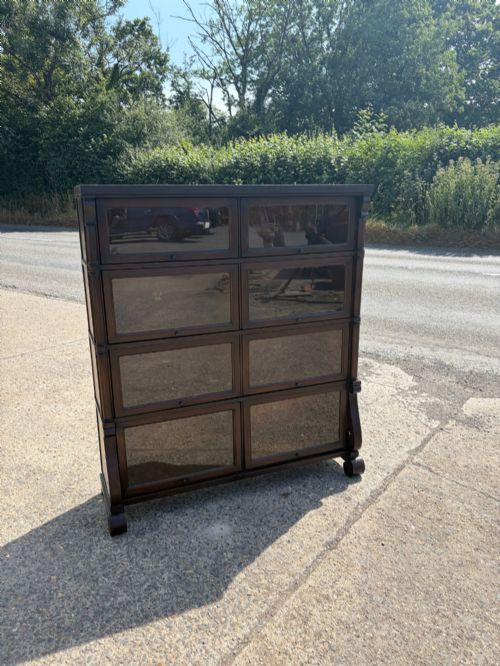
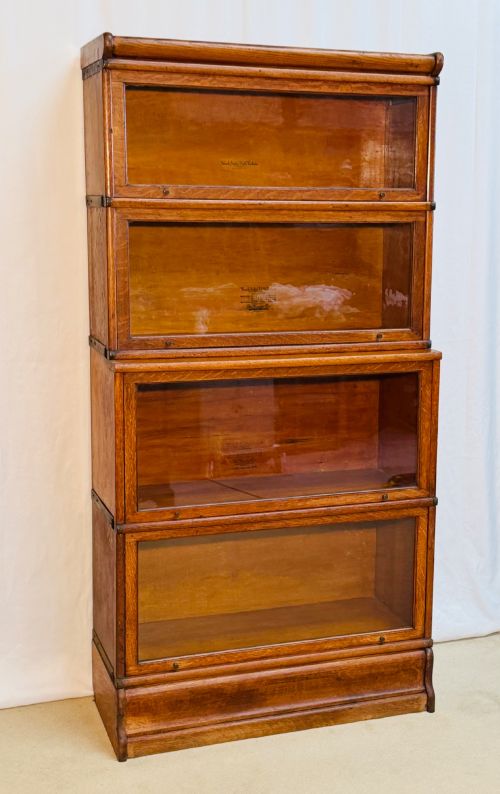
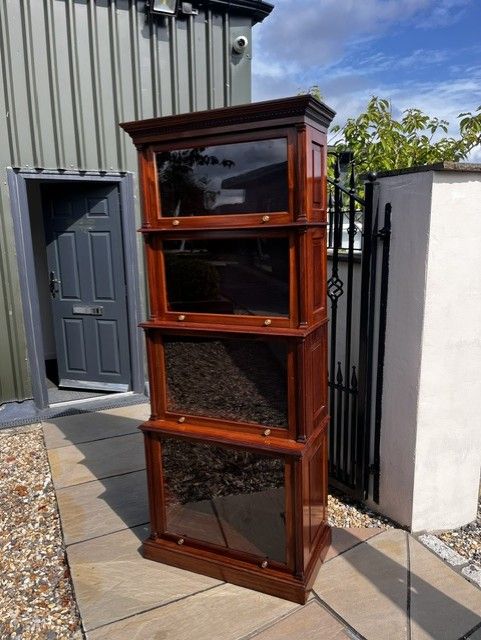
The most common iterations on this page are sectional oak and mahogany stacking bookcases featuring glass doors, alongside pine and hardwood pigeon hole cabinets. These pieces originated in commercial and professional environments, adapting easily to modern domestic studies and living rooms.
Forms range from compact tabletop desk organizers and George V shelf accessories to tall Wernicke and Macey system bookcases comprising multiple tiers. Construction dates span the Edwardian era through the nineteen-thirties, reflecting the shift towards organised administrative spaces.
Materials and construction
Makers utilised durable hardwoods such as solid mahogany and oak, alongside pine for utilitarian sorting units and brass for hardware and fittings. Sectional bookcases incorporated clever sliding mechanisms and up-and-over glass doors to protect documents while allowing modular expansion.
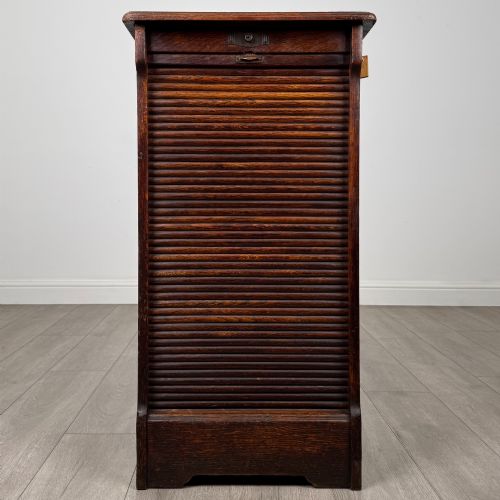
Tambour cabinets relied on flexible wooden slats running in tracked grooves to conceal adjustable internal shelving securely. Pigeon holes and desk organisers were built with straightforward pegged or nailed joints, prioritising daily functional longevity over ornate decoration.
Vintage Office Shelving Retail Price Guide 2026
Typical asking prices for vintage office shelving among the pieces listed under this phrase on Sellingantiques today, from the lower quarter to the upper quarter. They describe what is for sale here now, not the wider market.
Early twentieth-century pigeon holes often still retain faint pencil markings left behind by clerks sorting long-forgotten daily correspondence.
Assessing quality
Quality in these storage systems rests upon the integrity of the modular stacking mechanisms and the clarity of the original glass panes. Pieces bearing identifiable maker stamps or patent systems demonstrate superior manufacturing standards compared to unmarked workshop alternatives.
The choice of timber grain, particularly figured mahogany or quarter-sawn oak, distinguishes finer commercial furnishings from purely utilitarian pine storage. Smooth operation of tambour doors and matching hardware across all tiers indicate an intact, high-grade installation.
Wernicke System·Macey·James Mein of Kelso
The Vintage Office Shelving Glossary
- Barristers Bookcase
- A sectional bookcase featuring glass-fronted tiers that stack vertically, allowing individual units to be added as a collection grows.
- Tambour Cabinet
- A storage unit with a flexible door made of narrow wood strips glued to canvas, sliding along a track to enclose the shelves.
- Pigeon Holes
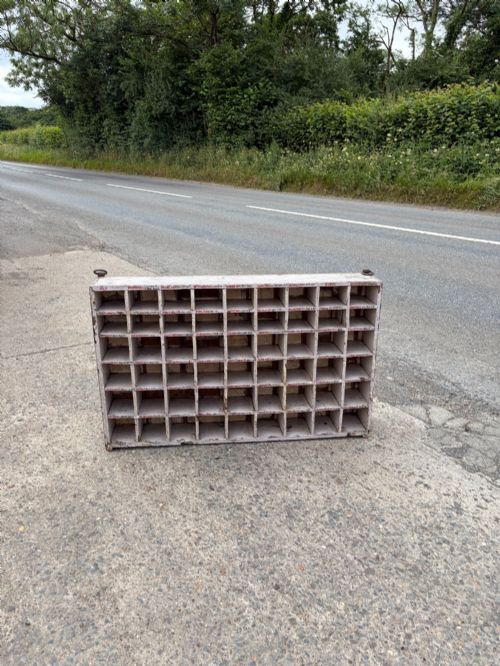
- A grid of small open compartments designed for sorting mail, documents and correspondence within an office or desk setting.
- Sectional Bookcase
- Modular furniture consisting of separate horizontal tiers and a base that lock together without permanent fixings.
- Quarter-sawn
- Timber cut radially to the growth rings, producing a distinct decorative grain pattern often found in quality oak office furniture.
Vintage Office Shelving: Frequently Asked Questions
What is a barrister bookcase?
A barrister bookcase is a stackable piece of office furniture comprising multiple individual shelf units with glass doors that lift and slide inward.
Originally designed for lawyers to transport their libraries easily, these modular units separate into individual tiers for moving.
How do tambour doors work?
Tambour doors consist of narrow vertical wooden slats attached to a flexible canvas backing that travels smoothly along recessed tracks.
This mechanism allows the door to curve around the side of the cabinet, hiding the shelving entirely without requiring clearance in front.
Can I separate stacking office bookcases?
Yes, stacking bookcases are built as modular tiers that rest one upon another with a base and a top cornice, meaning they can be reconfigured.
Buyers should check whether individual sections are uniform in depth and width before attempting to alter the configuration.
How do I date these storage pieces?
Dating relies on stylistic markers, construction methods, and patent stamps associated with specific manufacturers active from the nineteenth century to the nineteen-thirties.
Edwardian and Art Deco examples often feature distinct hardware, timber choices, and mechanical systems that indicate their era of production.