

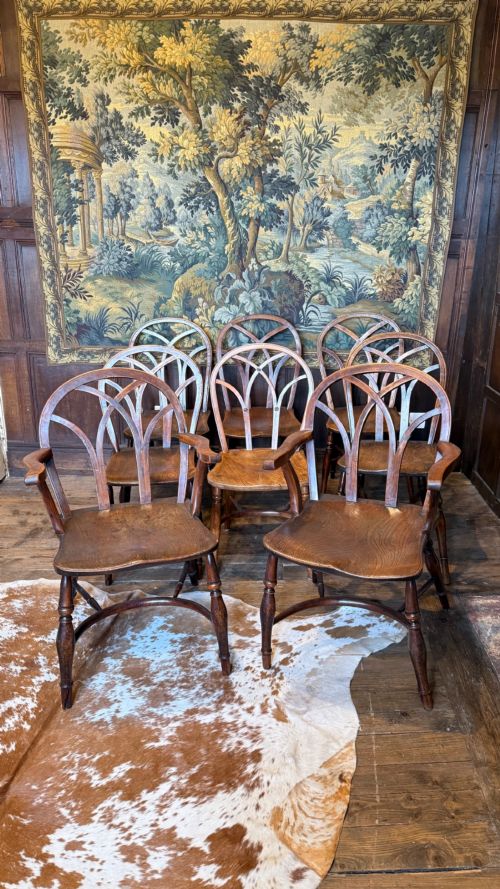
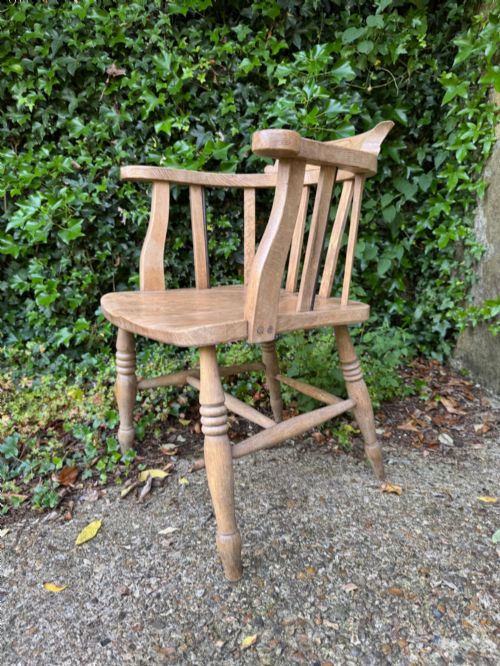
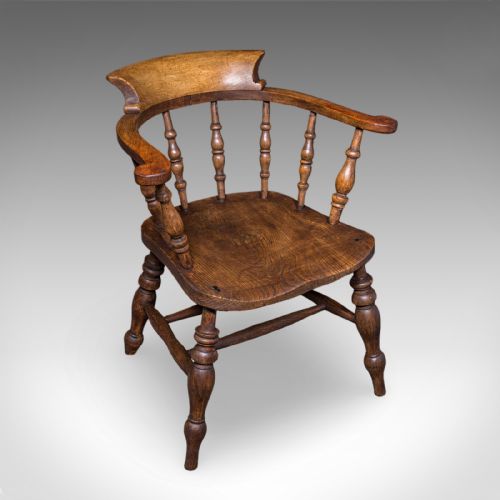
Vintage Oak Desk Seat
These vintage oak desk seat options offer sturdy timber construction and practical seating for daily work, bringing period character directly to your study.
Vintage Oak Desk Seat
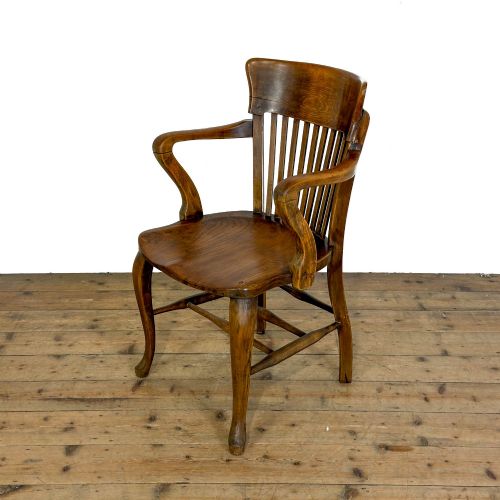
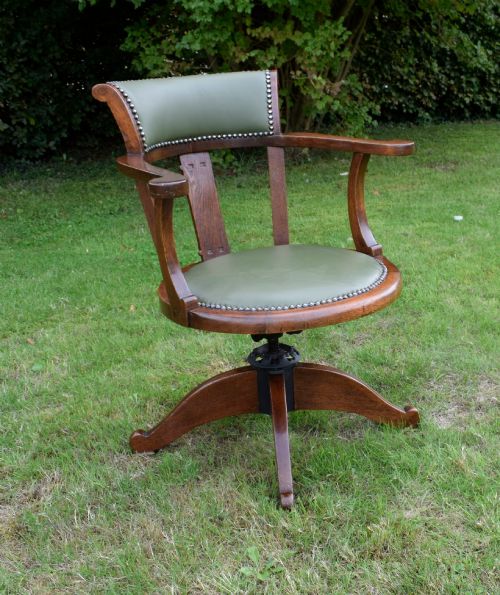
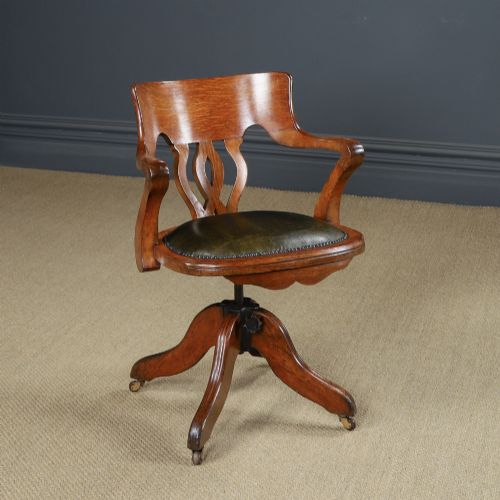
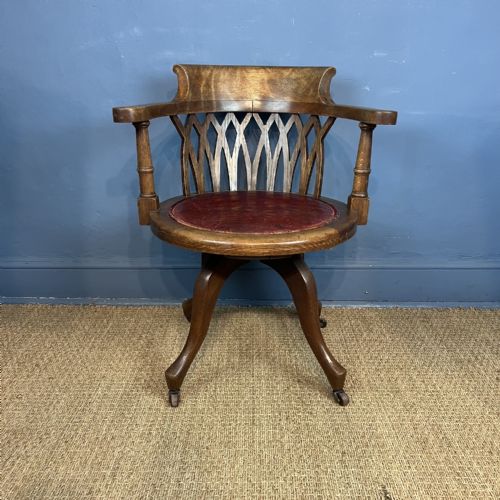
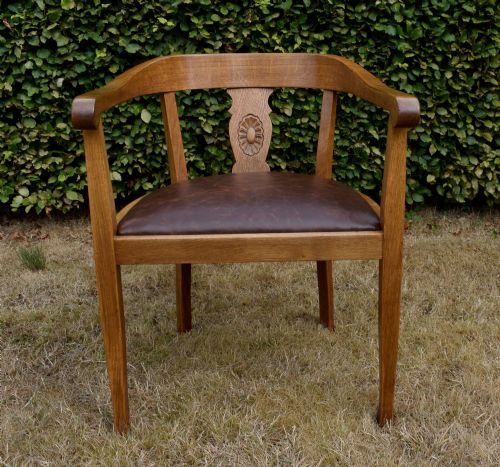
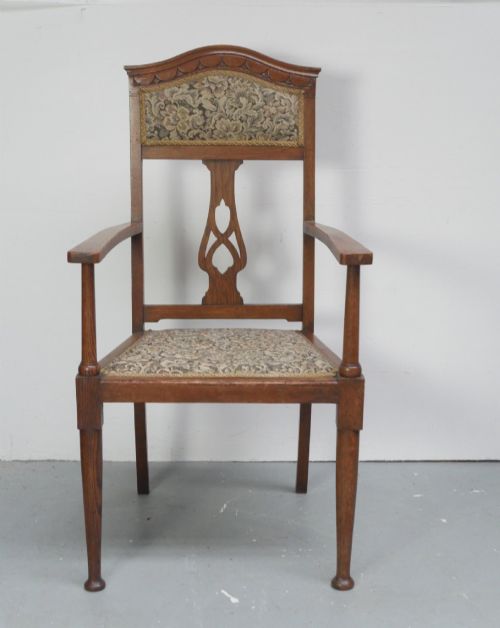
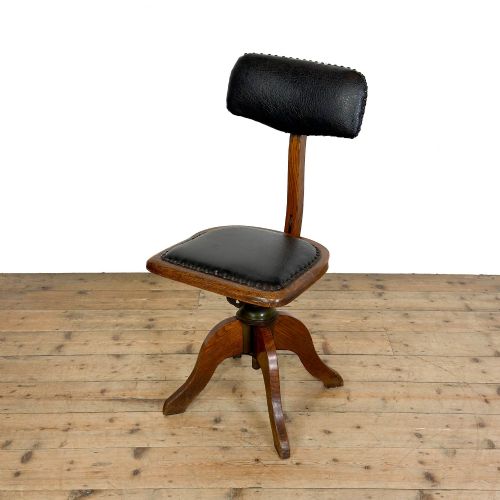
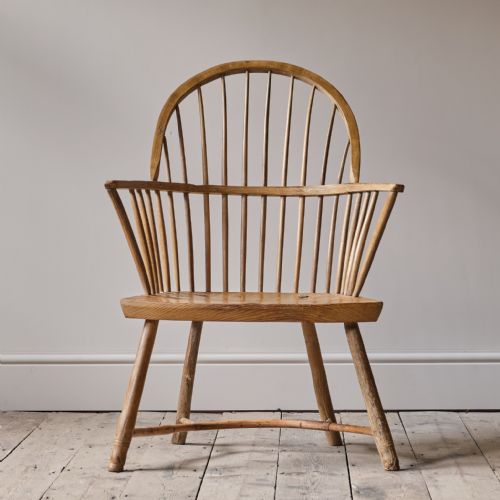
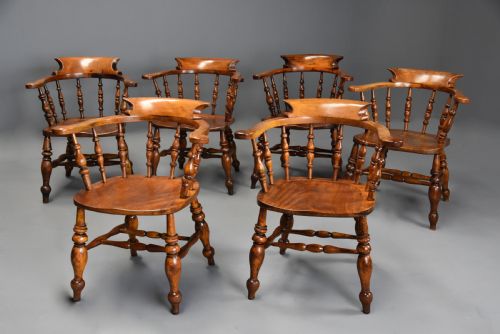
A vintage oak desk seat provides a solid wooden foundation for working at a table, taking forms such as swivel armchairs, revolving office seats, and captain's chairs. These pieces originate from the nineteenth and early twentieth centuries, spanning Victorian, Edwardian, and Arts and Crafts periods.
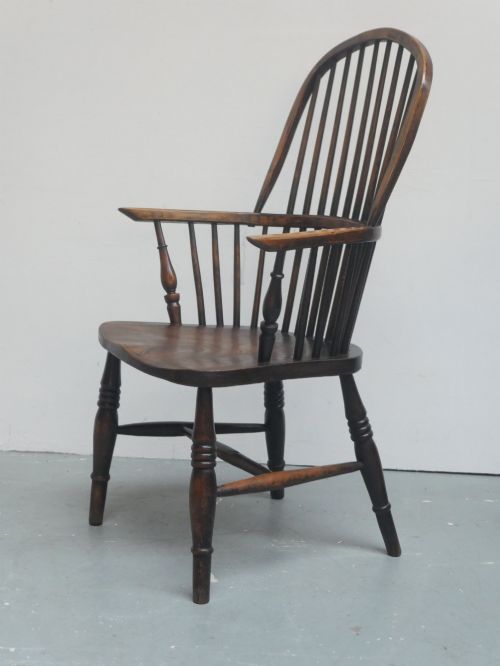
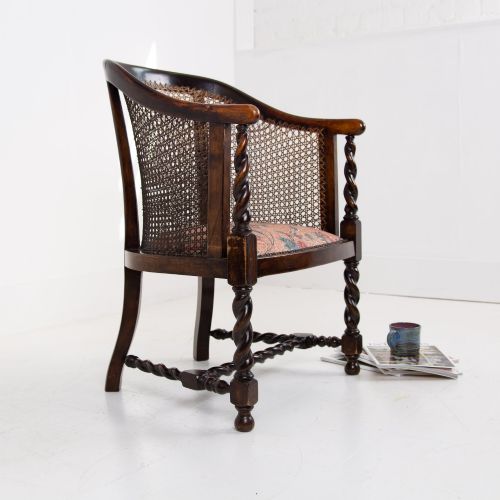
Most examples found here combine durable oak frames with leather or hide pads, while some feature cane or solid timber panels. They range from simple country elbow seats to adjustable industrial workshop chairs and Gothic Revival designs.
How they were made
Cabinet makers utilised solid oak for the structural frames, legs, and bentwood elements, ensuring long-term durability through traditional joinery and steam bending. Metal mechanisms, brass fixings, and cast iron parts were incorporated into swivel and tilt desk chairs.
Upholstered versions relied on leather, hide, fabric, or cane inserts for the seating surface, secured with brass studs where appropriate. These materials were chosen for resilience in daily office and domestic environments.
Listings feature oak combined with leather, brass, fabric, elm, metal, iron, and cast iron across various historical periods.
What varies in quality
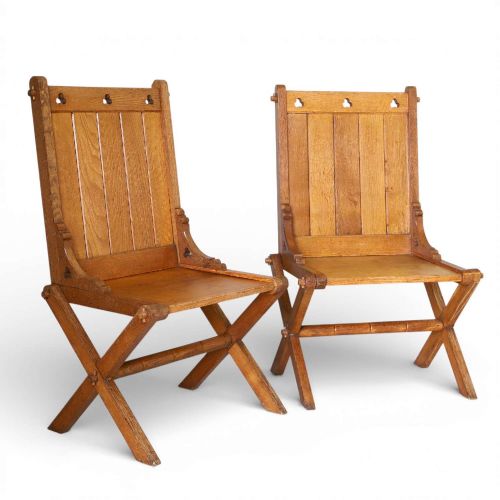
The sophistication of the turning, carving, and timber selection separates standard utilitarian seating from finer artistic commissions. Pieces showcasing detailed Gothic revival motifs, trefoil details, or complex revolving and tilting mechanisms demonstrate higher levels of period craftsmanship.
The integrity of the original oak frame and the retention of period leather or hide seats heavily influence the overall character. Alterations, replacements of swivel hardware, or poor-quality repairs alter the historical consistency of the piece.
Evertaut
The Vintage Oak Desk Seat Glossary
- Swivel desk chair
- A seat featuring a central pivot mechanism allowing rotation, often paired with an adjustable height screw. These were designed for nineteenth and twentieth-century offices.
- Captain's chair
- A low-backed wooden armchair with a rounded steam-bent rail supported by spindles, originating in traditional English country design.
- Gothic Revival
- A nineteenth-century design style incorporating medieval architectural motifs such as pointed arches, trefoils, and heavy carved tracery.
- Arts and Crafts
- A movement prioritising traditional craftsmanship, visible construction, and simple forms using solid oak without excessive ornamentation.
- Bergère
- An upholstered armchair with an enclosed wooden frame, frequently featuring cane panels on the back and sides.
Vintage Oak Desk Seat: Frequently Asked Questions
What is a vintage oak desk seat?
A vintage oak desk seat is a wooden chair designed for working at a table or bureau, produced primarily during the Victorian and Edwardian eras. These seats utilise robust oak frames and often incorporate swivel mechanisms or leather pads.
They serve as practical furniture for modern home offices while retaining historical character and traditional craftsmanship.
How do I date a vintage oak desk seat?
Dating relies on stylistic clues, hardware, and construction methods. Victorian pieces often show heavier carving or Gothic Revival influences, while Edwardian and later examples introduce more refined swivel and tilt mechanisms.
Material choices like cast iron parts or specific leather upholstery styles also help narrow down the production decade.
How were these chairs used originally?
These seats were placed in studies, offices, and libraries to provide posture support during extended periods of writing and administrative work. Swivel variants allowed clerks and professionals to reach different parts of a desk easily.
Country variations served as comfortable elbow seats in domestic rooms or ship cabins.
How do I care for a vintage oak seat?
Maintain the timber by applying appropriate furniture wax periodically to keep the oak nourished and prevent the grain from drying out. Avoid placing the piece near direct heat sources or in fluctuating humidity.
Treat leather or hide pads with suitable conditioners to preserve their flexibility and prevent cracking.