

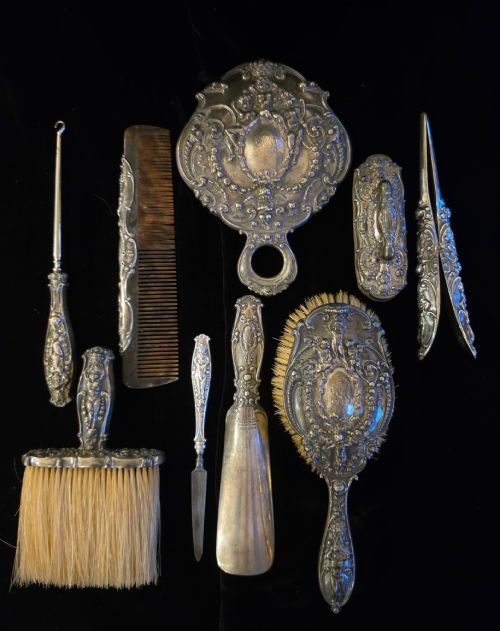
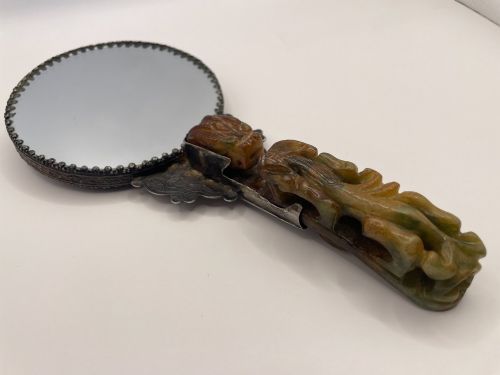
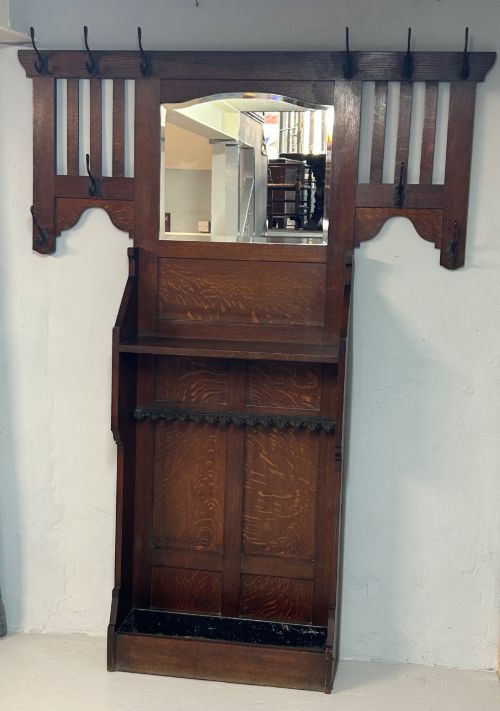
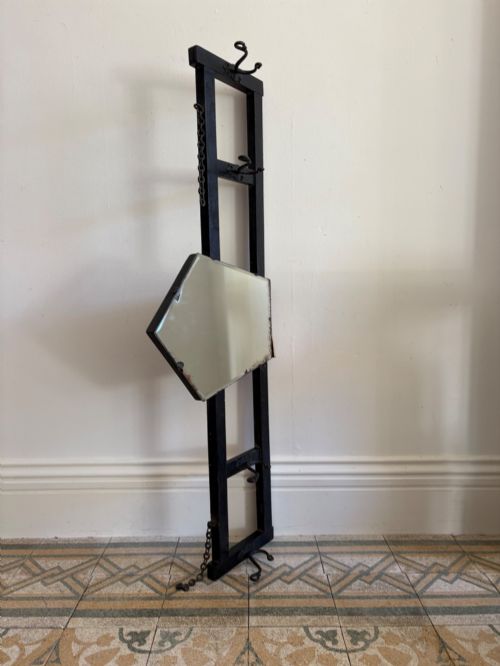
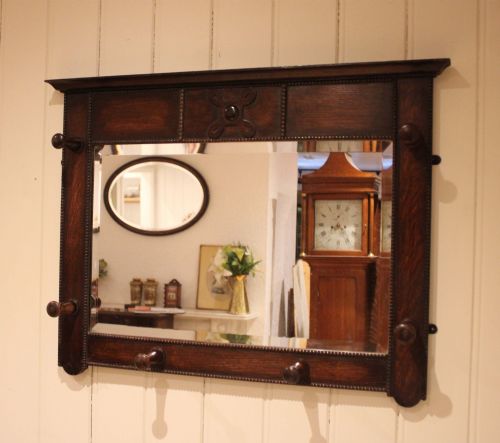


Vintage Mirror with Hooks
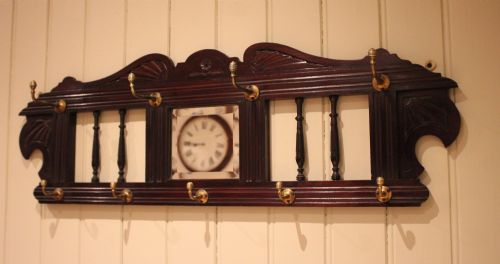
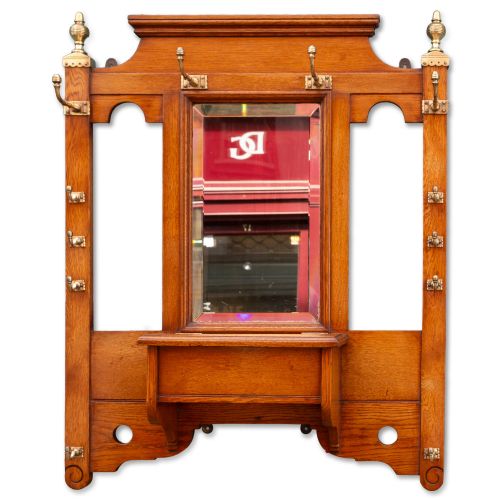
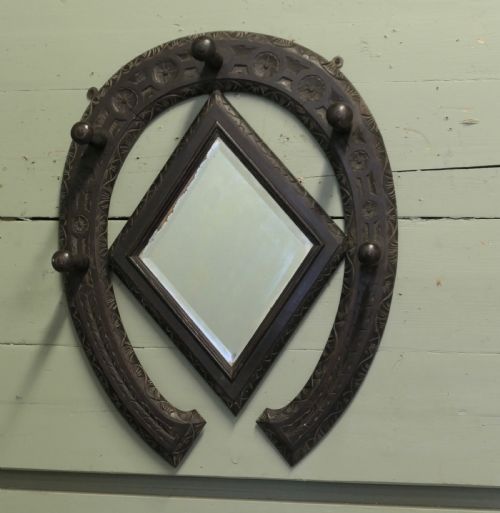
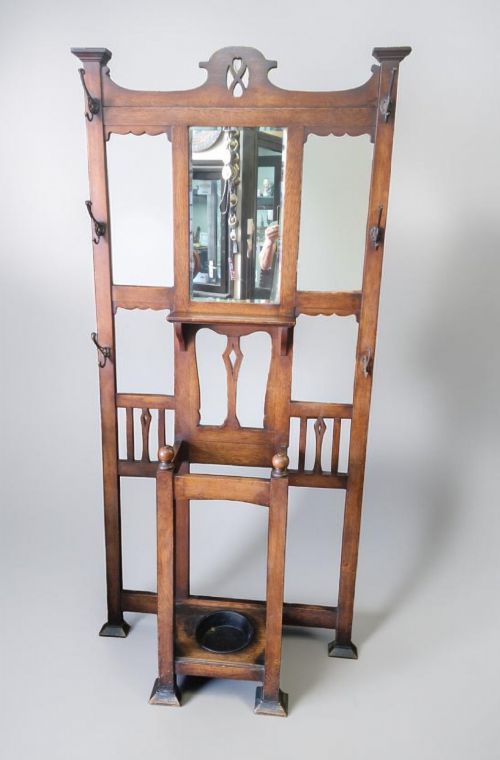
These vintage mirror with hooks pieces combine practical storage with polished glass, making them essential additions to an entrance hall.
Vintage Mirror with Hooks
A vintage mirror with hooks serves the dual purpose of checking one's reflection and hanging coats or hats in an entryway. Buyers searching this phrase encounter practical furnishings ranging from compact wall-mounted racks to substantial hall stands.
The pieces listed on this page span several distinct periods including the Victorian era, the Edwardian period, and the 1920s Art Deco movement. Common forms include oak wall units, cast iron frames, and French mirrored portmanteaus.
Most examples originate from British and French workshops, utilising regional timber and metalwork traditions. Whether looking for a simple oak frame with brass pegs or an elaborate hall stand, buyers find items designed for everyday utility.
Materials and construction
Makers built these pieces primarily using solid oak, glass, and metal elements such as brass, cast iron, wrought iron, and chrome. Timber frames provided sturdy backing for heavy glass plates and metal hardware.
Hardware construction involved casting and forging hooks from iron or brass, securing them directly to wooden panels or metal backplates. Original glass plates were set into rebates and held with timber mouldings or backing boards.
Vintage Mirror with Hooks Retail Price Guide 2026
Typical asking prices for vintage mirror with hooks among the pieces listed under this phrase on Sellingantiques today, from the lower quarter to the upper quarter. They describe what is for sale here now, not the wider market.
The inventory includes wall-mounted coat racks, hall stands, and vanity mirrors from British and French sources.
Evaluating craftsmanship
Quality in a vintage mirror with hooks rests upon the selection of timber, the weight of the metal hardware, and the clarity of the glass. Superior examples feature dense oak, robust cast or forged metal hooks, and bevelled glass plates.
Joinery and structural integrity distinguish finer workshops from utility pieces, with dovetail joints and sturdy backing boards ensuring longevity. The preservation of original surface finishes and matching hardware also dictates the standing of a piece.
Ellen E. Houghton of Minton
The Vintage Mirror with Hooks Glossary
- Portmanteau
- A large hall stand combining a mirror, coat hooks, umbrella stands, and sometimes a bench seat. These substantial pieces dominated grand entrance halls during the nineteenth century.
- Art Deco
- A design style emerging in the early twentieth century characterised by sleek geometric lines and modern industrial materials. Pieces from this period often incorporate chrome and streamlined ironwork.
- Hall Stand
- A piece of furniture designed for the hallway that integrates clothes hooks, a mirror, and storage compartments for walking sticks or umbrellas. They appear in oak and other domestic hardwoods.
- Gothic Revival
- An architectural and decorative style drawing inspiration from medieval design, featuring pointed arches and heavy ornamentation. Such items often utilise wrought iron and dark woods.
- Bevelled Glass
- Mirror glass with edges cut and polished to an angled slant, catching the light and adding depth. This treatment signifies finer glazing techniques.
Vintage Mirror with Hooks: Frequently Asked Questions
Where should I place a hall mirror in my home?
These pieces traditionally hang in entrance halls, mudrooms, or narrow corridors to provide a final check before heading outdoors. Their reflective surface bounces natural light around smaller spaces, making dark entryways feel larger.
Position the mirror at a comfortable eye level relative to the household, ensuring the coat hooks remain accessible for daily use. Keep them away from damp exterior walls to protect the timber and the backing of the mirror plate.
How do I clean an antique mirror plate?
Clean the glass gently using a soft microfibre cloth and a mild glass cleaner sprayed onto the cloth rather than directly onto the mirror. This prevents moisture from seeping behind the glass and damaging the silvered backing.
Avoid harsh chemical ammonia-based cleaners, which can erode the aged silvering and frame materials over time. Take care around the edges of older plates where the original seal is delicate.
How do I date an Edwardian hall stand?
Edwardian hall stands, produced roughly between the late Victorian period and the First World War, typically feature lighter oak timbers and simpler geometric lines than their Victorian predecessors. They often combine bevelled mirror glass with brass or copper-plated iron hooks.
Examine the construction methods, such as screw types and backboard fixings, which shifted toward standardised manufacturing during this era. Maker's marks or stamps on the timber or ceramic components can also provide precise chronological clues.