
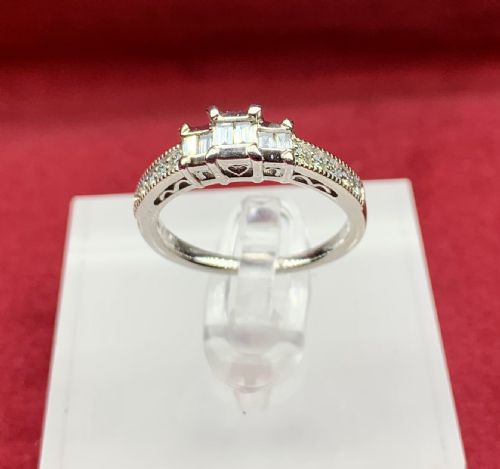
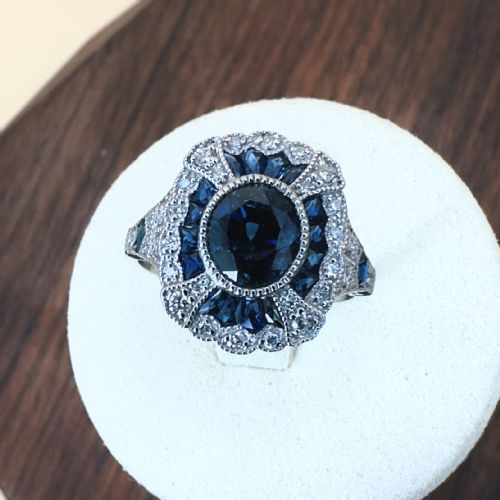


Vintage Milgrain Diamond Ring
A vintage milgrain diamond ring brings together delicate beaded metalwork and brilliant stones from the Edwardian era through the mid-twentieth century.
Vintage Milgrain Diamond Ring
A vintage milgrain diamond ring showcases historical craftsmanship, spanning periods from the Edwardian era through the 1920s, 1930s, 1940s, 1950s, 1960s, and later decades. These pieces primarily function as engagement rings, cocktail rings, and cluster rings.
Central diamonds frequently appear alongside contrasting gemstones such as sapphires, pink sapphires, emeralds, and rubies. The physical forms balance geometric lines with intricate floral and swirl motifs typical of early twentieth-century jewellery production.
Materials and construction
Master jewellers constructed these rings using platinum, 18ct gold, 18ct white gold, and 14ct platinum combinations to provide durable settings for precious stones. Platinum gained favour for its strength in holding delicate wirework and securely claw-setting gems.
The defining milgrain technique involves rolling a specialised tool along the outer edges of metal to raise a fine border of tiny, bead-like points. This textured edge frames the central stones and softens the transition between metal and skin.
Gems were cut by hand, predominantly utilising old cut, rose cut, transitional cut, and baguette stones. These older cutting styles produce softer, broader flashes of light compared to modern brilliant cuts.
The listings on this site span seven distinct periods, running from the Edwardian era and the 1920s through the 1960s and beyond.
Judging the work
Quality rests on the crispness and uniformity of the milgrainbeading along the metal edges, which should remain distinct and even under magnification. Hand-carved or hand-milled borders demonstrate superior precision compared to worn or softly cast examples.
The integration of the stones into the metal design dictates the overall standard of the piece, particularly how securely the old cut diamonds and coloured gems align with the geometric framework. Well-matched stone sizes and symmetrical cluster arrangements elevate the status of a ring.
The integrity of the original metalwork, including undamaged shoulders, clean gallery pierced work, and substantial shank thickness, distinguishes better-preserved examples from those altered or heavily worn over decades of use.
The Vintage Milgrain Diamond Ring Glossary
- Milgrain
- A decorative jewellery technique featuring a raised, beaded border along the edges of metal settings. This detail adds a refined, textural frame to the stones.
- Old cut
- A diamond cutting style prevalent in older jewellery before the standardisation of the modern brilliant cut. These stones typically feature higher crowns, smaller tables, and open culets.
- Cluster ring
- A ring design where a central gemstone is surrounded by a cluster of smaller accent stones, often forming a floral or geometric shape.
- Trilogy ring
- A three-stone ring arrangement representing the past, present, and future. The stones are usually graduated or matched in size.
- Transition cut
- A diamond cut used during the shift from old European cuts to modern brilliant cuts, displaying characteristics of both styles.
Vintage Milgrain Diamond Ring: Frequently Asked Questions
What is milgrain on a ring?
Milgrain refers to the tiny, raised metal beads that edge the settings of antique and vintage jewellery. The technique creates a textured, decorative border that softens the metal lines.
Craftsmen apply this detail manually using a specialised knurling tool along the platinum or gold edges. It serves as a hallmark of period authenticity and meticulous hand-finishing.
How do I date a vintage diamond ring?
Dating relies on combining the stylistic hallmarks, such as Art Deco geometry or Edwardian garland motifs, with the specific gemstone cuts used. Old cut diamonds and transitional cuts provide strong chronological clues.
Metal choices also help narrow the timeframe, as platinum dominated the early decades while white gold and yellow gold saw heavier use in later mid-century periods.
Are these rings suitable for daily wear?
These historical rings tolerate daily wear provided the settings receive regular checks by a professional jeweller. Platinum and 18ct gold offer sufficient durability for everyday use.
Owners should remove delicate milgrain or gemstone settings during heavy manual tasks to protect the fine metalwork and prong integrity.
What is an old cut diamond?
An old cut diamond is a stone shaped by hand before modern machinery standardised cutting angles and proportions in the mid-twentieth century. These stones often feature smaller tables and larger facets.
They produce a distinctive, softer candlelight sparkle rather than the intense white brilliance of modern cut stones.