



Vintage Liquor Decanter Stand
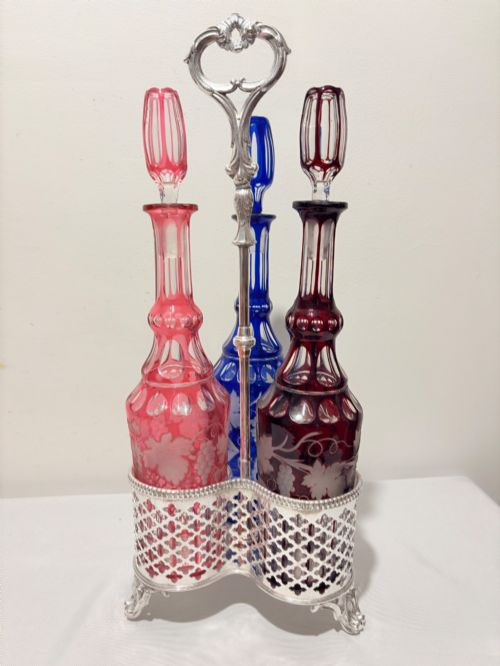
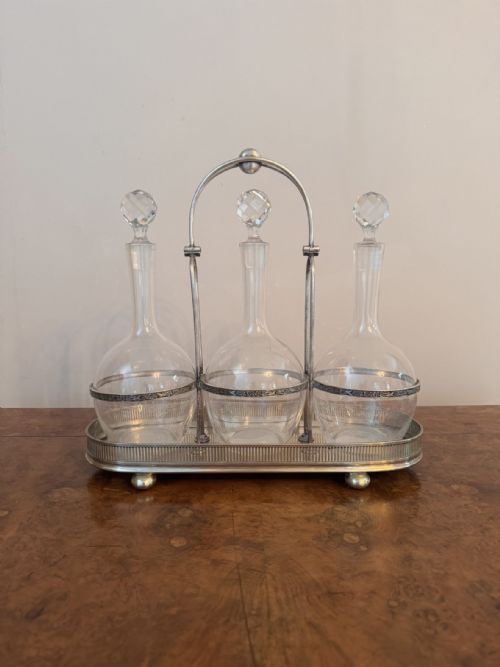
These vintage liquor decanter stand options organise your hospitality with the weighty gleam of silver plate and crystal.
Vintage Liquor Decanter Stand
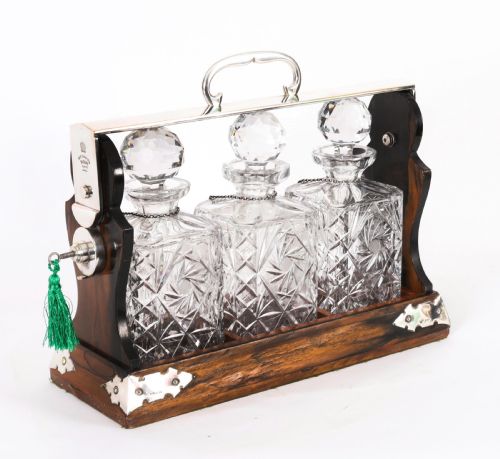
A vintage liquor decanter stand gathers heavy glass vessels in a secure metal or wooden frame designed for sideboard service. These pieces range from open cruet frames to lockable tantalus mechanisms that keep spirits safe from unauthorised pours.
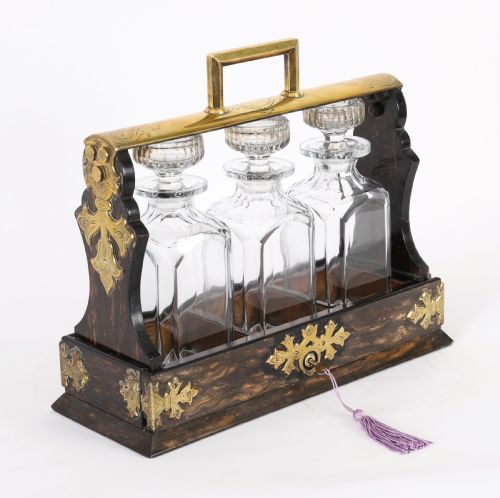
You will most frequently meet Victorian and Edwardian examples formed from silver plated metal fitted around cut crystal bottles. Oak and coromandel wood frames also appear, often housing three distinct bottles for whisky, gin and brandy.
Earlier Georgian and 18th century manifestations exist in mahogany, while later nineteenth-century work leans heavily towards robust oak marquetry and elaborate silver plating. Each variant serves the fundamental purpose of displaying and dispensing table drinks with formal symmetry.
Materials and construction
Makers built these frames using substantial hardwoods like oak and coromandel wood, frequently mounting them with brass hardware or enclosing them in lockable bars. Silver plating and Old Sheffield Plate techniques provided a durable, bright metallic finish over base metals.
The accompanying vessels relied on heavy cut glass and cut crystal, shaped with deep geometric facets to catch the light. Woodwork often incorporated marquetry stringing, while metalwork utilised secure locking mechanisms integrated directly into the handle supports.
Vintage Liquor Decanter Stand Retail Price Guide 2026
Typical asking prices for vintage liquor decanter stand among the pieces listed under this phrase on Sellingantiques today, from the lower quarter to the upper quarter. They describe what is for sale here now, not the wider market.
Listings feature oak, coromandel wood, and mahogany frames paired with cut crystal and silver plate across Victorian, Edwardian, and Georgian periods.
Judging the build
Quality rests in the density of the timber framing and the crispness of the cut glass facets on the bottles. Heavier gauge silver plating and fully operational locking bars with matching keys distinguish superior workshop output.
Finer pieces show precise cabinetry with marquetry stringing and uncompromised crystal free of chips. The harmony between the fitted bottles and the frame indicates whether the set was conceived as a unified whole.
Betjemann’s·Elkington·Hukin and Heath
The Vintage Liquor Decanter Stand Glossary
- Tantalus
- A locking drink stand that secures decanters within a wooden or metal framework so the stoppers cannot be removed without a key. This clever mechanism displays the contents while preventing unauthorised access.
- Silver Plate
- A metallic coating applied to a base metal foundation to create a lustrous surface. It gives the appearance of solid silver while maintaining structural rigidity.
- Coromandel Wood
- A dense, heavily figured tropical hardwood prized for dark brown colouration and dramatic grain patterns. Cabinetmakers used it for luxury nineteenth-century boxes and frames.
- Cruet
- A fitted stand holding multiple small glass bottles or decanters for liquids and condiments. These frames often pre-date the larger spirit tantalus.
- Old Sheffield Plate
- An early fusing technique where a thin sheet of silver is fused to a copper core. This method produces a distinct edge where the base metal shows through wear.
Vintage Liquor Decanter Stand: Frequently Asked Questions
What is a tantalus?
A tantalus is a specific type of lockable decanter stand that secures the stoppers beneath a metal bar. This design prevents people from pouring drinks without unlocking the mechanism.
First patented in the nineteenth century, these stands became staple fixtures in gentleman's studies and dining rooms. The name derives from the mythological figure punished by water just out of reach.
How do I date a stand?
Dating relies on combining the stylistic clues of the woodwork, metal mounts, and the cut of the glass. Victorian and Edwardian pieces often feature heavy oak frames or elaborate silver plating.
Earlier eighteenth-century examples use mahogany, while late nineteenth-century pieces frequently employ coromandel or brass-mounted oak. Maker marks on the silver plate help narrow the decade of production.
Are the decanters original?
Many sets retain their matched cut crystal or cut glass bottles, shaped precisely to fit the slots in the frame. Because bottles suffered breakage over generations, replacements do occur.
Checking that the facet cuts on the glass match the age and wear of the metal frame helps confirm originality. A snug fit in the wooden base is another positive indicator.
How were these stands used?
Hosts placed these stands on sideboards or dining tables to serve spirits like whisky, gin, and brandy after meals. The locking mechanism allowed hosts to secure expensive imported alcohol from household staff.
They functioned as both practical barware and decorative centrepieces that demonstrated the household's social standing. Keys were kept securely by the master of the house.