




Vintage Leather Bucket
These vintage leather bucket examples bring tactile history into a room, offering robust construction and rich patination.
Vintage Leather Bucket
When you search for a vintage leather bucket, you are exploring a range of utilitarian vessels spanning the eighteenth, nineteenth, and early twentieth centuries. These items originated as functional equipment for firefighting, naval ammunition storage, and military transport before finding new life in domestic interiors.
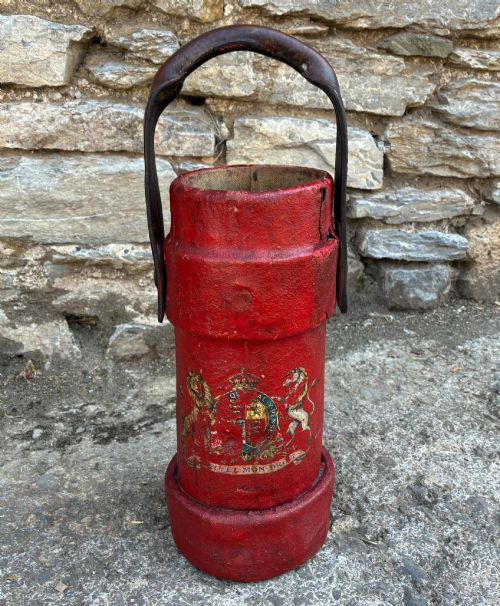
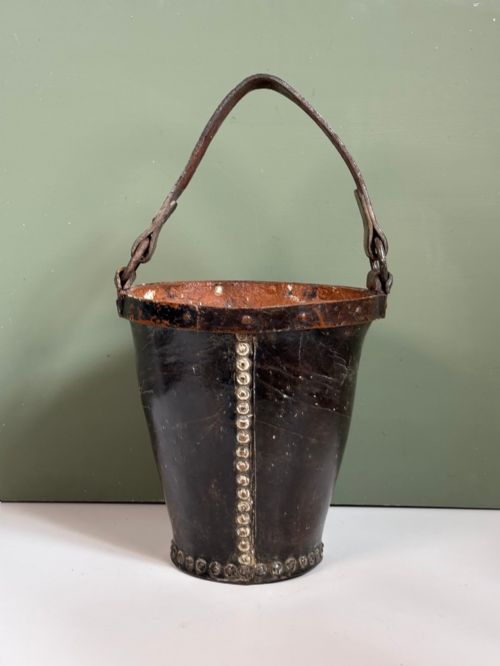
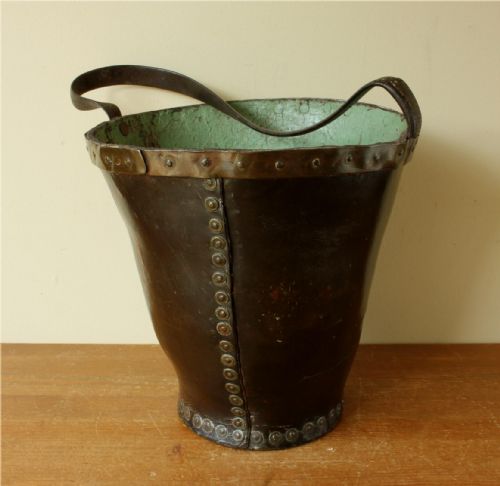
The versions you are most likely to meet on this page include Georgian fire buckets with hand-painted coats of arms or armorial crests, and boiled leather vessels that now serve as umbrella stands or waste paper baskets. Hat boxes and double hat cases also appear among the selections, alongside First World War cordite shell carriers adapted for modern hallway use.
The origins stretch across English country houses, Dutch workshops, and maritime settings, reflecting diverse periods from the seventeen-seventies through to the nineteen-forties. Each object carries the marks of its previous working life, shaped by materials that age with distinct character.
How they were made
Makers shaped thick animal hides using traditional techniques such as boiling the leather to create rigid, durable walls capable of holding water or enduring military campaigns. Copper studs, brass rings, and metal rivets reinforced the seams and structural points.
Surfaces were often treated with protective paint or left as soft leather coverings, sometimes displaying intricate heraldic crests applied by hand. Oak bases and internal metal frames provided additional stability for taller forms like umbrella stands and shell carriers.
Vintage Leather Bucket Retail Price Guide 2026
Typical asking prices for vintage leather bucket among the pieces listed under this phrase on Sellingantiques today, from the lower quarter to the upper quarter. They describe what is for sale here now, not the wider market.
Periods represented span from the eighteenth century through to the nineteen-forties.
What varies in quality
The distinction between standard utility items and exceptional examples lies in the survival of original painted armorial details and the integrity of the stitched seams. Early specimens from the eighteenth century demonstrate superior leather thickness and careful hand-tooling.
Proportion and form dictate desirability, with well-balanced proportions in tall umbrella stands commanding attention. The depth of the natural patination and the presence of authentic historical fixtures, such as original brass handles, elevate the stature of a piece.
JW Allen
The Vintage Leather Bucket Glossary
- Boiled leather
- Leather treated by heating in water or wax to make it stiff and durable. This historical technique created waterproof vessels suitable for firefighting and military transport.
- Armorial crest
- A design depicting a coat of arms or heraldic symbols. These were frequently painted onto fire buckets to identify the estate or regiment.
- Cordite bucket
- A cylindrical container originally designed to transport propellant charges for naval or military artillery. Their deep proportions make them well suited for holding walking sticks.
- Top hat case
- A rigid leather container shaped to protect formal headwear during travel. Multi-tier versions accommodate more than one hat alongside accessories.
Vintage Leather Bucket: Frequently Asked Questions
What were vintage leather buckets used for?
These vessels served demanding practical roles, from carrying water to extinguish fires in grand estates to storing cordite shells on military campaigns.
Over time, many transitioned into domestic service as umbrella stands, waste paper baskets, and decorative storage containers.
How do I care for leather buckets?
Keep these items away from direct sunlight and excessive heat to prevent the historic hide from drying out or cracking.
An occasional application of suitable leather balsam helps maintain flexibility and preserves the natural surface patination.
How do I date a leather bucket?
Dating relies on examining the construction methods, such as hand-stitching techniques, rivet styles, and the type of metal reinforcement used.
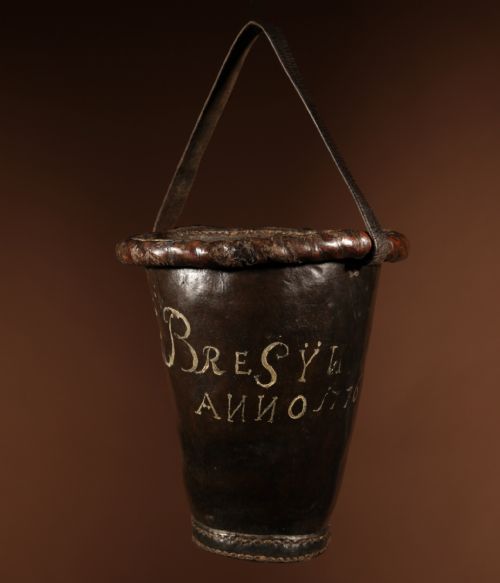
Painted armorial crests, maker stamps, and dated inscriptions also provide reliable clues to the period of origin.
Are these buckets waterproof?
While originally designed to hold water for firefighting, historic leather can dry out and lose its complete impermeability over the centuries.
It is wise to use a modern internal liner if you intend to use one as an umbrella stand or plant holder.