





Vintage Ladder Back
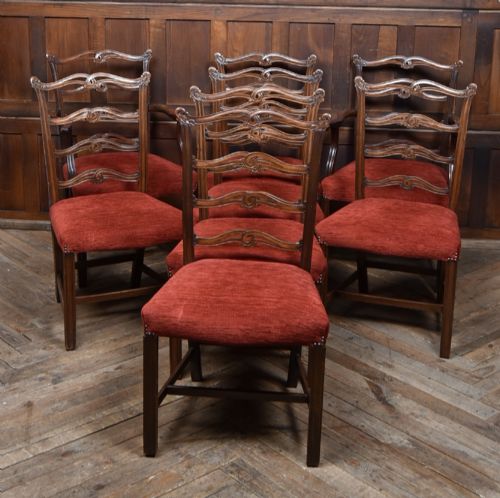
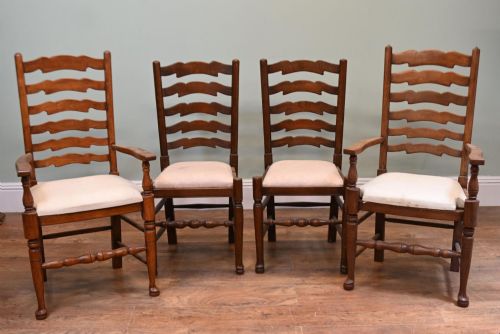
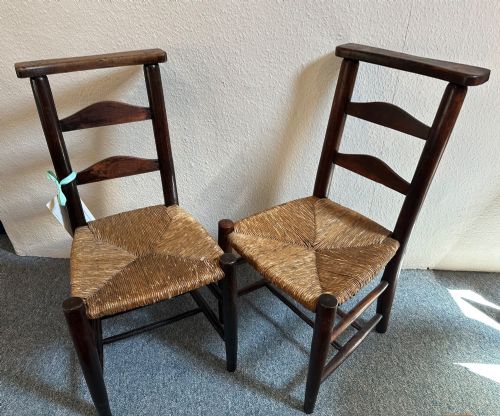
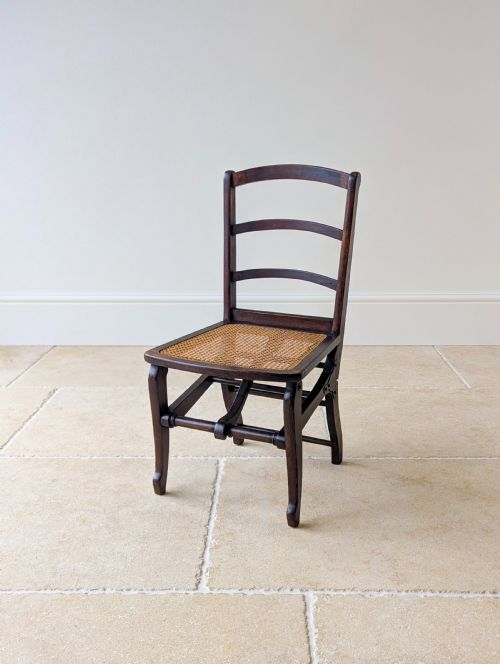
When you select vintage ladder back, you are choosing traditional seating built with horizontal slats, valued for robust country character and clean geometric lines.
Vintage Ladder Back
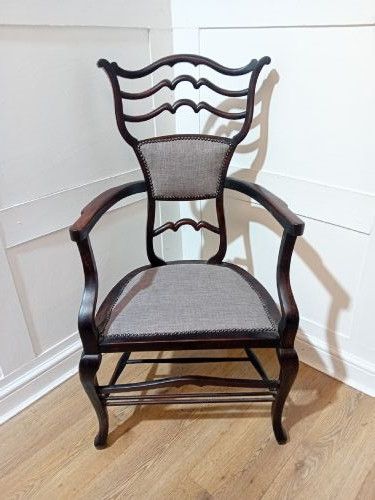
A vintage ladder back primarily consists of wooden dining chairs, armchairs, and rocking chairs featuring horizontal cross-rails set between upright posts. These pieces span periods from the nineteenth century through the early twentieth century, drawing on English Country, Arts and Crafts, and French Provincial traditions.
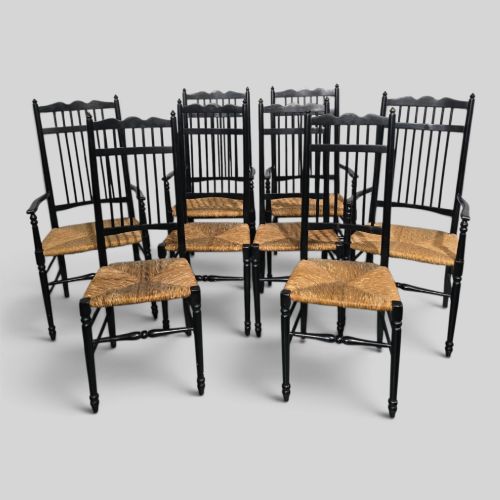
The version most commonly met on this page is the sturdy oak, elm, or mahogany dining chair, often fitted with a woven rush seat. Regional variations also include high chairs, library steps, and rocking chairs produced in ash or hardwood.
The form developed from vernacular rural seating into a deliberate aesthetic choice during the Arts and Crafts movement. Makers adapted the simple slatted frame for both rustic kitchens and formal dining rooms.
Materials and construction methods
Timbers such as oak, elm, mahogany, and ash form the structural frames of these pieces. Hardwoods provide the tensile strength required for slender upright posts and curved back rails.
Rush, leather, and fabric serve as the primary seating materials. Rush is tightly woven over wooden frames to create a durable, textured pad, while leather and fabric are utilised on upholstered pads.
Traditional joinery relies on turned spindles, mortise and tenon joints, and pegged connections. Steam bending shapes the curved uprights and horizontal slats without weakening the grain.
Vintage Ladder Back Retail Price Guide 2026
Typical asking prices for vintage ladder back among the pieces listed under this phrase on Sellingantiques today, from the lower quarter to the upper quarter. They describe what is for sale here now, not the wider market.
Certain library steps double as folding armchairs, offering a practical solution for reaching high bookshelves before sitting down to read.
Factors determining quality
The integrity of the timber framing dictates longevity. Solid hardwoods with well-preserved joinery and minimal replacement parts represent the higher end of the scale.
The precision of the rush weaving or upholstery work distinguishes standard workshop output from finer pieces. Tight, uniform strands demonstrate superior craftsmanship.
Provenance and maker attribution elevate certain examples above standard utility furniture. Marked pieces from notable workshops command greater interest among collectors.
Lawrence Neal·Liberty and Co·Heals
The Vintage Ladder Back Glossary
- Ladder back
- A chair design characterised by horizontal slats set between the rear upright posts, mimicking the appearance of a ladder. This form has roots in vernacular European furniture.
- Rush seat
- A seating surface woven from dried marsh grasses or synthetic substitutes over a wooden frame. It provides a resilient and traditional platform.
- Carver arm
- An armchair designed to match a set of single dining chairs, typically positioned at the head of a table. The term often describes vernacular armchairs with wooden armrests.
- Spindle back
- A variation of slatted seating that incorporates vertical turned wooden rods instead of horizontal rails. These spindles support the backrest.
Vintage Ladder Back: Frequently Asked Questions
How do I clean a rush seat?
Dust the woven surface gently using a soft brush attachment on a vacuum cleaner. Avoid applying excess water, as moisture causes dried marsh grasses to rot and split.
For stubborn marks, wipe lightly with a damp cloth and dry immediately with a towel. Keep the room humidity balanced to prevent the natural fibres from becoming brittle.
Are these chairs suitable for daily dining?
Many solid hardwood examples remain robust enough for everyday use around a kitchen or dining table. Check the stability of the joints and the tension of the rush before putting them into heavy service.
Pairing antique seating with modern tables requires checking seat heights to ensure comfortable clearance. Add subtle felt pads to the feet to protect hard flooring.
How do I date a ladder back chair?
Examine the tool marks, timber species, and construction methods to establish an approximate period. Hand-turned spindles and pegged joints typically indicate nineteenth-century or earlier vernacular production.
Later Arts and Crafts interpretations often bear maker stamps or display cleaner machine-sawn uniformity. Compare the turning style against documented regional furniture timelines.
What is a carver chair?
A carver is an armchair designed to match a set of single dining chairs. They were traditionally placed at the head and foot of a dining table.
The term originates from the eighteenth century when such chairs were wider to accommodate bulky clothing. Today, they function as standalone reading chairs or end-of-table seating.