
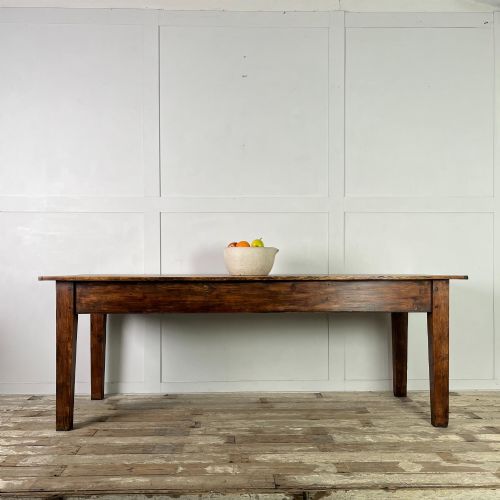
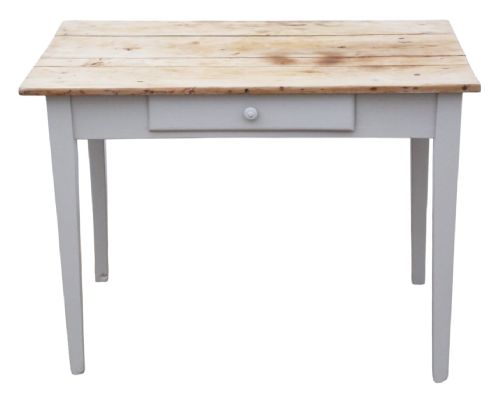


Vintage Kitchen Worktable
A vintage kitchen worktable brings practical utility and honest character to a room, built to handle daily domestic labour.
Vintage Kitchen Worktable
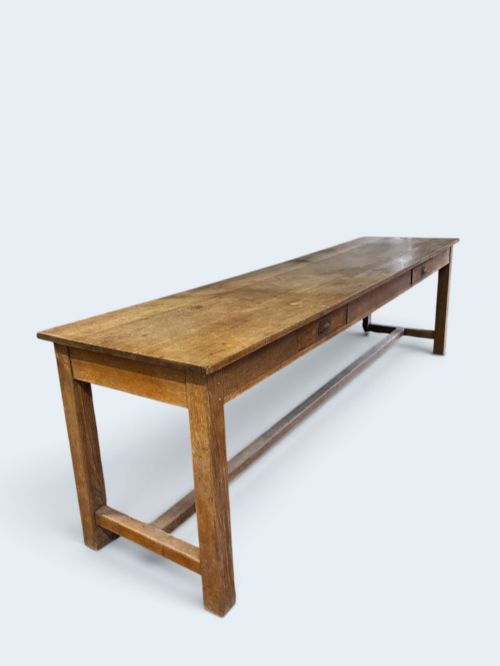
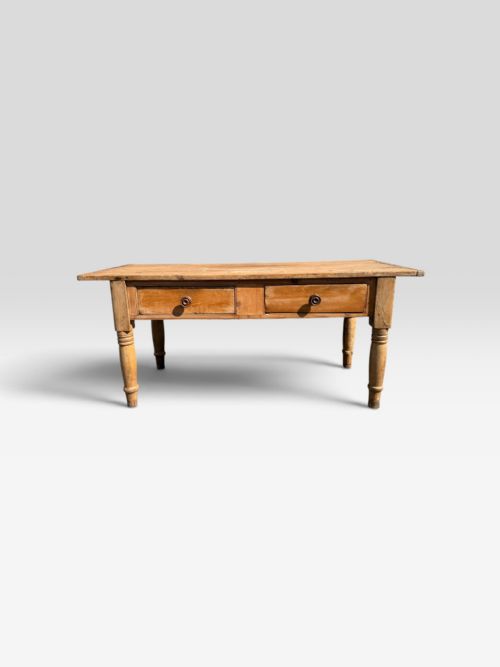
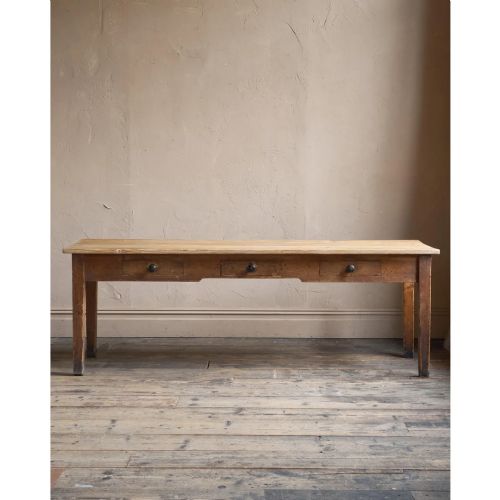
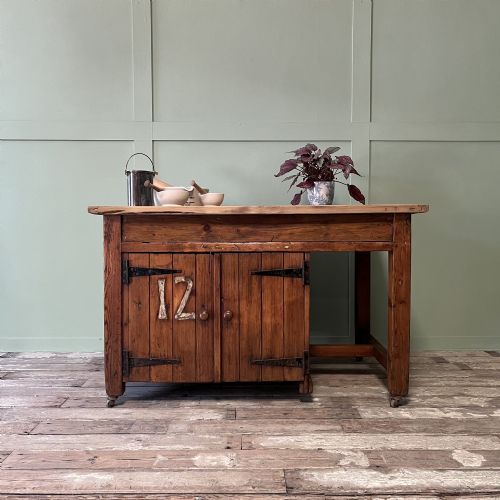
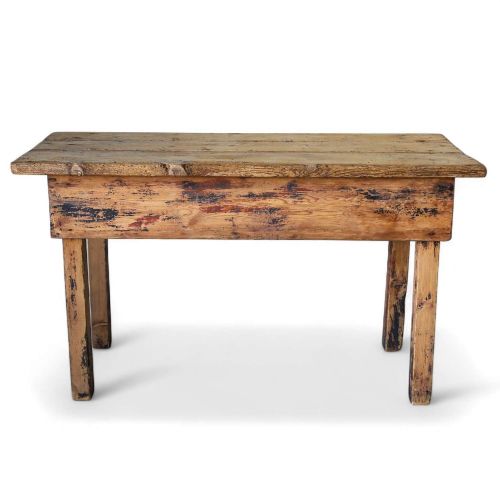
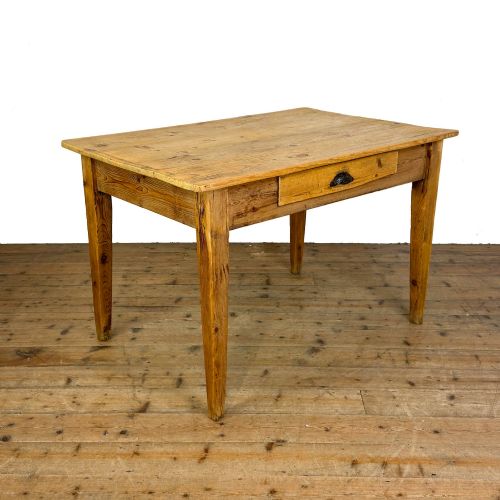
A vintage kitchen worktable is a robust surface designed for food preparation, baking, and scullery tasks, spanning dining tables, prep tables, workbenches, and drapers tables. You will most frequently encounter pine and oak examples dating from the nineteenth century and the early twentieth century.
How they were made
Construction relies heavily on solid pine, oak, and pitch pine timbers, frequently paired with scrubbed tops designed for heavy daily cleaning. Iron, cast iron, and bronze mounts provide structural reinforcement and functional hardware on industrial and workshop variants.
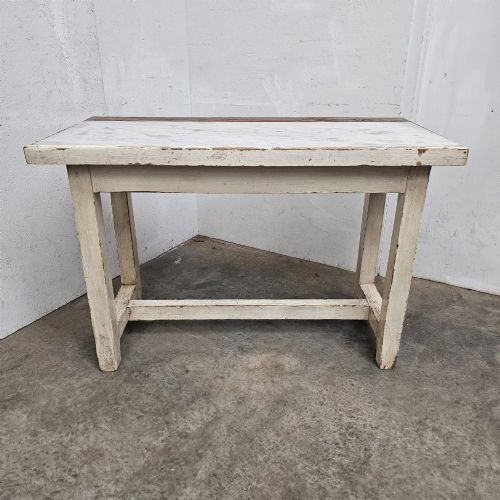
Surfaces show various finishes including original paint, bleached wood, and polished or scrubbed timber. Joinery methods prioritise stability and durability to withstand the rigorous demands of kitchen and workshop use.
The object types span dining tables, prep tables, drapers tables, and artisans workbenches.
What varies in quality
The integrity of the timber and the honesty of the surface wear determine the standing of a piece, distinguishing honest working patination from later alterations. Original fixtures, such as maker mounts or integrated drawers, elevate the character.
Proportion and scale dictate utility, with larger farmhouse and drapers tables offering greater presence than smaller prep surfaces. The balance between structural soundness and retained signs of active domestic history defines the merit of each table.
The Vintage Kitchen Worktable Glossary
- Scrub-top
- A wooden tabletop cleaned repeatedly with water and an abrasive to maintain hygiene, leaving a pale, textured grain. This surface treatment is typical of nineteenth-century food preparation tables.
- Bakers table
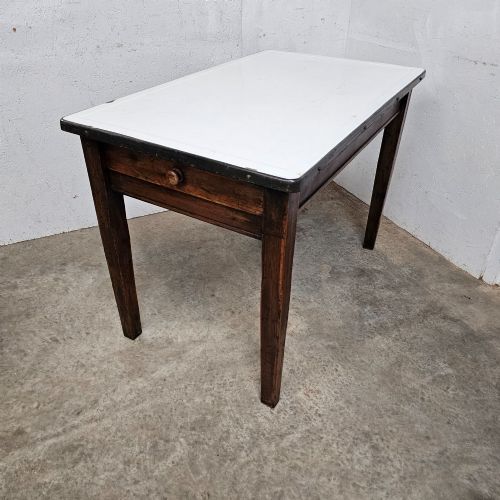
- A heavy table designed for rolling dough, often featuring a marble, enamel, or thick wooden top. These pieces originated in commercial bakeries and domestic sculleries.
- Drapers table
- A long, sturdy table originally utilised in fabric shops for measuring and cutting cloth. Their generous proportions make them suitable for modern kitchen islands and serving spaces.
- Pitch pine
- A dense, resinous softwood sourced mainly from North America, valued for durability and distinct grain patterns. It was frequently used for heavy-duty furniture during the nineteenth century.
- Workbench
- A heavy-duty table adapted from trade workshops for domestic food preparation. These pieces often incorporate vises, tool wells, and robust timber construction.
Vintage Kitchen Worktable: Frequently Asked Questions
How were these tables used originally?
They served as central hubs for domestic labour, including rolling dough, chopping ingredients, and washing up in sculleries.
Trade variants were utilised by bakers, butchers, and drapers for specific daily tasks requiring sturdy, reliable surfaces.
How do I care for a scrub-top table?
Scrub-top tables tolerate regular cleaning with warm water and traditional methods to maintain the pale, untreated timber finish.
Avoid harsh chemical sealants if you wish to preserve the authentic texture and historical patination of the wood.
How can I date a worktable?
Dating relies on observing construction methods, timber types, and the presence of period hardware such as cast iron or bronze mounts.
Nineteenth-century examples often feature hand-cut joinery and heavy pitch pine or oak, while early twentieth-century pieces may include enamel inserts or painted finishes.