

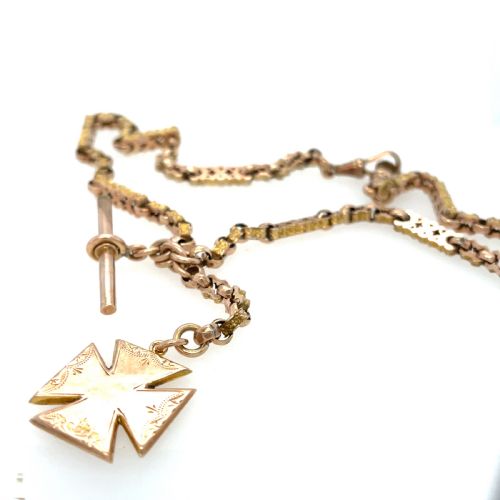


Vintage Jewellery Cross Pendant
These vintage jewellery cross pendant pieces span Victorian to mid-century designs in gold, silver, and precious stones.
Vintage Jewellery Cross Pendant
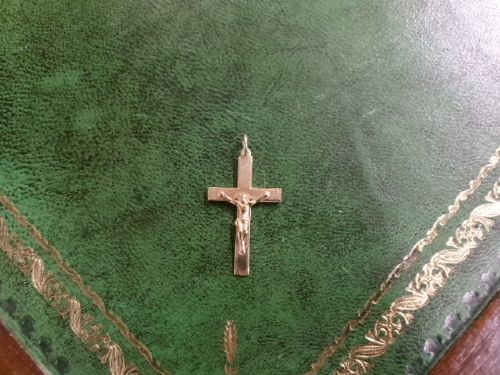
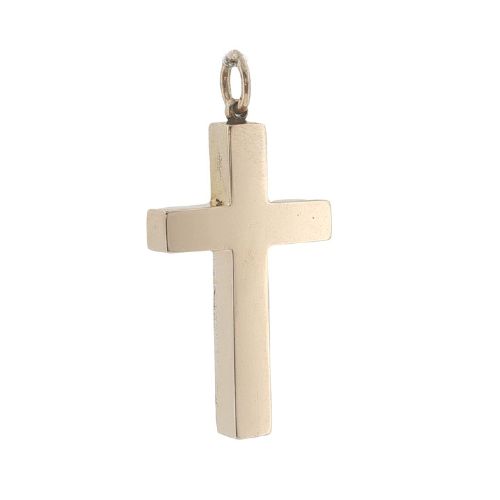
When you search for vintage jewellery cross pendant items, you encounter pieces that range from late nineteenth-century Victorian examples to mid-century modern designs. These objects serve primarily as devotional or decorative neckwear, encompassing straightforward Latin crosses, elaborate Maltese styles, and radiant sunburst medals.
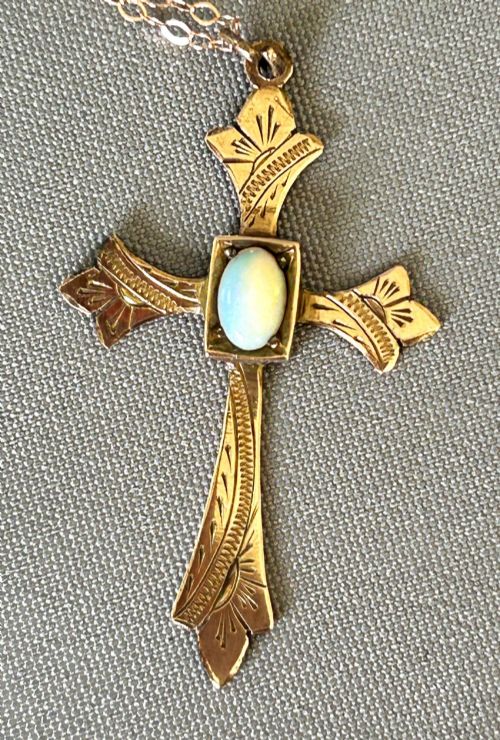
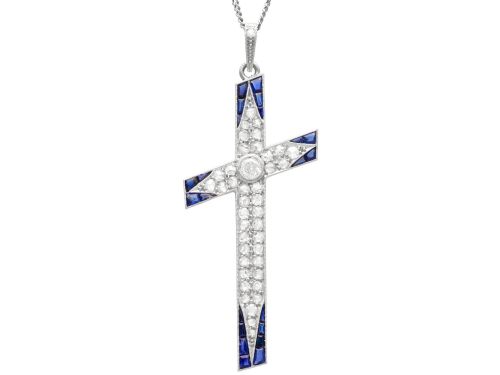
The selections on this page are most commonly Edwardian and Victorian gold engravings, alongside mid-century diamond and sapphire arrangements. They appear as pendants, necklaces, brooches, and charms designed to be worn close to the heart on chains or ribbons.
How they were made
Goldsmiths utilised 9ct gold, 15ct gold, 18ct yellow and white gold, and sterling silver as the foundation metals for these crosses. Stones such as diamonds, sapphires, rubies, amethysts, blue topaz, moonstones, and pearls are flush-set, grain-set, or mounted in claw settings across the face of the metal.
Detailing involves hand engraving, black and red enamel work, and the application of marcasite clusters. Makers also incorporated cast sunburst motifs and pierced openwork, particularly in French vintage and Edwardian workshop productions.
Vintage Jewellery Cross Pendant Retail Price Guide 2026
Typical asking prices for vintage jewellery cross pendant among the pieces listed under this phrase on Sellingantiques today, from the lower quarter to the upper quarter. They describe what is for sale here now, not the wider market.
Some crosses double as brooches, allowing a wearer to pin their faith directly to a lapel.
What varies in quality
The distinction between standard and exceptional pieces rests upon the weight of the precious metal and the precision of the hand-engraving or stone-setting. Heavier gold gauges and substantial platinum mounts indicate higher initial investment and durability.
Quality also shows in the uniformity and cut of the diamonds, sapphires, or pearls utilised, where matched stones and clean mounting bezels elevate the overall execution of the cross.
Henry Cook
The Vintage Jewellery Cross Pendant Glossary
- Marcasite
- Pyrite crystals cut and polished into small facets, then set closely together in silver to create a sparkling, dark metallic border. This technique was popular in Victorian and mid-century silver jewellery.
- Maltese Cross
- A cross form with four arrowhead-shaped arms converging at a central point, often associated with French vintage medals and mid-century diamond-encrusted designs.
- Rose Cut
- An antique diamond cut featuring a flat base and a domed crown with triangular facets that resemble an unopened rosebud. It appears frequently in Georgian, Victorian, and early twentieth-century pieces.
- T-Bar
- A small horizontal metal bar attached to the centre of an Albert chain, designed to anchor a pocket watch or fob. It occasionally accompanies Edwardian pendant and chain assemblies.
- Hallmark
- An official stamp or series of marks applied to precious metals by an assay office, indicating purity and origin. British pieces often bear town marks such as Birmingham alongside date letters.
Vintage Jewellery Cross Pendant: Frequently Asked Questions
How do I date a cross pendant?
Dating relies on hallmarks, metal purity standards, and the cut of any set stones. Victorian and Edwardian pieces often display specific assay office marks or distinct hand-engraved motifs.
Mid-century items tend to feature whiter gold alloys and modern brilliant-cut diamonds, distinguishing them from nineteenth-century rose cut stones and yellow gold foundations.
What metals are used in these pendants?
The materials span various purities of gold, including 9ct, 15ct, 18ct, and 24ct yellow, rose, and white gold, alongside platinum and sterling silver. Coloured enamel, marcasite, and multi-gemstones frequently supplement the metal structures.
Silver is commonly paired with marcasite and moonstones, while gold underpins heavier diamond and sapphire compositions.
Are these pieces suitable for everyday wear?
Most solid gold and platinum cross pendants withstand regular daily use when paired with a secure chain. Lighter stamped components or pieces set with pearls require more careful handling.
Historic silver and enamel items benefit from removal during physical activities or swimming to preserve their surface decoration.
Can these pendants be worn on chains?
Pendants include integrated loops or fixed bails designed to accommodate a range of chain thicknesses. Many pieces originate from periods when they hung from Albert chains or chatelaines.
Modern buyers easily slip them onto contemporary gold or silver chains to suit personal neckwear preferences.