


Vintage Gold Trinket
These vintage gold trinket pieces range from delicate 19th-century snuff boxes to charming mid-century pendants, offering small-scale elegance for holding precious keepsakes.
Vintage Gold Trinket
A vintage gold trinket selection encompasses small personal containers, jewellery boxes, and decorative dishes created across the nineteenth and twentieth centuries. These objects reflect various domestic uses, from holding snuff and tobacco to storing daily rings and pills.
The assortment includes pieces shaped by periods such as the Georgian, Victorian, Edwardian, and Art Deco eras. Makers utilised techniques spanning hand painting, casting, and lacquering to form vessels in brass, ormolu, porcelain, and gold.
Buyers encounter items originating from English, French, German, Russian, and Asian workshops. Forms vary from simple lidded pots and cigarette cases to elaborate gilt bronze containers and charm pendants.
How they were made
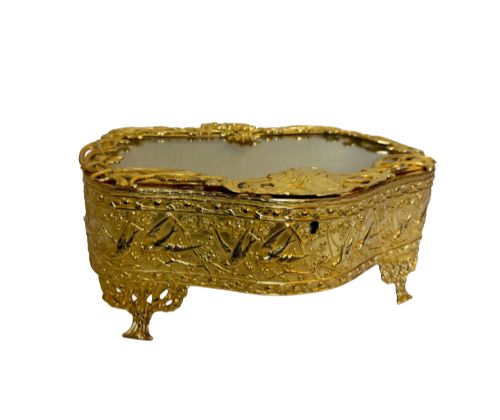
Metals such as brass, ormolu, and sterling silver form the structural bodies of many boxes, often finished with gold leaf or silver gilt. Workshops applied these gilded surfaces to enrich the appearance of everyday receptacles.
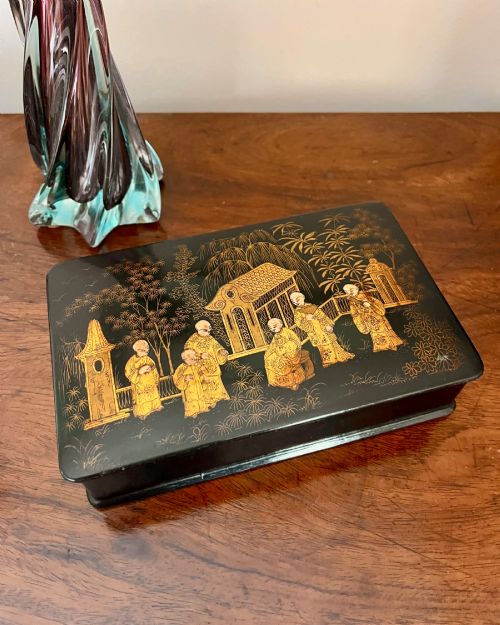
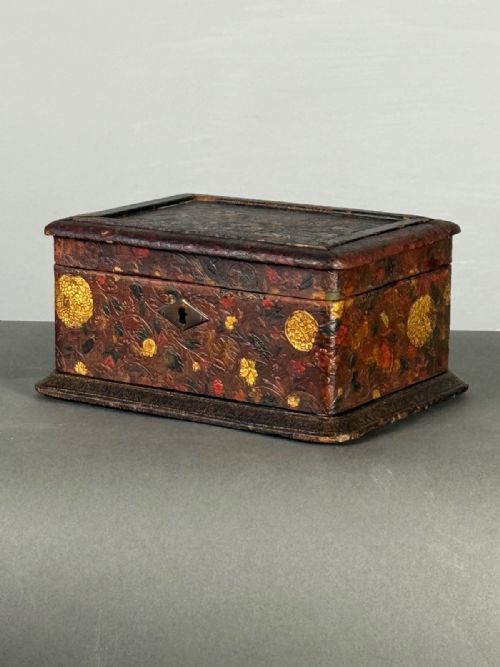
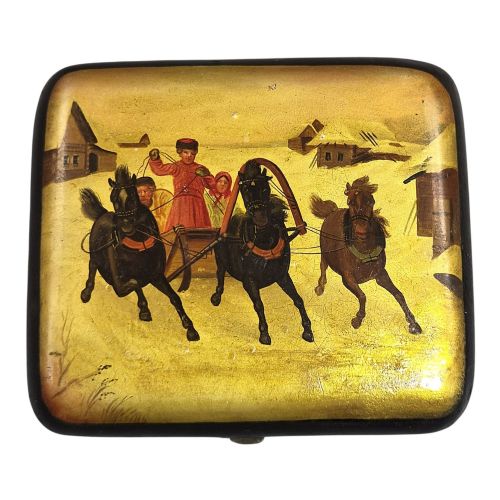
Organic and composite materials like lacquer, leather, wood, papier-mâché, and painted porcelain appear frequently. Artisans decorated these surfaces through hand painting, intricate inlays, and chiselled metalwork.
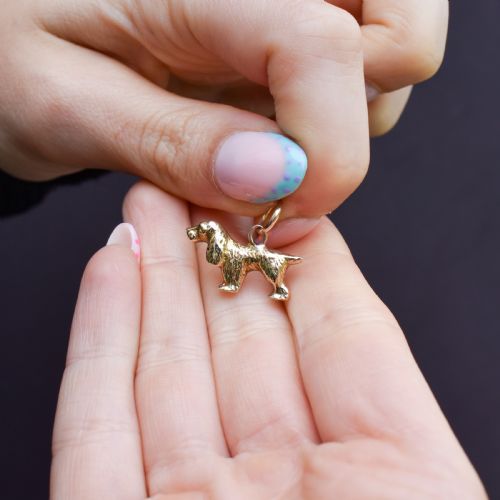
Precious metals including nine-carat and fourteen-carat gold constitute smaller wearable items like charms and pendants. Jewelers shaped these components through casting and delicate engraving.
What varies in quality
The distinction between standard containers and superior examples lies in the precision of the surface decoration and the integrity of the materials. Hand-painted miniatures, chiseled bronze mounts, and crisp gilding elevate a piece above routine mass production.
Maker marks and signatures provide clear indicators of origin and workshop standard, linking specific objects to established French, German, or English houses. The weight and purity of the gold or silver content similarly influence the standing of an item.
The complexity of the construction, such as fitted interior trays or multi-material inlays, demonstrates the original artisan's skill. Well-preserved lacquer and intact enamel work maintain visual depth that worn surfaces lose over time.
Susse Freres Paris·Erhard and Sohne·Hermes Paris·Van Cleef And Arpels·Cartier London·Edward Farrell·Royal Worcester·Vishnyakov Workshop
The Vintage Gold Trinket Glossary
- Ormolu
- A gilded bronze technique popular in French decorative objects. Artisans applied ground gold amalgam to bronze to achieve a rich golden finish on mounts and boxes.
- Vinaigrette
- A small ornamental box containing a perforated grille. These containers held a sponge soaked in aromatic vinegar for use during the Georgian and Victorian periods.
- Papier-mâché
- A composite material made from paper pulp or reinforced paper sheets mixed with oil and resin. Makers shaped and lacquered this substance to create durable, highly decorated boxes.
- Toleware
- Metalware painted and enamelled in a japanning style. English and European workshops produced these tin-plated items for domestic storage and serving.
- Chinoiserie
- A European artistic style reflecting Chinese aesthetic influences. Artisans used this decorative approach on lacquer and painted wooden boxes.
Vintage Gold Trinket: Frequently Asked Questions
What were small antique boxes used for?
These small vessels served specific personal functions in daily domestic life. Owners kept them on dressing tables or carried them to hold snuff, tobacco, stamps, and small jewellery.
Over successive periods, their uses expanded from functional pocket containers for men to decorative vanity items for women. They remained popular accessories into the mid-twentieth century.
How do I identify an Edwardian box?
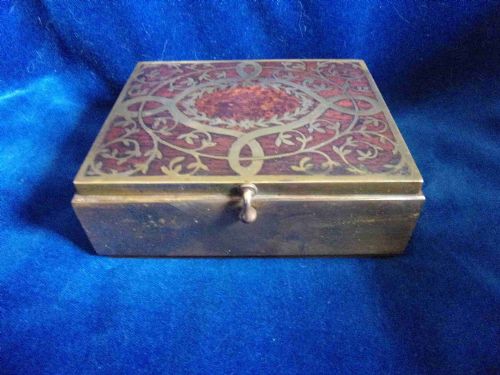
Edwardian items often display lighter proportions and neoclassical motifs that distance them from heavy Victorian designs. Look for refined floral painting, inlaid woodwork, and delicate brass mounts characteristic of the early twentieth century.
Hallmarks on silver or gold components provide precise date letters and assay office symbols. Comparing these marks against standard historical registers confirms the exact year of manufacture.
Are these pieces made of solid gold?
Many items utilise base metals such as brass, bronze, or copper finished with gold leaf, gilding, or ormolu. These techniques provided a luxurious appearance without the prohibitive cost of solid precious metal.
Wearable pieces like charms and specific cigarette cases frequently use nine-carat or fourteen-carat solid gold. Hallmarks stamped directly onto the metal verify the specific purity standard.
How should I care for lacquered items?
Lacquered boxes require gentle handling to protect their polished surfaces from moisture and direct sunlight. Dust them softly with a dry cloth and avoid harsh chemical cleaners.
Keep these items in stable indoor environments with moderate humidity. Sudden temperature shifts can cause vulnerable wooden or papier-mâché foundations to warp.