





Vintage Gold Crucifix
These vintage gold crucifix pieces are devotional pendants spanning from the Victorian era to the mid-twentieth century, offering both traditional craftsmanship and enduring personal significance.
Vintage Gold Crucifix
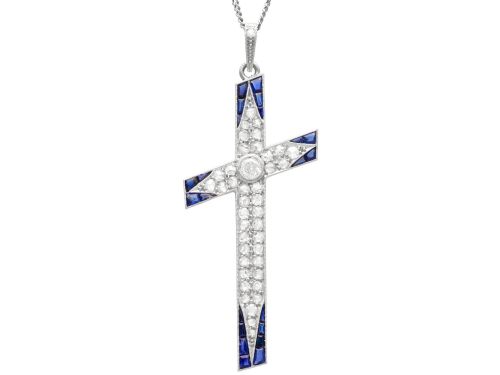
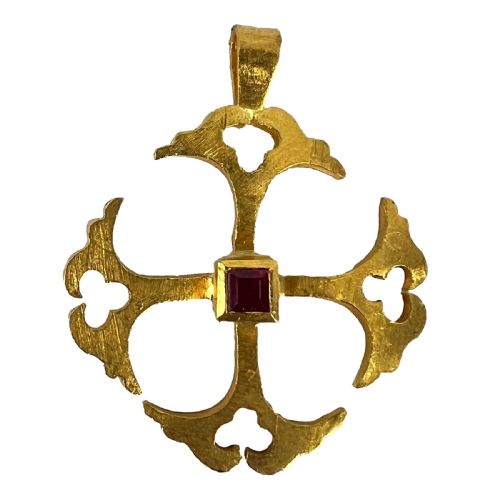
The most common items you will meet on this page are pendant crosses rendered in nine-carat or eighteen-carat yellow and white gold. These objects range from restrained engraved designs to elaborate gem-set iterations originating from periods like the Edwardian era, Art Deco, and Italian modernist workshops.
How they were made
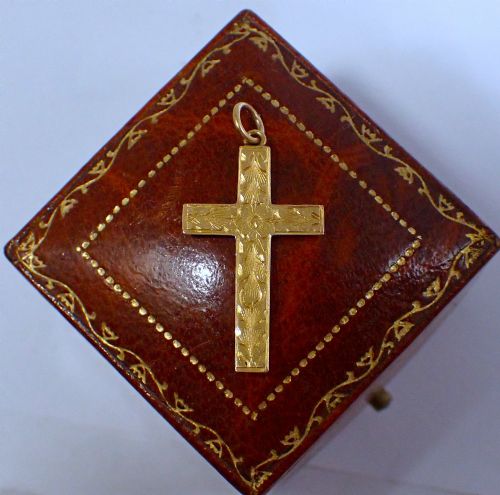
The construction of these pieces relies on traditional goldsmithing techniques applied to varying purities of gold, including nine-carat, fifteen-carat, eighteen-carat, and twenty-four-carat variants. Metalwork often involves hand engraving, casting, and meticulous wirework to form the structural cross shape.
Gemstones such as brilliant-cut diamonds, rose-cut diamonds, sapphires, and pearls are integrated through precision setting techniques suited to the period. Whether configured as a standalone pendant, a brooch-pendant combination, or suspended from a necklace, the physical structure balances precious metal durability with intricate ornamentation.
Vintage Gold Crucifix Retail Price Guide 2026
Typical asking prices for vintage gold crucifix among the pieces listed under this phrase on Sellingantiques today, from the lower quarter to the upper quarter. They describe what is for sale here now, not the wider market.
What varies in quality
Quality in these pieces is dictated by the caliber of the metalwork, the weight and purity of the gold utilised, and the precision of the stone setting. Pieces from earlier periods often display hand-engraved details and secure bezel or claw settings that demonstrate meticulous benchwork.
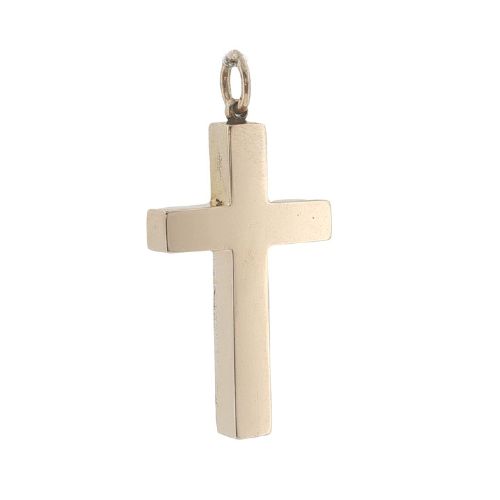
The choice of embellishments further differentiates the items, ranging from simple polished gold surfaces to complex arrangements featuring multi-gemstone pavé or brilliant-cut stones. The integrity of the loop or bail used for suspension also indicates the overall thought put into the pendant's daily wearability.
The Vintage Gold Crucifix Glossary
- Crucifix
- A cross bearing the figure of Jesus Christ, distinguishing it from a plain Latin cross. These devotional items serve both decorative and symbolic functions.
- Carat
- A unit measuring the purity of gold, where twenty-four carats represents pure gold. Lower carats like nine or fifteen indicate alloy mixtures added for durability.
- Pendant
- An ornament that hangs from a necklace, chain, or brooch fitting. In this collection, crosses are frequently structured specifically as pendants.
- Rose-cut diamond
- An antique gemstone cut featuring a flat base and a domed crown with triangular facets. This historic style predates the modern brilliant cut.
- Bezel setting
- A method of securing a gemstone where a thin metal rim surrounds the stone to hold it in place. This technique is common in antique jewellery.
Vintage Gold Crucifix: Frequently Asked Questions
How do I date a gold crucifix?
Dating relies on hallmarks, metal purities, and stylistic indicators such as Edwardian filigree or Victorian engraving. Comparing the specific gold standard, such as fifteen-carat versus modern nine-carat, helps place the piece within a particular decade.
Examining the stone-setting methods and overall design language further narrows the period of origin, distinguishing late nineteenth-century examples from mid-twentieth-century modernist creations.
What is the difference between a cross and a crucifix?
A plain cross consists solely of intersecting bars without additional figurative elements. A crucifix specifically incorporates the corpus, or the figure of Christ, upon the structure.
Both forms appear across various gold purities and stylistic periods within the available selection, catering to distinct devotional and aesthetic preferences.
Can these pendants be worn daily?
Most gold crucifixes and pendant crosses are structurally robust enough for regular wear, provided the suspension loop and settings remain secure. Higher carat golds are softer, while lower carats or white gold alloys offer increased resistance to daily friction.
Care should be taken with pieces set with softer gemstones like pearls or intricate antique settings to prevent accidental damage during active use.
What gold purities should I expect to find?
The inventory encompasses a range of gold standards reflecting the period of manufacture, including nine-carat, fifteen-carat, eighteen-carat, and twenty-four-carat yellow gold. White gold variants in nine-carat purity also appear among mid-twentieth-century listings.
Each purity level imparts a distinct hue and physical weight to the pendant, influencing both its durability and its visual warmth.