



Vintage Glove Stand
A vintage glove stand is a practical piece designed for the hallway, keeping daily accessories tidy with period character.
Vintage Glove Stand
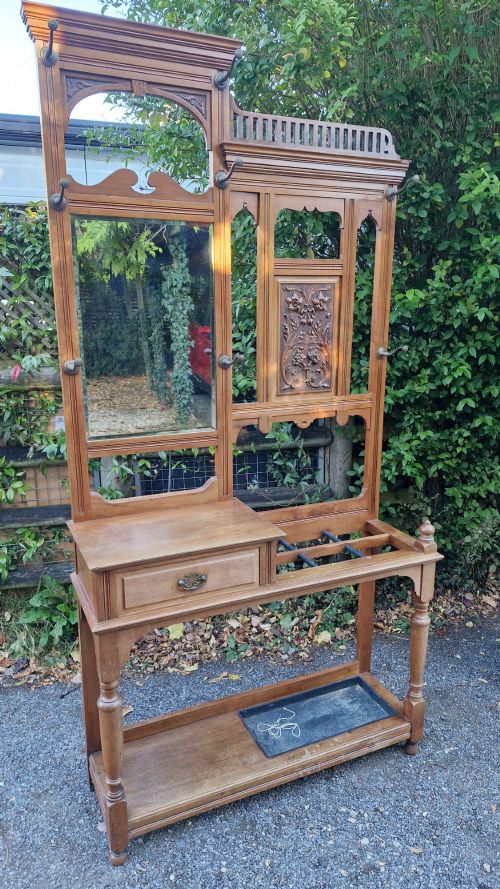
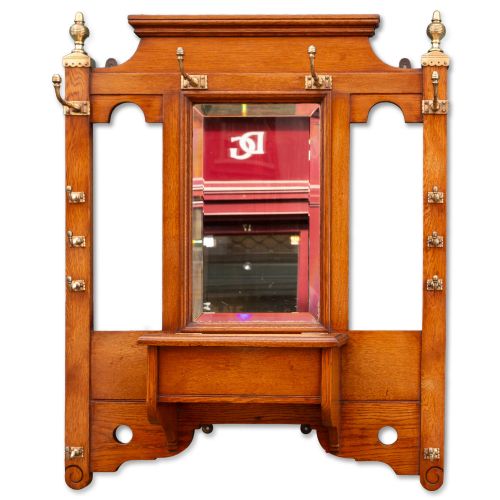
The search phrase vintage glove stand encompasses larger hall furniture pieces that incorporate dedicated storage for gloves alongside hats, coats, and sticks. These items belong to broader hallway furnishings recorded across Victorian, Edwardian, and early twentieth-century periods.
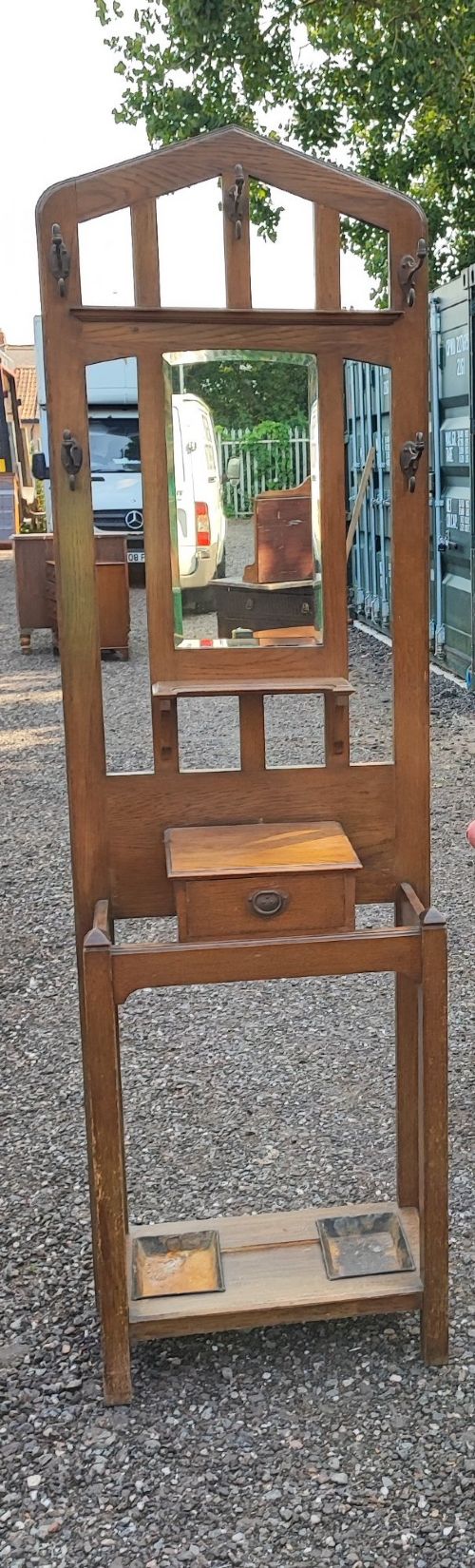
Buyers on this page are most likely to encounter substantial oak, mahogany, or walnut hall stands that combine umbrella wells, coat hooks, and mirror elements. Examples range from 1870 and 1880 Victorian designs to 1910 Arts and Crafts interpretations.
The form evolved to serve the entrance hall, offering structural compartments for outdoor wear. Many surviving examples integrate carved detailing, brass fittings, and glass accents within their larger frameworks.
Materials and Construction
Cabinet makers utilised dense hardwoods such as oak, mahogany, and walnut to build these functional hallway pieces. Golden and light oak variations frequently appear alongside rich dark walnut and mahogany structures.
Metal components such as brass, iron, copper, and general metalwork form the hooks and drip trays integral to the designs. Carved detailing and fretted woodwork demonstrate the decorative techniques applied during the Victorian and Edwardian eras.
Vintage Glove Stand Retail Price Guide 2026
Typical asking prices for vintage glove stand among the pieces listed under this phrase on Sellingantiques today, from the lower quarter to the upper quarter. They describe what is for sale here now, not the wider market.
Some oak stands feature integrated drip trays made of copper or iron, catching the rainwater from gentlemen's walking sticks.
Assessing Quality and Design
Quality separates mass-produced utility items from pieces exhibiting ambitious carved detailing and architectural styles like Victorian Gothic Revival or Victorian Jacobean Revival. The depth of the hand-carving and the integration of auxiliary materials like brass and glass indicate the maker's investment of time.
The choice of primary timber shifts the visual weight of the piece, with figured walnut and selected oak achieving a more commanding presence in the hall. Structural integrity relies on how securely the coat hooks, umbrella trays, and mirror frames are joined to the main body.
The Vintage Glove Stand Glossary
- Hallstand
- A large piece of hall furniture combining coat hooks, umbrella storage, and often a central mirror. It serves as a single station for outdoor garments and accessories.
- Arts and Crafts
- A design movement focusing on traditional craftsmanship and simple forms, visible in the light oak hallstands from the early twentieth century.
- Victorian Gothic Revival
- A nineteenth-century architectural and decorative style drawing on medieval ecclesiastical forms, seen in the carved detailing of certain hall stands.
- Stick Stand
- A compartment or metal tray at the base of a hall furniture piece intended to hold walking sticks and umbrellas.
- Fretted
- Woodwork pierced with ornamental open patterns, adding decorative lightness to heavy timber frames.
Vintage Glove Stand: Frequently Asked Questions
What is a vintage glove stand?
A vintage glove stand is typically part of a larger hall furniture piece designed to hold outdoor accessories near the entrance of a home.
These items combine storage for gloves and small items with hooks for coats and racks for walking sticks or umbrellas.
How were these hall stands used?
They served as the primary drop-off point in a nineteenth or early twentieth-century hallway for hats, coats, gloves, and walking sticks.
Visitors and residents used them to store weather-related gear immediately upon entering the house.
How do I date a hall stand?
Dating relies on the stylistic markers of periods such as Victorian, Edwardian, or Arts and Crafts movements.
Characteristics like heavy Gothic carving, light oak construction, or specific brass hardware configurations point towards particular decades between 1870 and 1910.
Will these fit in a modern hallway?
Many surviving examples are substantial pieces of furniture built for period entrance halls with high ceilings.
Checking the overall dimensions and layout of the wall space ensures the piece complements the proportions of a modern interior.