


Vintage Geometric Pendant Light
These vintage geometric pendant light options bring clean lines and period illumination to interiors, offering enduring charm through structured form.
Vintage Geometric Pendant Light
A vintage geometric pendant light typically takes the form of a ceiling light, lantern, or chandelier shaped by the design movements of the early twentieth century. Buyers seeking this phrase encounter pieces dating primarily from the 1920s and 1930s, reflecting Art Deco and Arts and Crafts aesthetics.
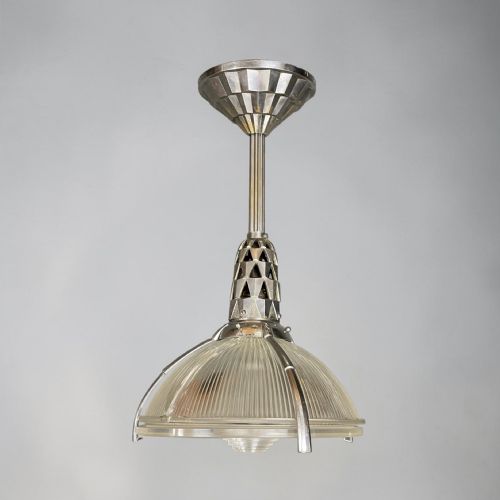
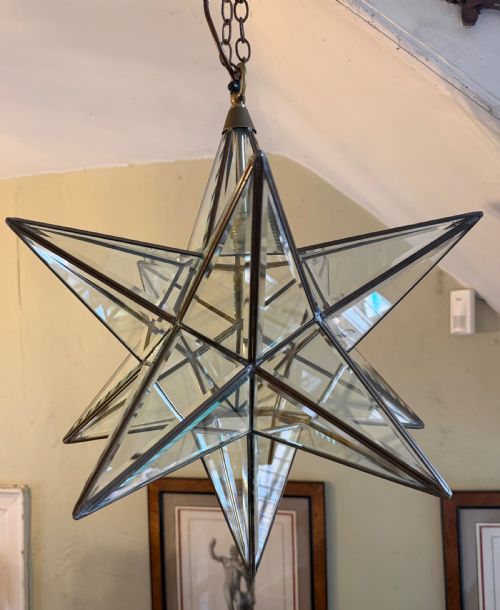
The most common formats on this page include brass-framed star lanterns, chrome and glass ceiling fixtures, and opaque glass plafonniers. These objects serve as functional ceiling lighting that doubles as a strong architectural statement in a room.
Originating from the early 20th century, these fixtures range from austere steel lanterns to decorative bronze designs incorporating frosted or bevelled glass. Each piece captures a distinct geometric impulse from the interwar period.
How They Were Made
Maker workshops utilised a combination of structural metals such as brass, chrome, copper, nickel plated metal, steel, and wrought iron to build rigid frameworks. These metals were soldered, riveted, or forged into polygonal and star shapes to support the weight of the glass panels.
The transparent and translucent elements rely on frosted glass, bevelled glass, plain glass, and rock crystal. Artisans cut and fitted these glass sections tightly into the metal channels to diffuse light evenly across the room.
Listings feature pieces spanning the 1920s and 1930s, constructed from brass, chrome, copper, steel, wrought iron, and various forms of glass.
What Varies in Quality
The distinction between tiers of execution rests on the weight of the metal framework and the precision of the glass cutting. Superior examples employ heavier gauge brass, chrome, or wrought iron alongside hand-bevelled or thick frosted glass that sits flush within the frame.
Subtleties in finish and joinery separate standard production from exceptional pieces. Higher quality items show careful metal plating, secure riveting, and sophisticated structural geometry rather than simple mass-produced stamping.
Émile-Jacques Ruhlmann
The Vintage Geometric Pendant Light Glossary
- Plafonnier
- A shallow ceiling light designed to sit close to the ceiling surface. These fixtures often feature frosted glass bowls held in metal mounts.
- Bevelled glass
- Glass with edges cut and polished at an angle to catch and refract light. This technique adds depth and sparkle to lanterns and star lights.
- Frosted glass
- Glass treated to scatter light and reduce glare, creating a soft illumination. It remains a hallmark of period lighting from the interwar decades.
- Arts and Crafts
- A design movement valuing handcraftsmanship and simple forms over industrial ornamentation. Pieces from this era often feature honest construction in brass or copper.
- Art Deco
- A style defining the interwar period, characterised by sleek geometric shapes and stylised motifs. It heavily influences the profile of these pendant lights and lanterns.
Vintage Geometric Pendant Light: Frequently Asked Questions
What is a vintage geometric pendant light?
These fixtures are overhead lights originating from the early twentieth century, designed with structured, angular lines. They draw heavily on Art Deco and Arts and Crafts principles to provide both illumination and architectural presence.
Most examples rely on combinations of metal framing and glass panels, spanning styles from austere steel lanterns to decorative star-shaped pendant lights.
How were these pendant lights used?
Interwar households utilised these ceiling lights primarily as central illumination sources in hallways, living rooms, and dining spaces. Their enclosed or semi-enclosed designs helped diffuse light downward and outward.
They served as functional task lighting while acting as a primary decorative focal point within the room's decorative scheme.
How do I live with antique ceiling lighting?
Integrating period lighting into modern spaces involves hanging fixtures at appropriate heights to clear walkways while maintaining visual impact. Pairing them with warm LED bulbs replicates the soft glow of historical illumination.
Regular dusting of the metal frames and glass panels keeps the surfaces clear and preserves the finish over years of daily use.