



Vintage English Couch
A vintage english couch brings deep-seated comfort and enduring craftsmanship to a room, offering the classic forms and rich upholstery that collectors seek.
Vintage English Couch
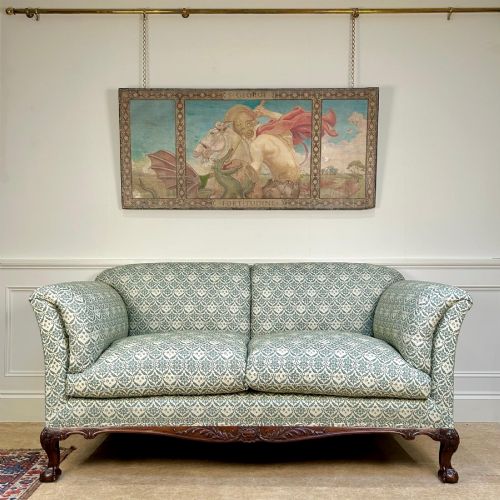
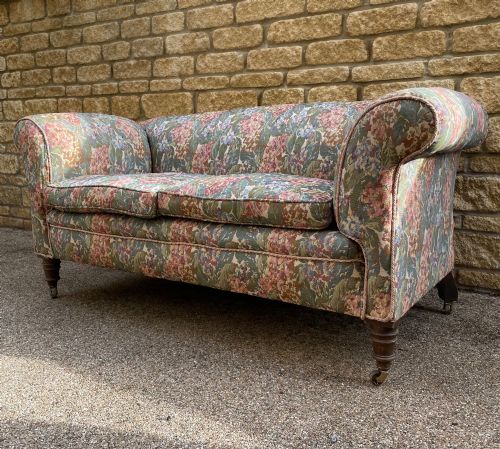
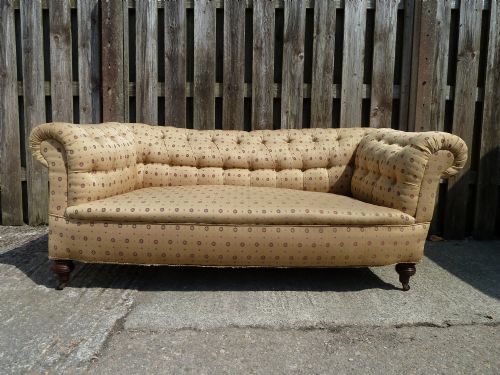
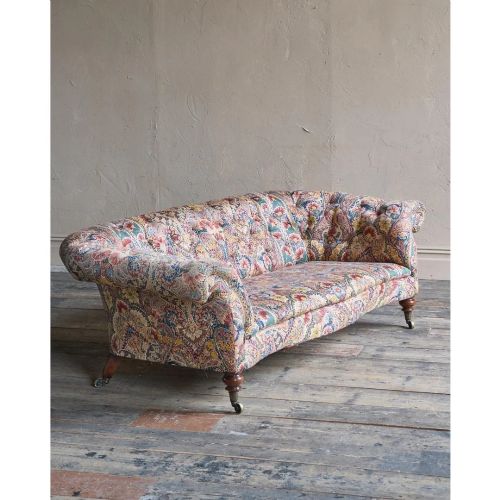
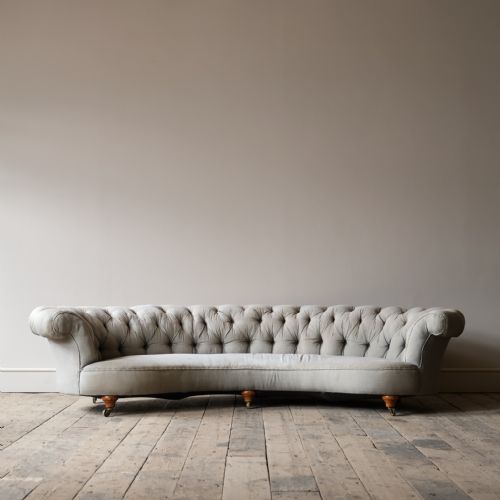
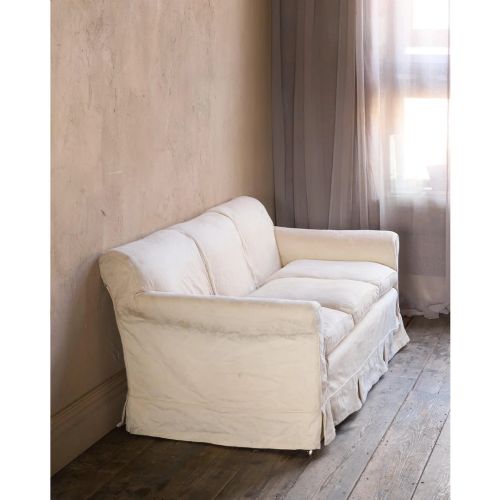
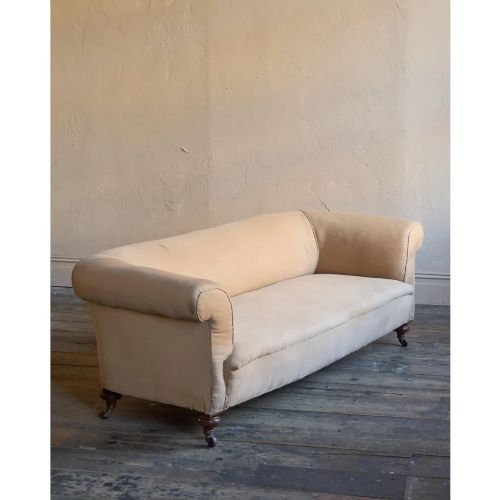
When you search for a vintage english couch, you encounter a variety of substantial seating forms spanning the nineteenth and early twentieth centuries, including traditional Chesterfields, Knole sofas, and country house settees. These pieces range from deep-seated two and three-seaters upholstered in fabric or leather to elegant day beds and chaise longues with wood frames.
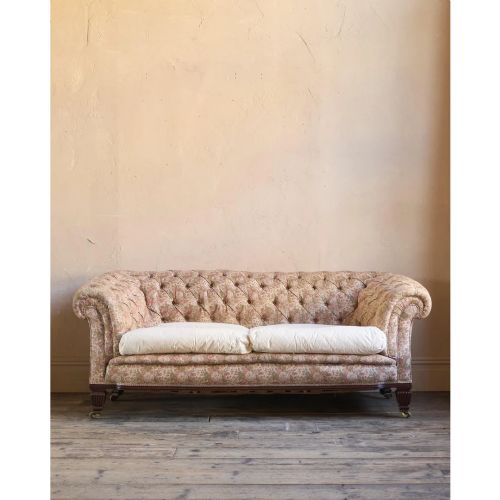
The version you are most likely to meet on this page is the classic Victorian or Edwardian Chesterfield, often upholstered in calico, linen, or hand-dyed leather, alongside country house models built for relaxed comfort. Alongside these sit occasional Regency chaise longues and walnut settees reflecting earlier design traditions.
How they were made
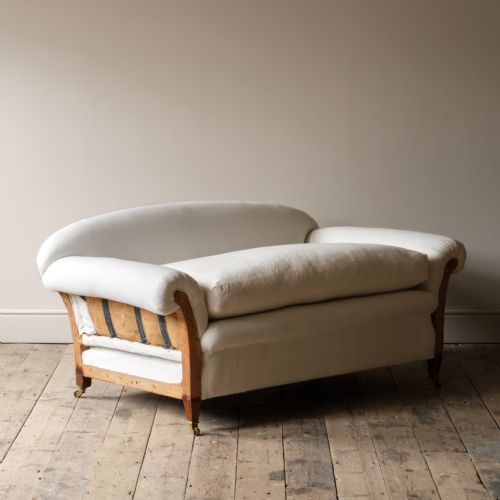
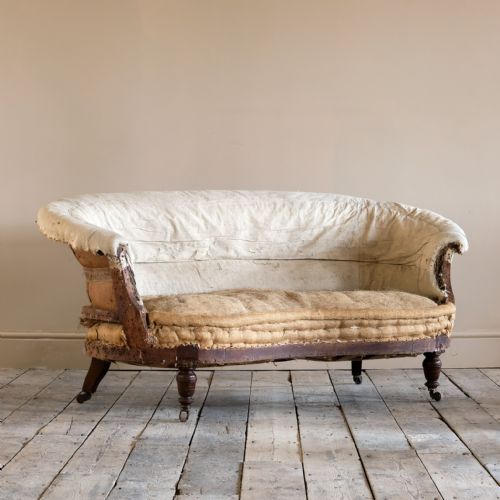
Frames rely on sturdy timbers such as mahogany, walnut, and general hardwood, providing the structural foundation for deep seating and carved show-frames in giltwood or mahogany. Traditional upholstery methods utilise horsehair for filling, linen or calico linings, and fully loose coil springing to achieve resilience and support.
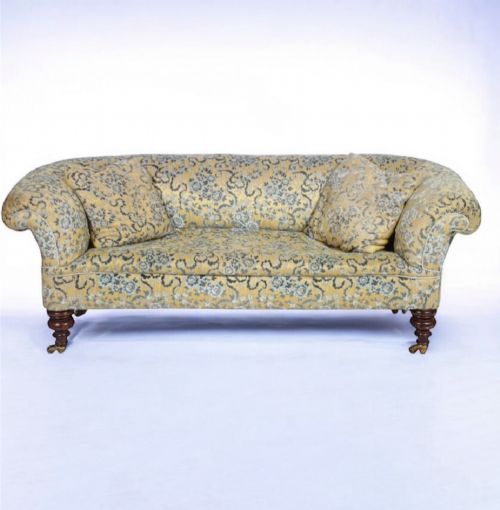
Surface finishing involves hand-dyed leather, button-backed tufting, and textiles ranging from gold damask to floral fabric. Details such as turned legs, original castors, and carved herms complete the construction of these substantial seating forms.
Vintage English Couch Retail Price Guide 2026
Typical asking prices for vintage english couch among the pieces listed under this phrase on Sellingantiques today, from the lower quarter to the upper quarter. They describe what is for sale here now, not the wider market.
Listings feature seating spanning the Regency, Victorian, and Edwardian periods, constructed in mahogany, walnut, brass, and leather.
What varies in quality
The integrity of the internal stuffing and coil springing dictates the depth of comfort and the retention of shape over decades of use. Pieces retaining original horsehair and properly tied springs demonstrate a higher standard of maker craftsmanship.
The choice of frame timber and the refinement of the woodwork, from plain turned legs to carved mahogany or giltwood show-frames, separate standard production from superior workshop output. The quality of the leather treatment, such as traditional hand-dyed finishes, also defines the upper tier of these pieces.
Howard & Sons·Hampton & Sons·Jas Shoolbred·Gillows
The Vintage English Couch Glossary
- Chesterfield
- A traditional sofa characterised by deep button-tufting and rolled arms of the same height as the back. It represents a staple form in English seating history.
- Knole sofa
- A historic settee design featuring hinged or adjustable drop arms that can be lowered or raised. It is typically upholstered in rich damask or heavy fabric.
- Chaise longue
- An elongated upholstered chair designed for reclining, combining elements of a chair and a day bed. Examples range from Regency frames to Victorian models.
- Drop arm
- A movable arm mechanism on a sofa that lowers on one or both sides. This allows the piece to function for both sitting and lying down.
- Horsehair
- A traditional stuffing material used in upholstery for its resilience and breathability. It provides firm support within the internal layers of antique seats.
Vintage English Couch: Frequently Asked Questions
How do I identify a Knole sofa?
A Knole sofa is recognised by its high, straight back and characteristic adjustable arms held in place by vertical wooden posts and cords. This historic design allows the user to drop one or both sides.
They are traditionally upholstered in heavy textiles like damask or velvet and trimmed with decorative braid and tiebacks.
Where should I place a day bed?
A day bed suits spaces that benefit from slender, elongated furniture silhouettes, such as reception rooms, large hallways, or quiet reading corners. Their open frames maintain a feeling of light in a room.
Positioning them against a wall or beneath a window allows the carved woodwork and upholstery details to remain visible without blocking pathways.
How do I care for antique leather?
Antique leather benefits from gentle cleaning using specialist leather balms that nourish the hide without altering the hand-dyed finish. Keeping the material away from direct heat sources prevents drying and cracking.
Regular dusting with a soft cloth maintains the surface sheen developed through decades of careful use.