

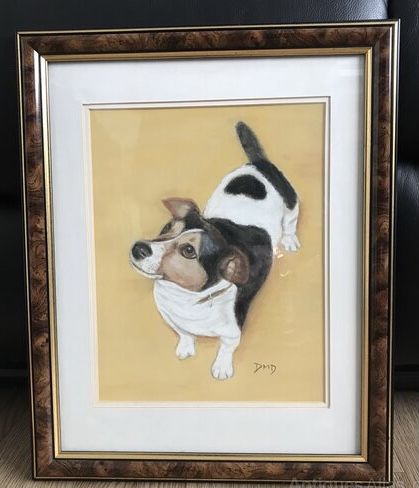


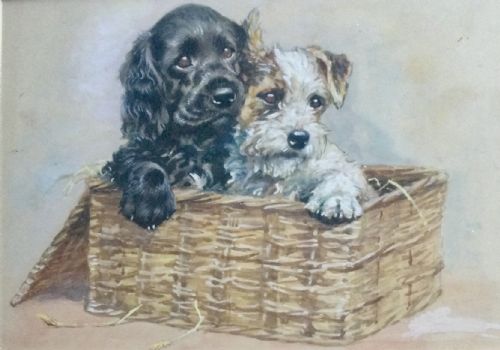

Vintage Dog Watercolour
These vintage dog watercolour works capture canine character on paper, offering buyers authentic sporting subjects and charming animal portraits from past centuries.
Vintage Dog Watercolour
A vintage dog watercolour is a painted paper artwork depicting canine subjects, created across various eras from the Georgian period through the mid twentieth century. Buyers seeking this phrase encounter framed paintings and paired studies depicting hounds, terriers, and working gun dogs.
The pieces on this page span British sporting art, Victorian dog portraiture, and English country house aesthetics. Common subjects include hunt packs, coursing greyhounds, and close companions rendered in watercolour and pastel.
Works range from detailed studies signed by named artists to anonymous English school pieces showing children and their dogs. Paper and glass framing preserve these delicate paintings, which often record specific breeds and historical working animals.
Materials and technique
Artists executed these works primarily using watercolour and pastel pigments applied directly onto paper supports. Many examples incorporate mixed media techniques, combining fluid washes with precise pastel detailing to render animal coats and textures.
Framing typically involves wood, gold leaf, and giltwood mouldings set with protective glass. These traditional mountings safeguard the fragile paper surfaces from environmental damage while maintaining period presentation.
Vintage Dog Watercolour Retail Price Guide 2026
Typical asking prices for vintage dog watercolour among the pieces listed under this phrase on Sellingantiques today, from the lower quarter to the upper quarter. They describe what is for sale here now, not the wider market.
Certain hounds and terriers stare out across the centuries with expressions as stubborn as any modern dog.
The markers of quality
Quality rests in the anatomical accuracy of the canine subject and the dexterity of the brushwork. Skilled hands capture the alert posture of a terrier or the muscular form of a hound with economy and precision.
The provenance and identity of the hand shape valuation, particularly when works bear signatures from established sporting artists. Original framing materials and the preservation of the paper support also contribute significantly to the standing of a piece.
Arthur Wardle·J F Marie Huet Villiers·Mabel Gear·Tom Carr·Arthur Alfred Davis·Frank Dadd·Fred Lawson·Mabel Lucie Attwell
The Vintage Dog Watercolour Glossary
- Watercolour
- A paint consisting of colour suspended in a water-soluble vehicle, used on paper to create translucent washes.
- Pastel
- A art medium in the form of a stick, consisting of powdered pigment and a binder, frequently combined with watercolour in these works.
- Giltwood
- Wood that has been gilt with gold leaf or a similar thin gold finish, commonly seen on the frames of these paintings.
- Sporting art
- Depictions of rural sports, game, and working animals such as hounds and gun dogs, which form a major category in this genre.
- English school
- A term used to classify works produced by artists working in England, often applied to unsigned pieces from historical periods.
Vintage Dog Watercolour: Frequently Asked Questions
How do I hang a watercolour painting safely?
Watercolours require protection from direct sunlight to prevent the pigments from fading over time. Hang them on interior walls away from moisture and direct heat sources.
Ensure the framing is secure and the glass does not press directly against the paper surface. Proper mounting preserves both the paper and the delicate paint layer.
Are these paintings original works?
The pieces listed are original hand-painted works on paper rather than modern mechanical reproductions. Artists applied pigments directly by hand, making each sheet unique.
Signatures, brushstroke texture, and the grain of the paper confirm their status as authentic period art. Archival records and inscriptions often provide further context on their origins.
How do I identify a Victorian dog painting?
Victorian works often display specific framing styles, distinct paper ageing, and particular stylistic conventions associated with nineteenth-century animal portraiture. Subject matter frequently leans towards working gun dogs, sporting hounds, and sentimental family pets.
Examining the backing boards, inscriptions, and artist signatures helps narrow down the period. Many pieces also carry dates or attribution details within the framing or on the reverse.
What is the difference between a pastel and a watercolour?
Watercolour involves fluid, water-based pigments applied with a brush to create translucent colour layers. Pastel uses dry pigment sticks that leave a velvety, chalky surface on the paper.
Artists often combined both mediums in canine art to render soft fur textures alongside fine facial details. Protective glass is essential for both to prevent smudging or moisture damage.