
Vintage Crystal Fixture
A vintage crystal fixture brings enduring luminosity to a room, casting intricate patterns through faceted drops and polished metal frameworks.
Vintage Crystal Fixture
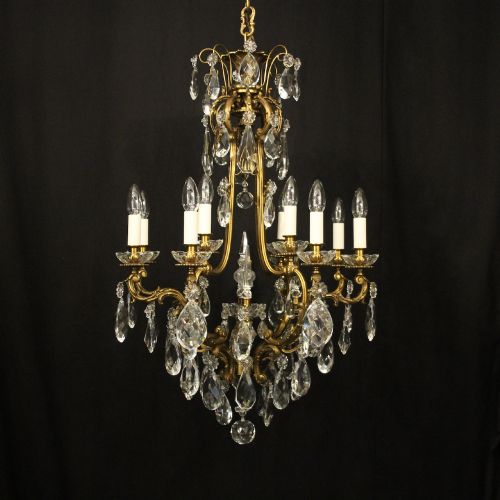
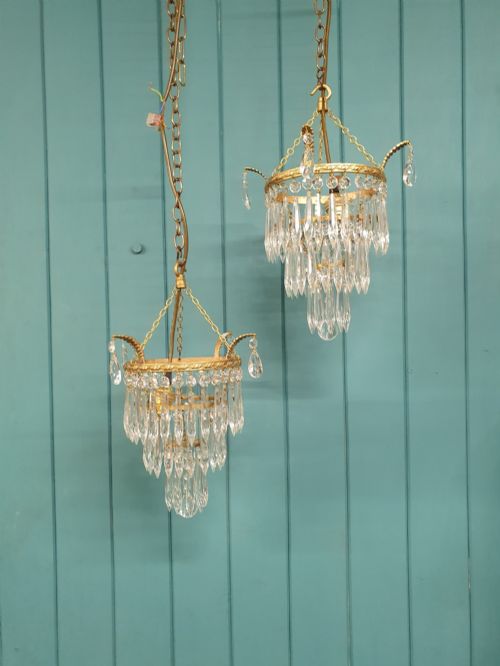
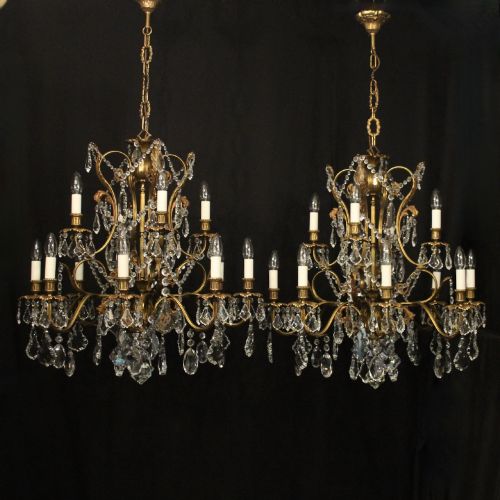
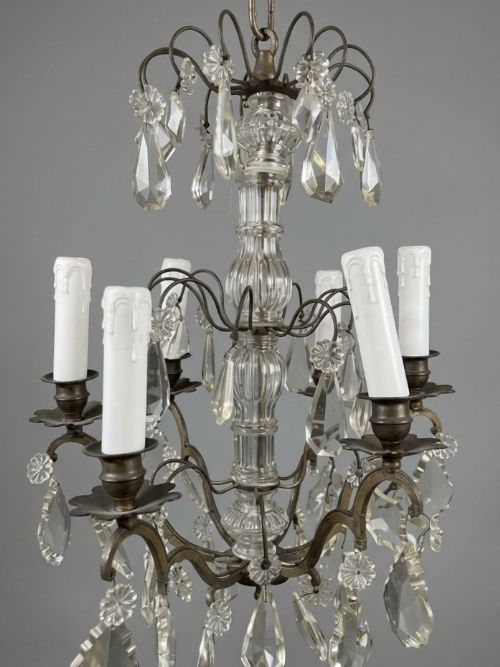
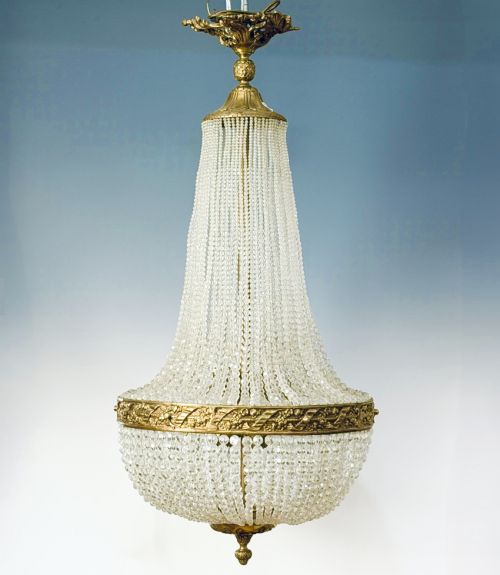
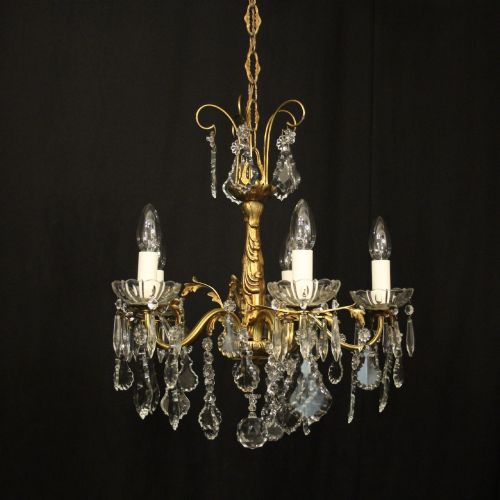
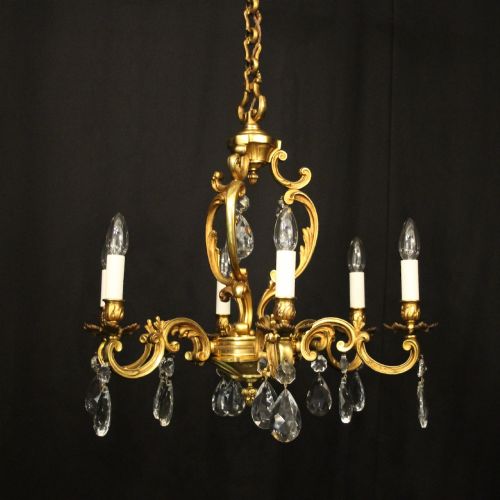
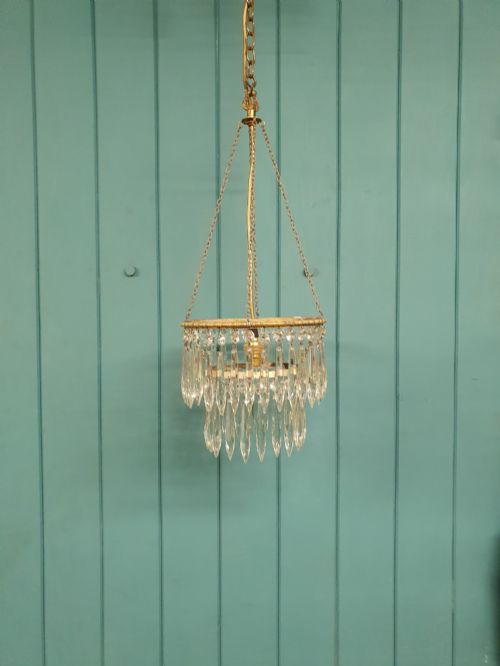
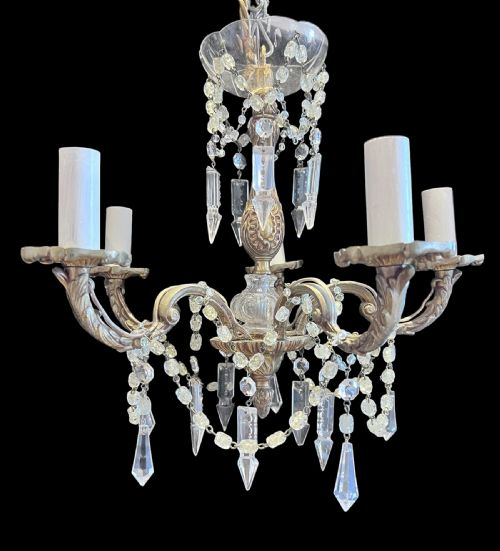
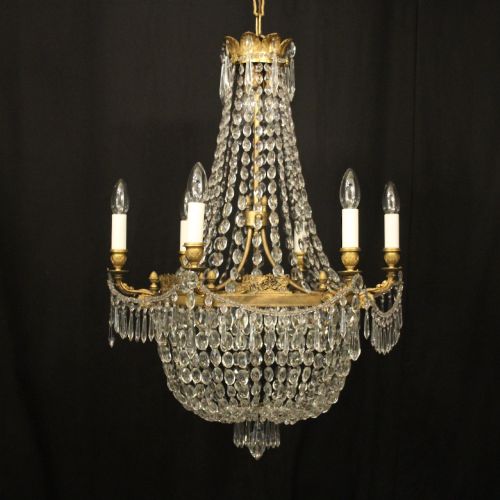
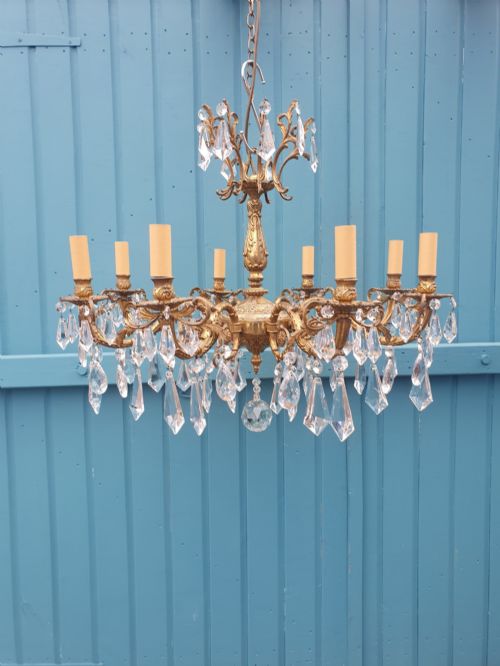
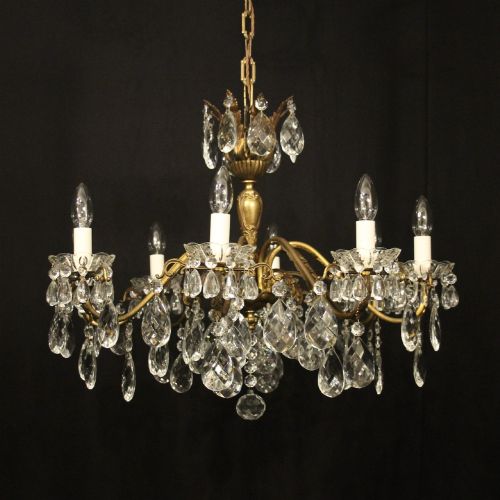
A vintage crystal fixture encompasses multi-arm chandeliers, flush ceiling lights known as plafonniers, and twin-arm wall sconces designed to illuminate interior spaces. Buyers searching for a vintage crystal fixture most frequently encounter early twentieth-century French and Italian examples dating from the 1920s and 1930s. These pieces often feature prominent arrangements of cut glass pendants, glass beads, and tiered drops suspended from metal frames.
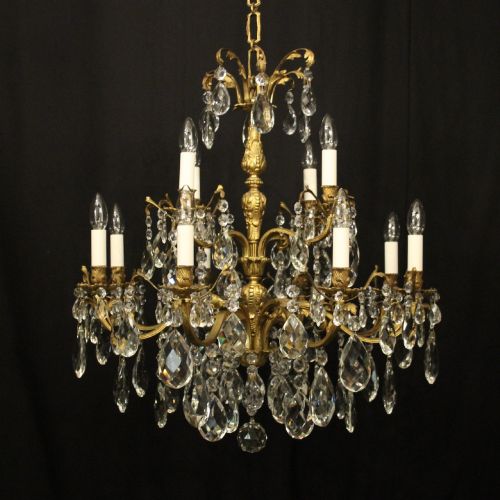
The selections span distinct continental decorative movements, including French Empire, Rococo revival, and Italian Florentine styles. Chandeliers range from compact single-light pendants to grand twelve-light and fourteen-light ballroom centrepieces hung with crystal lustres. Wall lights and smaller ceiling mounts provide coordinated options for more modest ceiling heights or intimate corners.
Materials and construction methods
Makers constructed the structural framework of a vintage crystal fixture using cast metals such as brass, gilt bronze, ormulu, and gilt metal. These metallic mounts frequently received surface gilding or silver-gilding to enhance reflection beneath the lit bulbs or candles. Structural elements like the central stem often supported intricate metal bandings, leafy decorations, or figural details including cherubs.
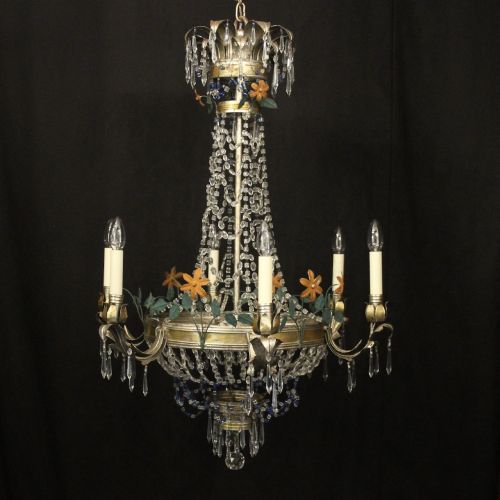
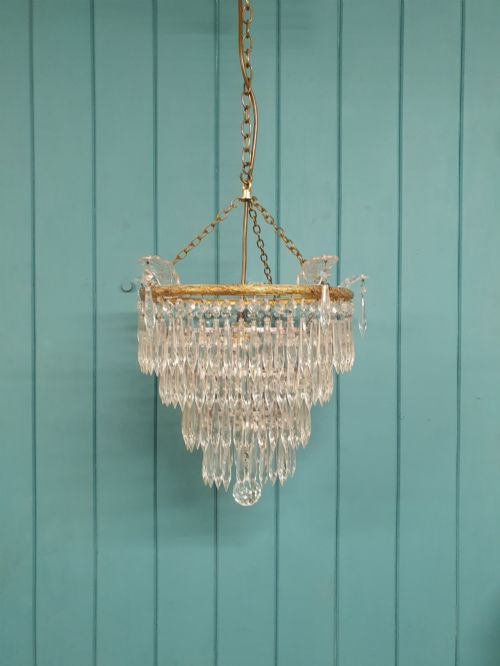
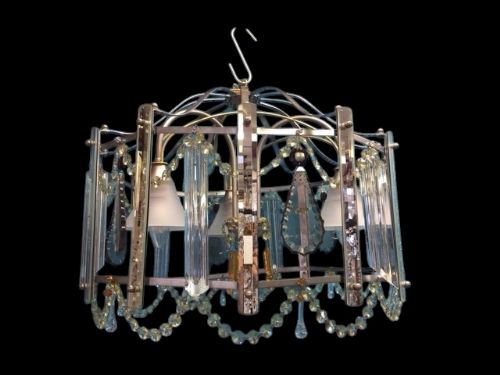
Hanging elements consist of lead crystal and cut glass shaped into spikes, beads, lustres, and faceted drops. Assemblers connected these glass components to the metal frames using wire pin loops, building complex configurations such as tent and waterfall structures or birdcage profiles. Selected Italian examples incorporate contrasting details like porcelain flowers integrated into the metal branches.
Listings feature pieces spanning from the nineteenth century through the 1930s, utilising brass, bronze, crystal, and porcelain elements.
Variations in quality and execution
The distinction between standard examples and the finest pieces rests upon the density of the glass cutting and the weight of the metal armature. Superior fixtures employ hand-cut crystal drops with sharp facets that refract light cleanly, paired with heavily cast bronze or ormulu mounts rather than lighter pressed brass or spelter.
Design complexity also defines the upper tier of the range, visible in multi-tiered arrangements, intricate tent and waterfall cascades, and balanced arm counts. Finer pieces demonstrate precise symmetry in the arrangement of hundreds of individual glass drops and integrated decorative flourishes along the crown and drip pans.
The Vintage Crystal Fixture Glossary
- Tent and waterfall
- A lighting configuration where a central upper canopy of strung beads slopes down like a tent over a cascading tier of vertical crystal drops. This classic arrangement maximises light dispersion across large reception rooms.
- Plafonniere
- A flush-mounted ceiling light designed to sit close to the plasterwork rather than hanging on a suspension chain. These fixtures suit rooms with lower ceilings while retaining crystal and brass detailing.
- Ormulu
- Gilded bronze produced through a mercury amalgamation technique common in nineteenth-century and early twentieth-century continental decorative metalwork. It provides a warm, durable golden finish to the fixture frame.
- Lustre
- A cut crystal pendant or drop suspended from the arms or crown of a lighting fixture to catch and reflect illumination. Lustres vary in shape from simple spear points to multi-faceted disks.
- Birdcage
- A rounded metal frame skeleton resembling an aviary structure, enclosed by vertical strands of crystal beads and drops. This framework surrounds the central column and lamp holders.
Vintage Crystal Fixture: Frequently Asked Questions
How do I choose the right size?
Consider both the floor area and the ceiling height of the room where the fixture will hang. Multi-arm chandeliers require adequate clearance beneath them for foot traffic, while compact flush mounts suit lower spaces.
Matching the arm count and physical diameter to the proportions of the furniture below ensures the lighting piece anchors the interior scheme effectively.
What periods do these fixtures represent?
The available lighting spans from the nineteenth century through the Edwardian era and into the interwar period of the 1920s and 1930s. Early twentieth-century production heavily reflects French and Italian interpretations of earlier classical styles.
Revival movements such as French Empire and Rococo heavily influence the decorative vocabulary found across these decades.
Are these fixtures wired for modern use?
Most antique and vintage lighting requires inspection and rewiring by a qualified electrician to meet current electrical standards. Adapting the internal wiring ensures safe operation with modern voltage requirements.
Sockets and internal channels can be updated while preserving the exterior metalwork and crystal arrangement intact.
How do I clean a crystal chandelier?
Routine maintenance involves gentle dusting of the glass drops and metal arms using a soft brush or microfibre cloth. For deeper cleaning, specialised non-drip crystal cleaning sprays applied while covering the sockets allow residue to drip away.
Removing individual crystals for washing in warm soapy water restores maximum brilliance when accumulated grime dulls the facets.