



Vintage Corner Vitrine
A vintage corner vitrine makes use of neglected angles to display precious objects behind glass.
Vintage Corner Vitrine
A vintage corner vitrine serves to house collections of porcelain, glassware and curiosities within glazed timber enclosures designed to fit domestic room angles. When searching for a vintage corner vitrine, buyers encounter floor-standing, wall-hanging and double-height architectural formats spanning the eighteenth to the twentieth centuries.
The selection ranges from early nineteenth-century examples and Edwardian satinwood inlaid pieces to Art Deco designs and revival styles such as Sheraton and Louis XV. Most items met on this page utilise mahogany or oak frames, often featuring glass panels to the front doors and sides.
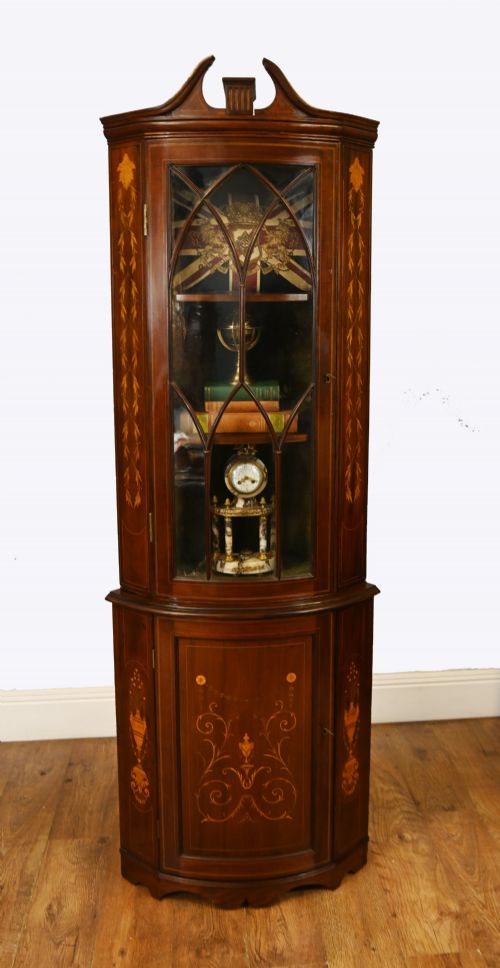
Makers and workshops of various origins produced these cabinets to maximise floor space while offering a decorative focal point. Forms vary from simple glazed cupboards to serpentine-fronted display pieces adorned with marquetry and ormolu mounts.
Construction and materials
Cabinets were built primarily from hardwoods such as mahogany, oak and walnut, occasionally incorporating softer timbers like satinwood for contrasting inlay work and decorative banding. Glazing bars divide the glass door panels into smaller panes, requiring precise joinery to follow flat or curved profiles.
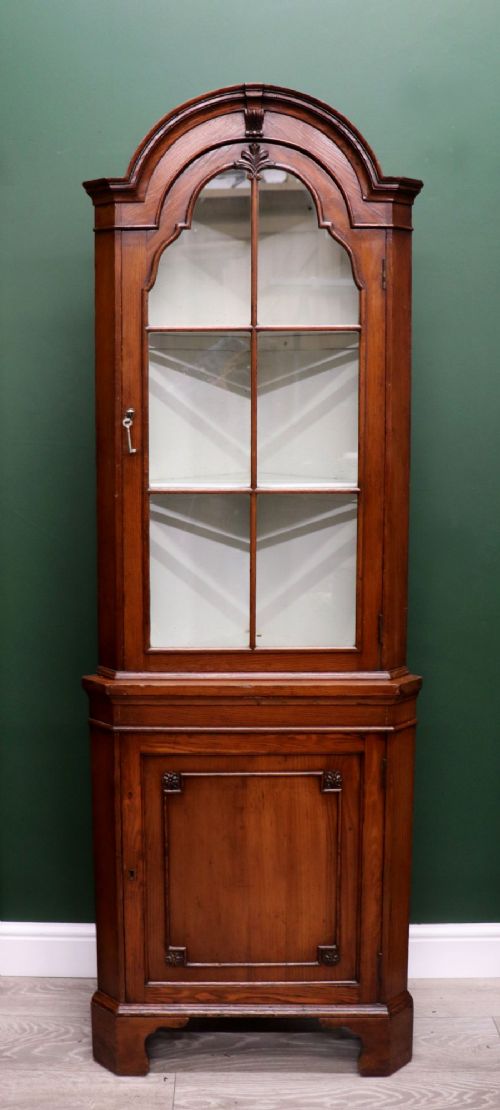
Surface finishes include French polishing, ebonising and hand painting as seen on eighteenth-century Dutch pieces. Brass hinges, locks and occasional mounts provide structural reinforcement and decorative contrast to the timber surfaces.
Vintage Corner Vitrine Retail Price Guide 2026
Typical asking prices for vintage corner vitrine among the pieces listed under this phrase on Sellingantiques today, from the lower quarter to the upper quarter. They describe what is for sale here now, not the wider market.
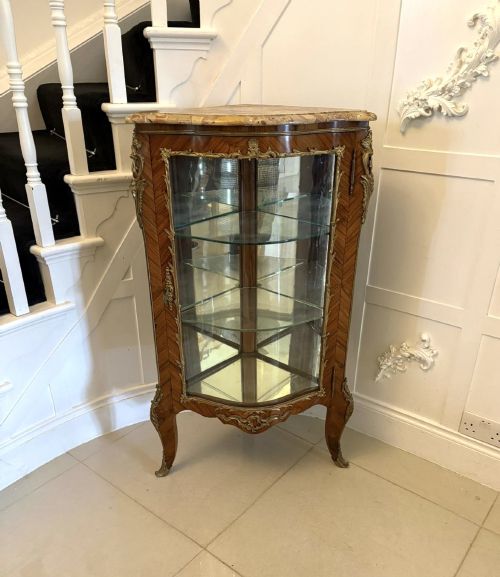
One exceptional nineteenth-century French cabinet squeezes serpentine curves and ormolu mounts into a tight room corner.
Evaluating craftsmanship and condition
Quality separates through the selection of timber veneers, the crispness of marquetry inlay and the precision of the mitre joints where the cabinet meets the wall. Superior examples display carefully matched grain patterns and solid brass hardware rather than stamped base metals.
The integrity of the original glass, the smoothness of door alignment and the finesse of carved or applied ornamentation distinguish high-workshop production from standard utility cabinet making.
Maurice Adams·Edwards And Roberts
The Vintage Corner Vitrine Glossary
- Vitrine
- A glass-fronted cabinet designed specifically for the display of works of art or collections. These pieces prioritize visibility through extensive use of window panes.
- Serpentine
- A curved shape consisting of a convex centre flanked by concave ends, or vice versa. This contour adds movement to cabinet fronts.
- Marquetry
- The art of applying decorative pieces of veneer to a structure to form intricate designs. Craftsmen use various tinted woods to create pictures or geometric patterns.
- Ormolu
- Gilded bronze applications used as decorative mounts on fine furniture. The technique was particularly popular on nineteenth-century revival pieces.
- Edwardian
- Pertaining to the reign of King Edward VII, characterised by lighter furniture designs often reviving eighteenth-century Sheraton and satinwood traditions.
Vintage Corner Vitrine: Frequently Asked Questions
What is the difference between a vitrine and a cupboard?
A vitrine incorporates glass panels to the doors or sides specifically for displaying contents, whereas a traditional cupboard utilises solid timber doors to conceal storage. Vitrines evolved to showcase valuable collections rather than hide everyday domestic items.
In corner formats, glazed vitrines lighten the visual weight of a room corner by reflecting light through the interior shelves.
How do I style a corner display cabinet?
Styling involves grouping objects of varying heights and materials, such as ceramics, glass and small sculptures, while leaving negative space to avoid clutter. Consistent colour palettes among the displayed items help unify the interior.
Consider the background fabric or timber lining when choosing pieces to display, ensuring enough contrast for each object to stand out clearly.
Are Art Deco vitrines different from Edwardian ones?
Art Deco vitrines favor geometric lines, streamlined forms and contrasting veneers such as walnut, omitting the delicate floral marquetry typical of Edwardian pieces. Deco design emphasises structural simplicity and modern materials.
Edwardian cabinets frequently look back to eighteenth-century Sheraton and satinwood revival styles, featuring subtle stringing and classical motifs.