



Vintage Clothing Rail
A vintage clothing rail repurposes nineteenth-century towel airers and coat stands to bring solid timber character into modern bedrooms and hallways.
Vintage Clothing Rail
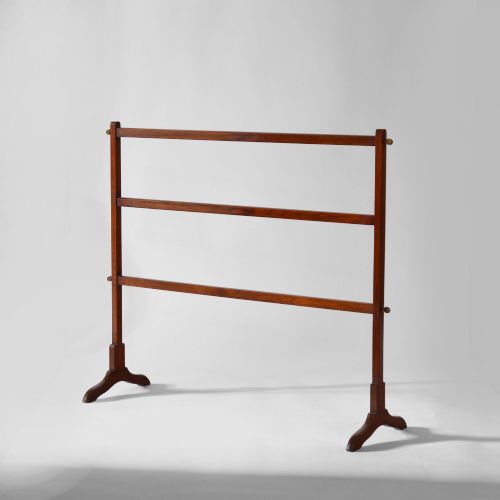
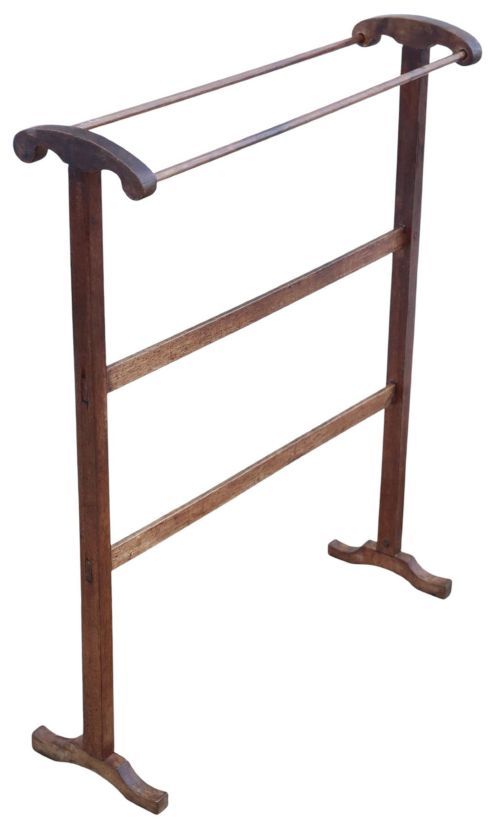
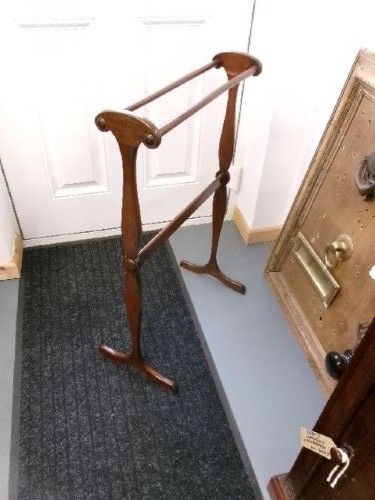
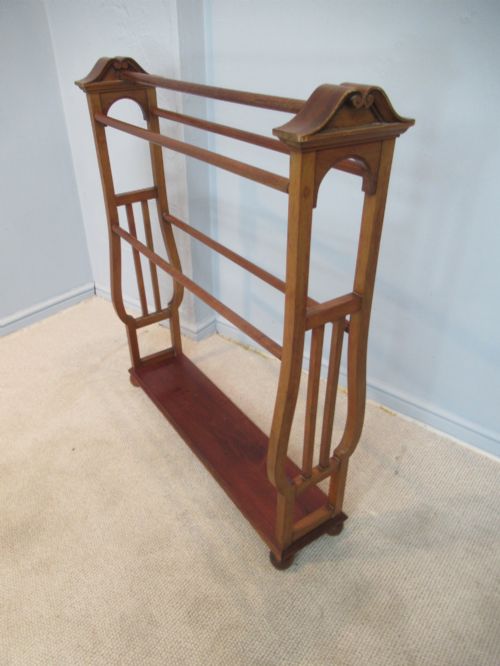
When you search for a vintage clothing rail, you encounter traditional wooden towel rails, clothes racks, and hall stands repurposed for modern wardrobes. These items originate across the nineteenth and early twentieth centuries, spanning periods from the Regency era through to Edwardian times.
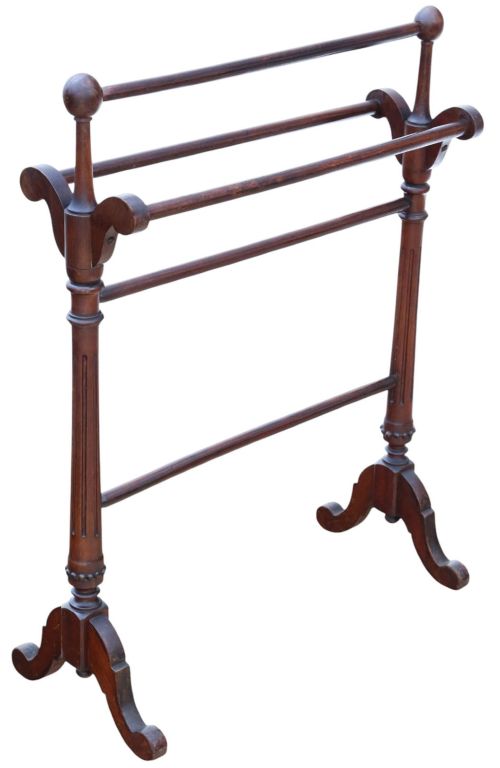
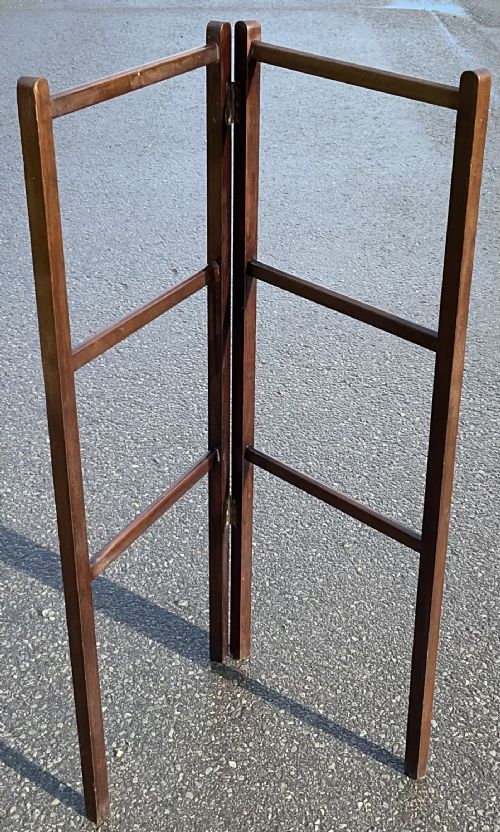
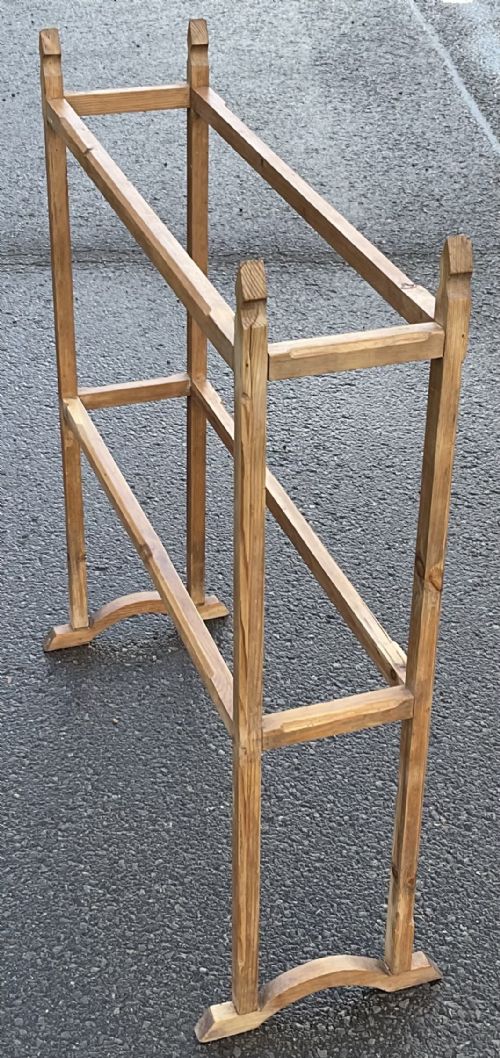
The most common form you will meet on this page is the freestanding mahogany towel rail, often built with folding multiple bars or cheval frames. Alongside these, you find pine standing rails, oak arts and crafts pieces, and occasional campaign items in teak.
Makers historically designed these pieces for bedrooms, nurseries, and dressing rooms to air and hang garments. Today, buyers utilise them to display clothes in contemporary spaces where standard metal rails feel out of place.
Materials and construction
Cabinet makers built these pieces predominantly from dense hardwoods such as mahogany, walnut, and oak, alongside utilitarian softwoods like pine and elm. Workshops employed traditional joinery techniques, using turned uprights, framed joints, and occasional brass fittings to secure folding sections.
Surface finishes vary from polished mahogany and ebonised timber to waxed pine and lacquered surfaces. Some pieces incorporate detailed carving, turned rails, or inlaid decoration to elevate everyday functional furniture.
Vintage Clothing Rail Retail Price Guide 2026
Typical asking prices for vintage clothing rail among the pieces listed under this phrase on Sellingantiques today, from the lower quarter to the upper quarter. They describe what is for sale here now, not the wider market.
Form variations include multi-fold towel airers, nursery fenders with integrated rails, hall stands, and large standing clothes horses.
Assessing quality
Quality rests in the choice of timber and the rigidity of the frame. Heavy hardwoods like mahogany and walnut offer stability, whereas smaller pine or elm versions rely on balanced proportions to avoid tipping under weight.
Fine examples show careful turning on the uprights and secure hinge mechanisms on multi-fold or cheval designs. Simpler country pieces prioritise sturdy pegged joints over decorative detail.
The Vintage Clothing Rail Glossary
- Cheval rail
- A freestanding framed rail that often tilts or pivots between two upright floor supports.
- Campaign furniture
- Portable pieces made for travel, typically featuring brass corners and sturdy folding frames.
- Ebonised timber
- Wood stained or painted a deep black to imitate the appearance of ebony.
- Gothic Revival
- An architectural and decorative style using medieval motifs, pointed arches, and heavy carved details.
Vintage Clothing Rail: Frequently Asked Questions
Can these hold heavy modern coats?
Most pieces were built to support lighter garments, towels, or robes rather than heavy winter outerwear.
Sturdier mahogany or oak frames handle daily use well, but it pays to check the overall gauge of the rails before loading them heavily.
How do I tell an Edwardian rail from a Victorian one?
Victorian pieces tend to use dense, dark mahogany or walnut with heavier turned sections and robust frames.
Edwardian examples often feature lighter mahogany, simpler lines, and occasional inlaid stringing or satinwood banding.
Are folding rails stable?
Multi-fold designs rely on hinged joints to spread their footprint and support garments across several bars.
When placed on an even floor, properly adjusted hinges keep the structure steady during everyday hanging.
How should I clean a vintage wooden rail?
Dust the timber regularly with a soft dry cloth to prevent dirt accumulation on carved or turned details.
Feed the wood periodically with a traditional beeswax polish to maintain the sheen without damaging the underlying finish.