




Vintage Clothing Rack
A vintage clothing rack brings honest utility and warm timber grain to a modern bedroom, answering the daily need to hang garments without fuss.
Vintage Clothing Rack
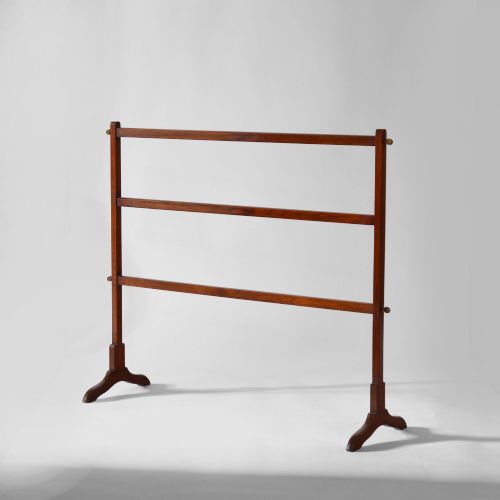
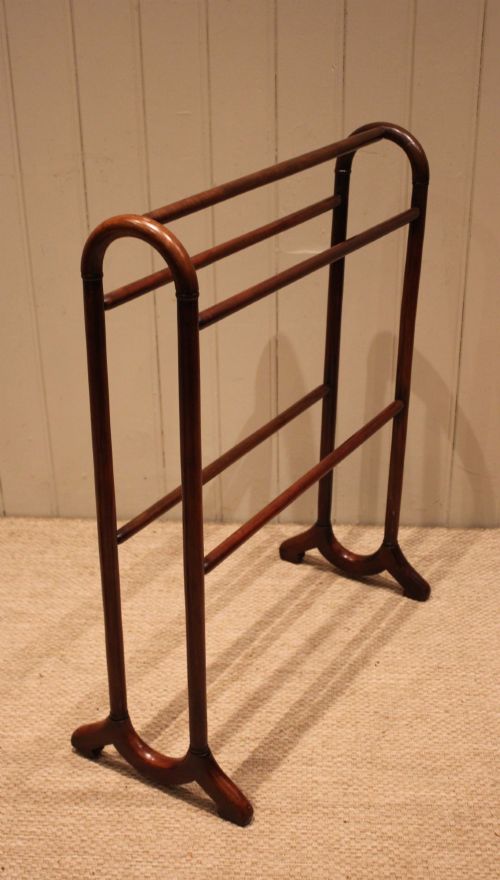
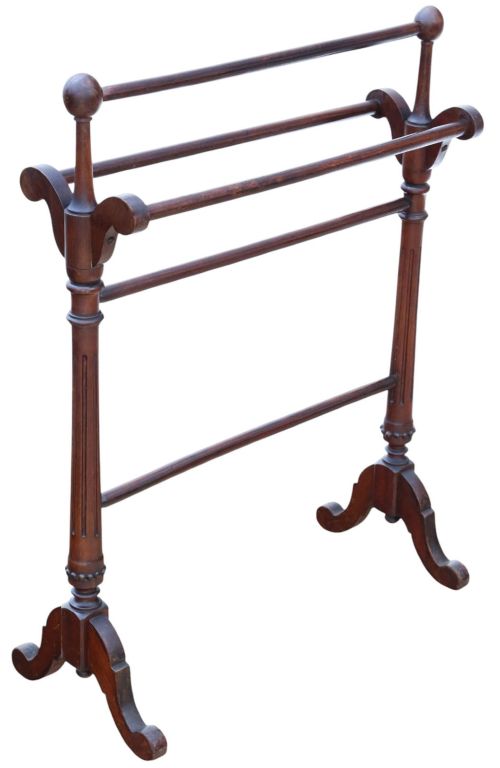
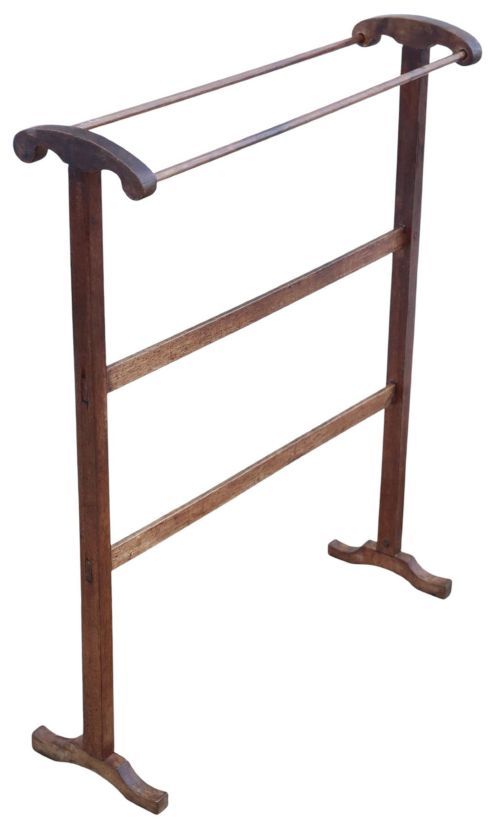
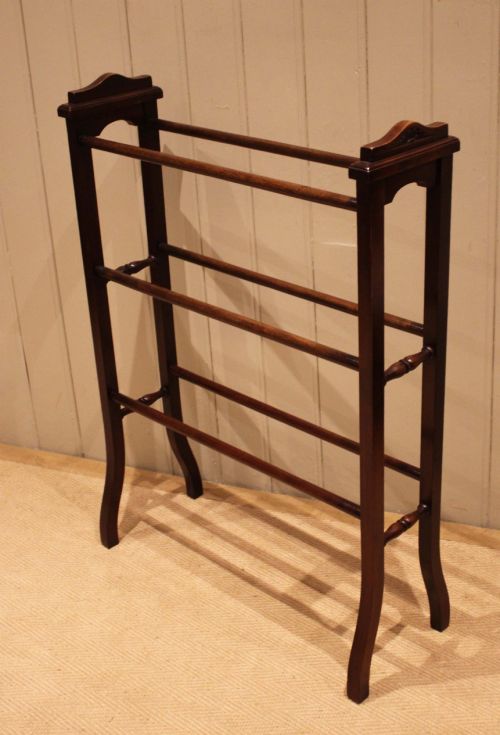
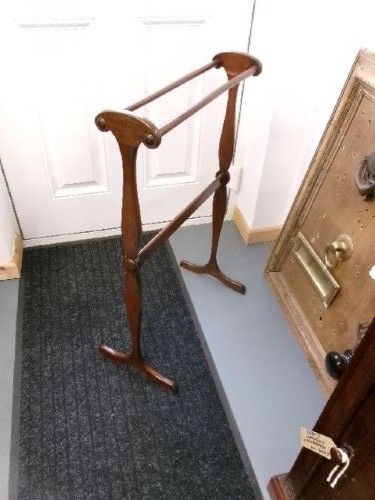
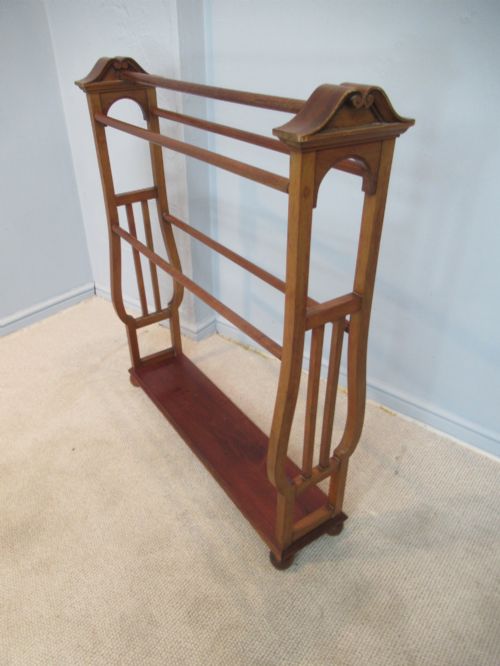
A vintage clothing rack in this collection typically takes the form of a towel rail, clothes horse, or valet stand adapted over time for garments. These practical wooden furnishings span from the nineteenth century through the Edwardian period and the early twentieth century.
Mahogany and pine dominate the standing forms, while oak and walnut appear in heavier towel rails and hall stands. Buyers frequently encounter folding multi-bar rails designed originally for airing laundry or garments in domestic chambers.
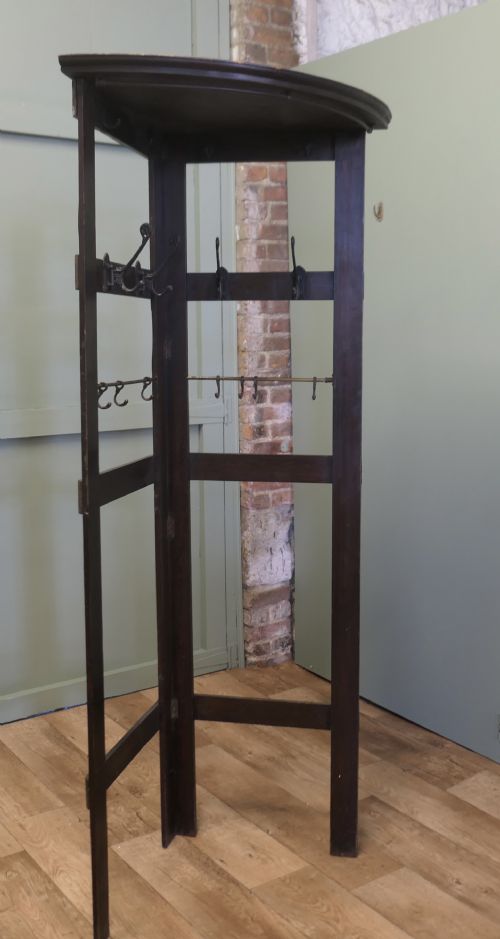
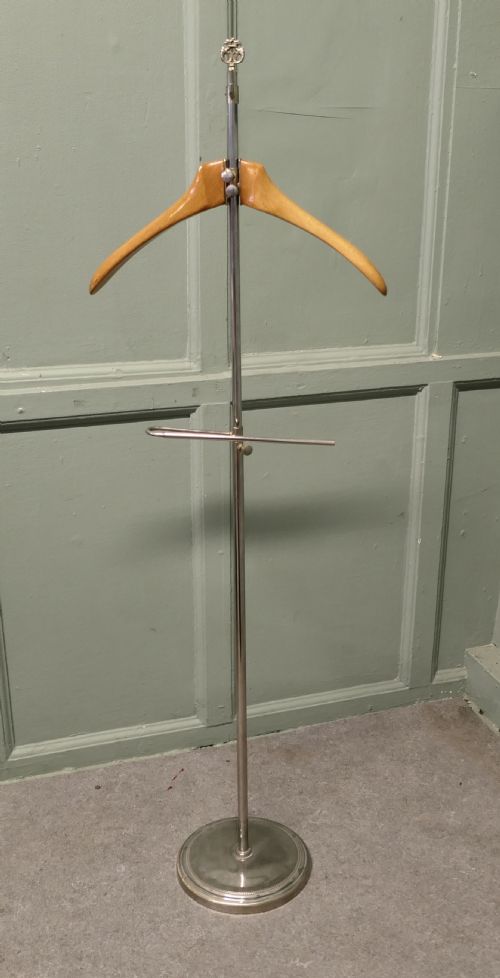
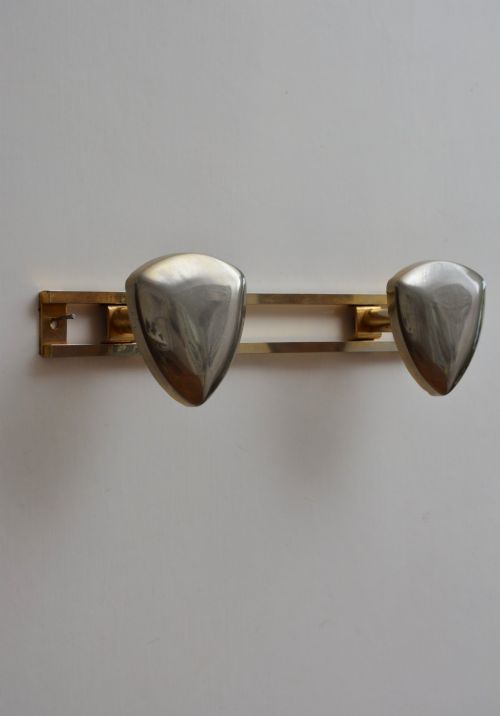
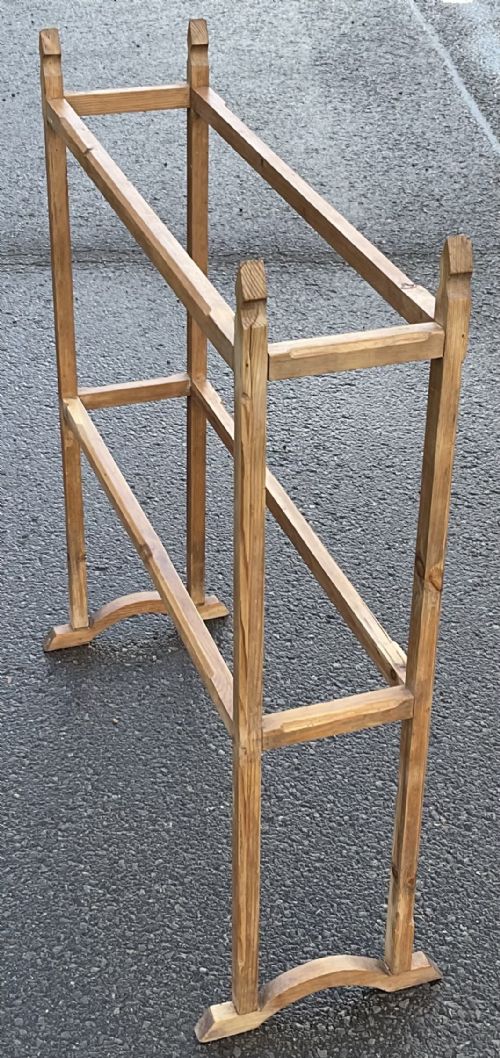
Regional and campaign pieces bring variety, including portable folding wardrobes and double-sided hanging rails in golden pine. French chrome and beech gents' valets represent the later twentieth-century shift towards designated suit storage.
How they were made
Cabinet makers built these racks using solid hardwoods like mahogany, oak, and walnut, frequently jointed with traditional tenons to withstand daily weight and movement. Pine and beech served for lighter utility pieces, while brass fittings and chrome added structural reinforcement and functional movement.
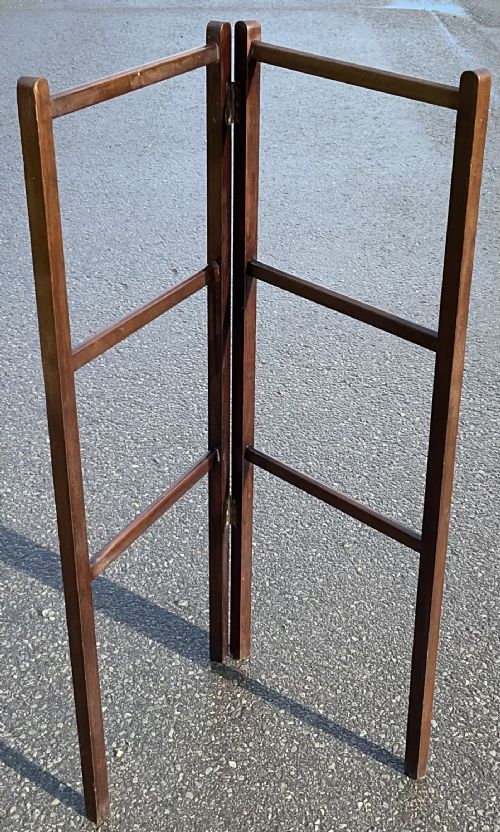
Folding mechanisms rely on secure hinges and wooden pins that allow multi-fold towel rails and clothes horses to collapse flat when not in use. Surface finishes range from polished mahogany and lacquered surfaces to ebonised black treatments and simple waxed pine.
Vintage Clothing Rack Retail Price Guide 2026
Typical asking prices for vintage clothing rack among the pieces listed under this phrase on Sellingantiques today, from the lower quarter to the upper quarter. They describe what is for sale here now, not the wider market.
What varies in quality
The distinction between standard utility items and finer pieces lies in the choice of timber and the subtlety of turning on the upright supports. Heavier gauge brass hardware and crisper moulded details elevate an ordinary folding rail into a more considered interior piece.
Proportion and stability dictate the merit of a standing rack, with superior examples offering generous proportions without wobbling at the joints. Original patination on the timber surface remains crucial, showing the natural depth accumulated from decades of handling.
The Vintage Clothing Rack Glossary
- Valet stand
- A freestanding piece designed to hold a complete suit, tie, and shoes overnight. It usually incorporates a shaped coat hanger and a small tray for smaller items.
- Clothes horse
- A slatted folding wooden frame used originally for drying laundry indoors. These serve readily today as lightweight partitions or hanging rails for garments.
- Campaign
- Portable furniture constructed for travel, often featuring folding frames and brass corners. Such pieces prioritize sturdy knockdown construction and practical portability.
- Cheval
- A mirror or rack mounted on a standing frame that tilts or pivots. In this context, it describes a folding multi-bar rail that opens on hinges.
- Ebonised
- Timber treated with a dark stain or finish to imitate ebony. This treatment was common on Victorian utility pieces to achieve a formal appearance.
Vintage Clothing Rack: Frequently Asked Questions
How do I use a vintage towel rail for clothes?
Many historical towel rails and clothes horses share the exact dimensions and bar spacing required for modern garments. They sit neatly in a bedroom to hold tomorrow's outfit or air freshly laundered items.
The multiple bars allow coats, shirts, and trousers to hang without crowding, keeping fabrics smooth and accessible.
Are these racks sturdy enough for heavy coats?
Solid mahogany and oak pieces built in the nineteenth century offer robust frames designed for heavy household textiles. They handle winter coats and garments securely when placed on an even floor.
Lighter pine or folding utility rails suit delicate shirts and lighter daily wear rather than heavy outerwear.
How do I distinguish Edwardian pieces from Victorian ones?
Victorian racks often feature heavier dark timbers, turned walnut, and ebonised finishes with a formal presence. Edwardian examples frequently showcase lighter mahogany, sometimes with inlaid details and simpler uprights.
The transitional styles show a gradual shift toward domestic lightness and brighter polished surfaces.
Can I fold these racks away when not in use?
Most multi-fold towel rails and campaign pieces feature working hinges designed for compact storage. You can collapse them flat and slide them behind a door or wardrobe.
Freestanding single-frame stands remain fixed and rely on a stable footprint rather than folding joints.