

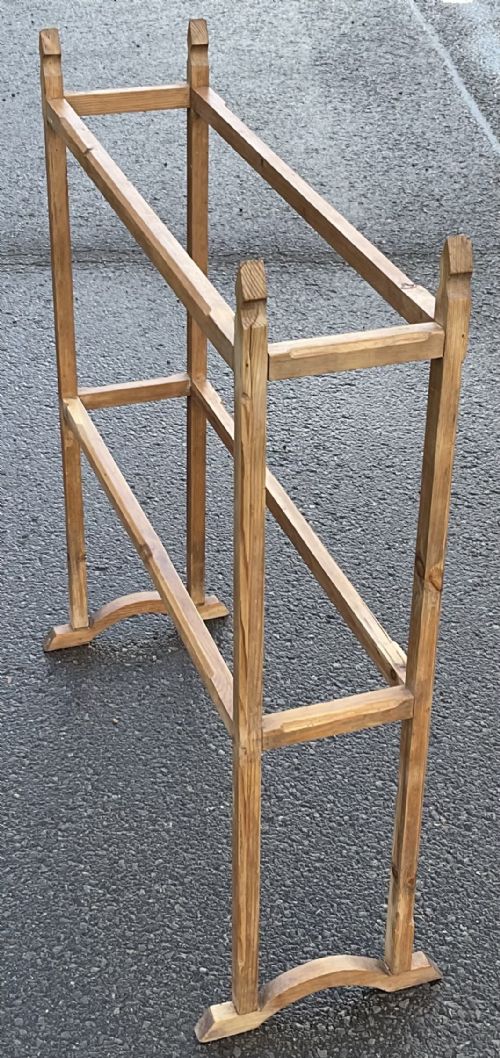


Vintage Clothes Stand
These vintage clothes stand options span functional towel rails and valet stands designed to keep garments orderly with timeless British craftsmanship.
Vintage Clothes Stand
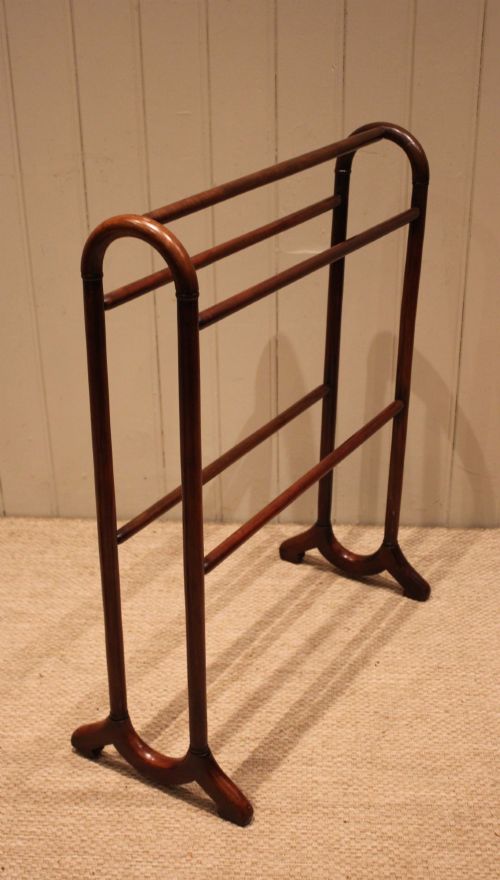
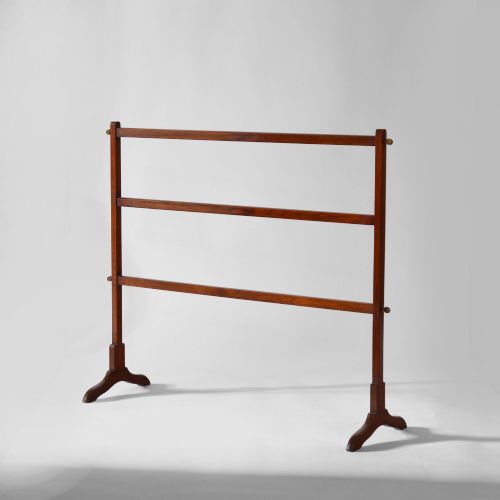
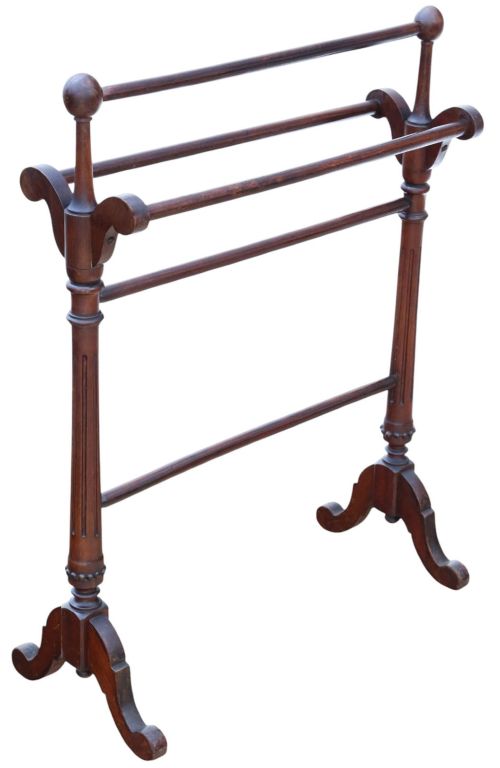
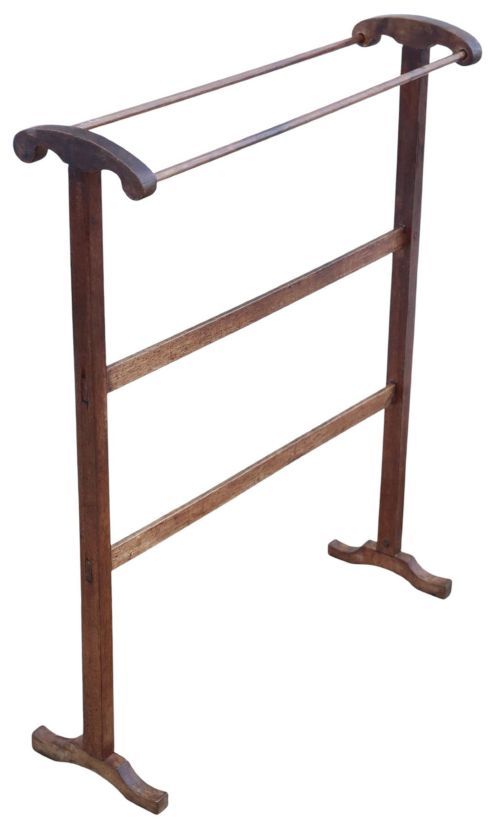
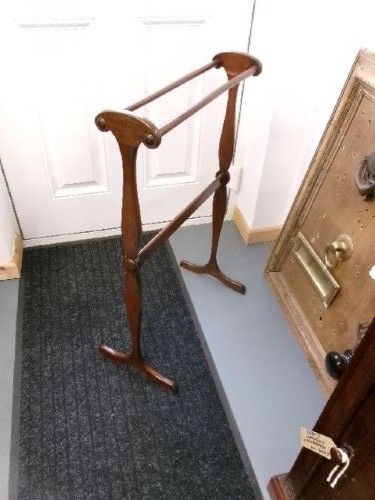
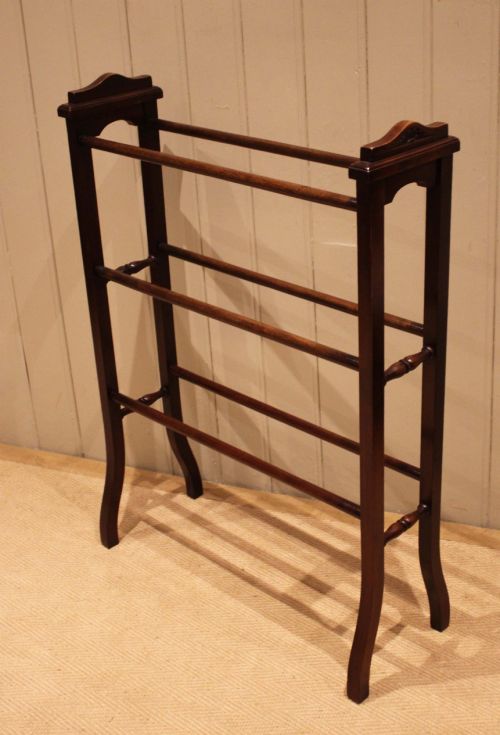
The selection on this page leans heavily toward freestanding wooden towel rails and multi-bar clothes horses from the Edwardian era and the nineteenth century. These pieces offer accessible ways to integrate period materials into bedrooms and bathrooms without dominating the room.
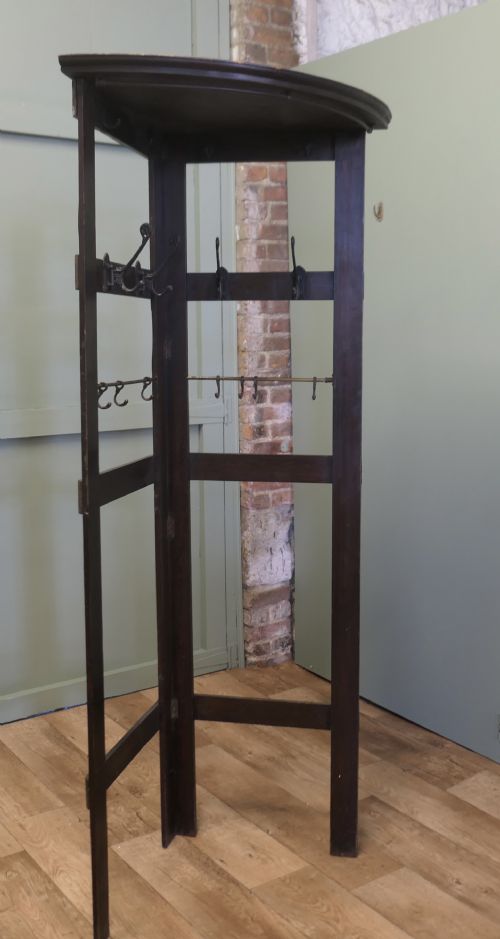
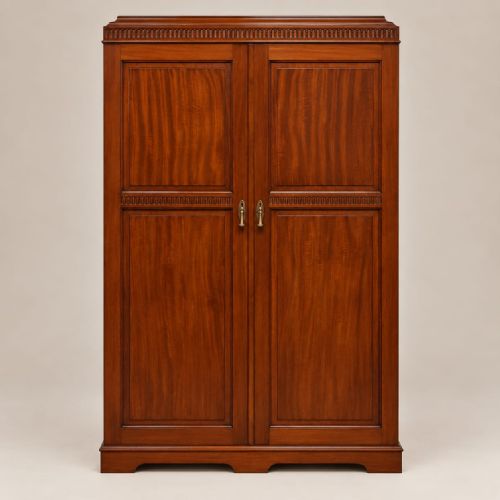
Beyond simple rails, the category stretches to include portable folding wardrobes, steamer trunks, and specialised coat stands. Each variation serves the core purpose of hanging or draping garments effectively in domestic interiors.
Materials and construction methods
Makers relied predominantly on solid hardwoods such as mahogany, oak, walnut, and beech to build sturdy frames capable of withstanding daily hanging loads. Pine appears frequently in simpler country house and domestic pieces, offering lighter utility.
Joinery techniques ranged from traditional pegged mortise and tenon joints in Arts and Crafts designs to folding hinges and metal brackets on portable campaign and steamer items. Brass and iron hardware frequently reinforced moving parts and provided structural stability.
Vintage Clothes Stand Retail Price Guide 2026
Typical asking prices for vintage clothes stand among the pieces listed under this phrase on Sellingantiques today, from the lower quarter to the upper quarter. They describe what is for sale here now, not the wider market.
Some travellers preferred folding their wardrobes into steamer trunks rather than unpacking at every stop.
Distinctions in construction and finish
Quality rests primarily on the integrity of the timber and the rigidity of the assembled frame. Superior examples utilise dense, well-figured mahogany or oak with tight joints that prevent the wobble common in heavily used multi-bar rails.
The refinement of turned spindles, subtle inlay work, and original metal fixings separate standard utility items from finer country house commissions. Preserved surface patination and smooth mechanical movement in folding pieces further elevate a piece.
Fratelli Rugitti·Hartman Luggage Co·Louis Vuitton
The Vintage Clothes Stand Glossary
- Valet stand
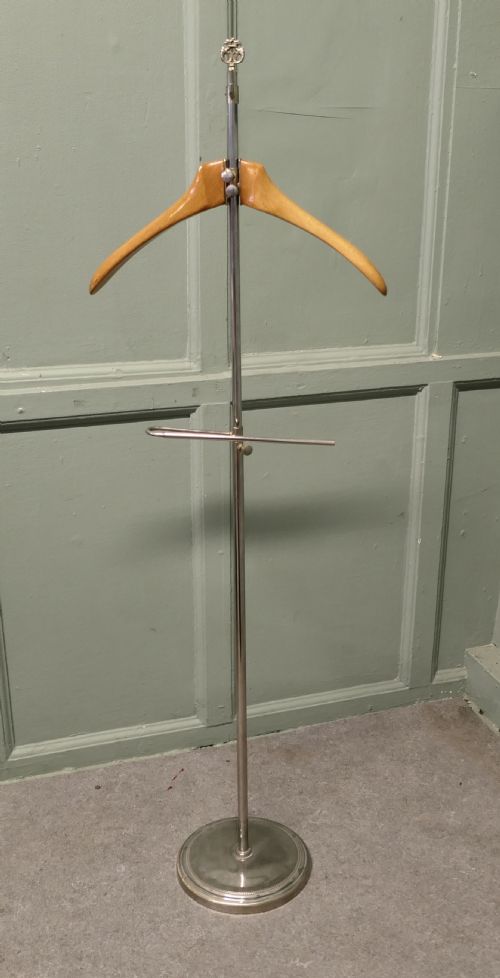
- A specialised piece of furniture designed to hold a complete suit, including a jacket hanger, trouser rail, and small tray for accessories. These pieces typically appeared in gentleman's dressing rooms during the early twentieth century.
- Towel rail
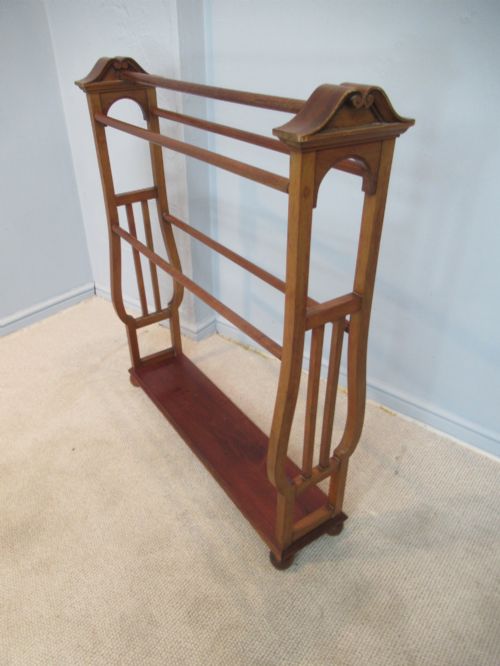
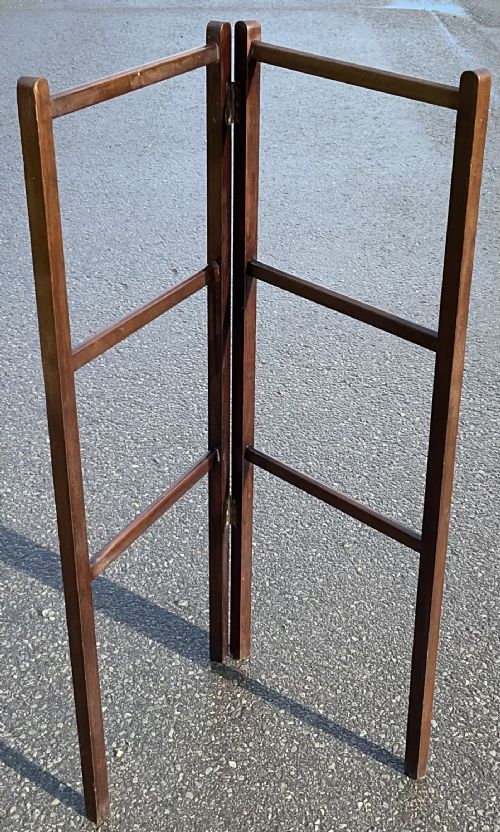
- A freestanding wooden frame with multiple horizontal bars used for airing textiles or hanging garments. Nineteenth and Edwardian versions often featured folding multiple-fold panels.
- Hall stand
- A large piece placed near an entryway combining coat hooks, umbrella wells, and frequently a mirror or small seat. They organise outdoor wear in domestic hallways.
- Campaign furniture
- Portable pieces designed to fold down easily for travel or military deployment. These items incorporate brass corners and folding hinges.
- Bentwood
- Wood softened through steaming and bent into curved structural components. This technique created lightweight, durable frames popular in the early twentieth century.
Vintage Clothes Stand: Frequently Asked Questions
How do I use a vintage clothes stand today?
These stands fit naturally into bedrooms or dressing rooms as functional furniture for organising tomorrow's outfit. Multi-bar rails also serve well in bathrooms for airing towels.
Their narrow footprints allow them to sit compactly against walls without cluttering smaller living spaces.
Are these stands sturdy enough for daily use?
Most solid hardwood pieces from the Victorian and Edwardian periods remain structurally robust for everyday garment hanging. Proper timber selection and tight joinery ensure they handle standard coats and trousers.
Folding versions should be checked periodically to ensure their hinges and moving joints remain secure.
How do I distinguish Edwardian pieces from Victorian ones?
Victorian stands often feature darker, heavier walnut or mahogany timbers with more elaborate ornamentation, including Gothic revival or heavier turned elements. They prioritize dense mass and traditional carving.
Edwardian examples tend to be lighter in scale, occasionally featuring simpler inlaid details or brighter polished mahogany finishes suited to airy domestic interiors.
What maintenance do wooden clothes stands require?
Standard wooden frames benefit from occasional applications of appropriate beeswax or furniture polish to nourish the timber surface. Avoid placing them directly next to strong heat sources that might dry out the wood.
Checking screws, hinges, and joints annually helps maintain structural stability across folding or multi-bar items.