




Vintage Cameo Carving
Vintage cameo carving brings forward classical subjects carved in relief across shell, hardstone, and glass, offering miniature portraiture that wears easily today.
Vintage Cameo Carving
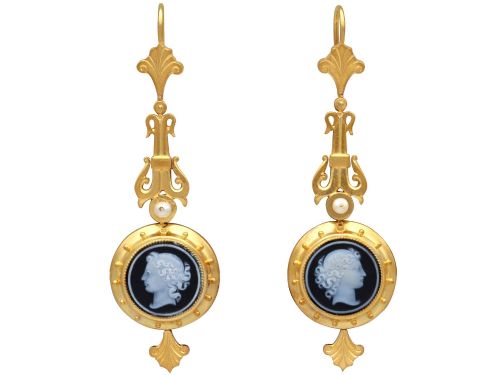
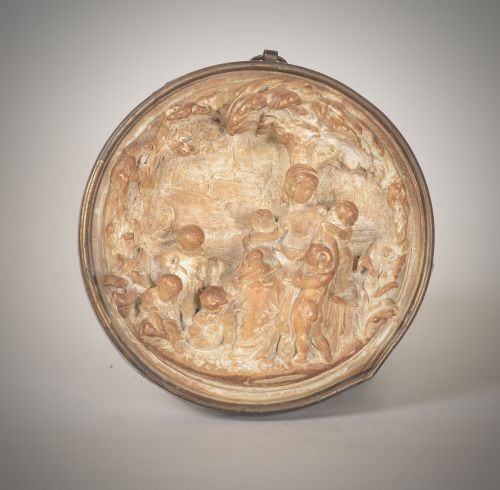
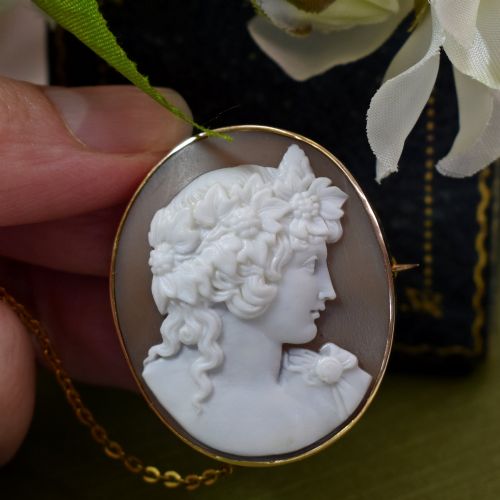
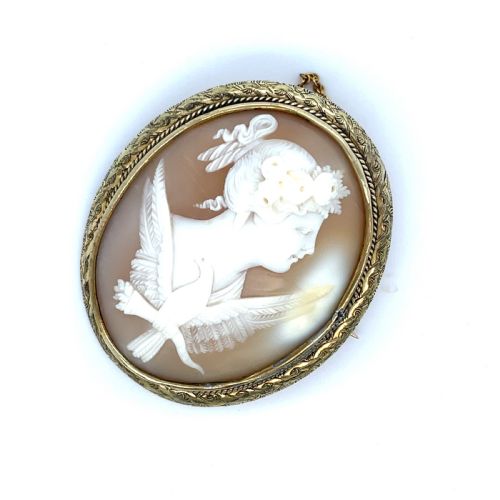
When searching for vintage cameo carving, buyers encounter personal ornaments and decorative objects spanning the Victorian, Edwardian, and mid-twentieth-century periods. Brooches, earrings, rings, and pendants form the core of the jewellery selection, alongside vases and wall plaques.
Shell and hardstone mounted in gold or silver predominate among personal pieces, while cameo glass and carved wood appear in decorative items. The Italian tradition is strongly represented through classical subjects and shell mediums.
Pieces range from nineteenth-century Neoclassical revival designs to later twentieth-century iterations. Buyers find both delicate everyday drops and large statement mounts set in various purities of gold.
How they were made
Carvers cut directly into layered materials such as conch shell, agate, onyx, and multi-layered cameo glass to create a raised motif against a contrasting background. Artisans exploited natural colour variations in the strata to achieve depth in miniature.
Metalwork involved silver and various grades of gold, including nine-carat, eighteen-carat, and twenty-two-carat frames, often shaped with detailed bezels, twist wire, or cast mounts. Glass versions required acid-etching or wheel-carving techniques across contrasting cased layers.
Vintage Cameo Carving Retail Price Guide 2026
Typical asking prices for vintage cameo carving among the pieces listed under this phrase on Sellingantiques today, from the lower quarter to the upper quarter. They describe what is for sale here now, not the wider market.
Listings feature items spanning the Victorian era, the Edwardian period, and the twentieth century, utilising shell, hardstone, coral, glass, and gold.
What varies in quality
Depth of relief and sharpness of detail distinguish finer carvers from routine production, particularly in facial expressions and drapery. The natural material beneath dictates the clarity of the colour contrast between figure and field.
The weight and purity of the precious metal mount, alongside secure bezel settings, elevate the overall standard of the piece. Masterwork carvings command attention through proportion and anatomical accuracy rather than sheer size.
Thomas Webb & Sons·R.Pernice·Galle
The Vintage Cameo Carving Glossary
- Cameo
- A method of carving an object such as a gemstone, shell, or piece of glass where a relief image is raised above a flat background. This contrast relies on differing natural or fused colour strata.
- Hardstone
- A semi-precious mineral such as agate, onyx, or sardonyx utilised for cameo carving. These stones offer durability and crisp detail.
- Conch shell
- A marine mollusc shell utilised for its pink and white layered structure. Carvers frequently select this material for large classical portrait brooches.
- Cameo glass
- Art glass formed of two or more fused layers of contrasting colours. Artisans carve away the exterior layer to reveal the design beneath.
- Neoclassical
- A style drawing inspiration from the classical art and culture of ancient Greece and Rome. This aesthetic heavily influences the portrait subjects chosen for antique carvings.
Vintage Cameo Carving: Frequently Asked Questions
What is the difference between shell and hardstone cameos?
Shell cameos utilise organic marine shell yielding warm cream and peach tones against a darker backing. They tend to offer softer detail and lighter weights.
Hardstone cameos utilise layered mineral stones like agate, providing crisp, enduring profiles with sharp colour separation.
How should I clean my cameo jewellery?
Wipe shell and hardstone gently with a soft, damp cloth to remove surface dust. Avoid harsh chemical dips or ultrasonic cleaners which damage organic materials.
Dry the metal mount thoroughly before storing the piece to protect the gold or silver settings.
How do I date a cameo carving?
Examine the style of the mount, the clasp mechanism, and the clothing or hair styling of the portrait figure. Victorian and Edwardian pieces often feature closed backs and tube hinges.
Twentieth-century examples frequently show different fastener styles and bolder, less traditional proportions.