



Vintage Brass Hanging Mirror
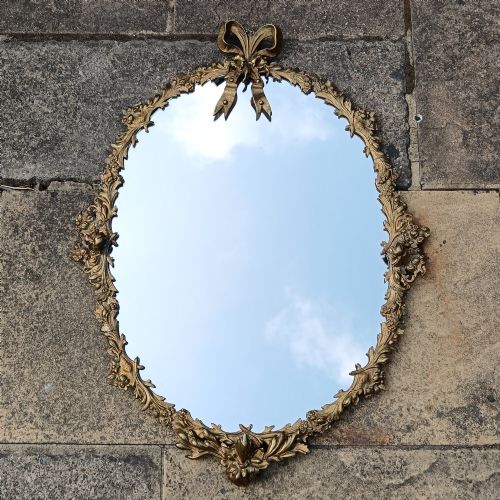
These vintage brass hanging mirror examples combine reflective glass with cast metal frames, offering functional wall pieces shaped by Victorian, Edwardian, and Art Deco hands.
Vintage Brass Hanging Mirror
A vintage brass hanging mirror spans several decades of decorative design, encompassing wall mirrors alongside occasional lighting and furnishing forms. The pieces available traverse the nineteenth century, Victorian, Edwardian, and later periods like the 1920s and 1930s.
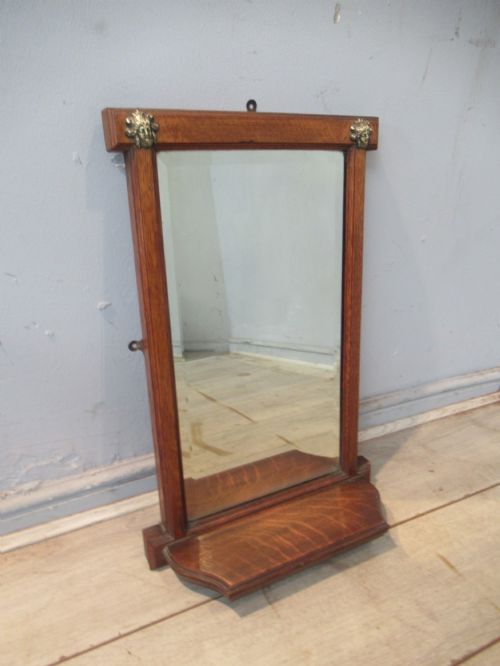
Most items on this page adhere to defined historical styles, including Louis XVI Revival, Neoclassical Revival, Hollywood Regency, and Art Deco. Frames appear in oval, circular, and rectangular formats designed specifically for wall suspension.
Makers utilised various metals and woods to support the glass, resulting in items ranging from simple pressed brass borders to heavily ornamented cast frames featuring cherubs, rams heads, and mask crests.
Materials and construction
Makers built these frames using brass, gilt bronze, pressed brass, and occasionally wood or giltwood alongside oak and mahogany. Metal components were often cast or pressed into detailed decorative motifs before receiving mirror plates.
Reflective surfaces include standard glass alongside mercury glass variants, set securely within the structural metal surrounds. Hanging mechanisms were integrated into the framing to allow straightforward wall mounting.
The listings span eight distinct periods, from Regency and Victorian eras through to Art Deco styles of the 1930s.
Assessing quality and finish
The refinement of the casting separates standard production from superior examples, particularly visible in the crispness of details like rams heads, cherubs, and mask crests. Finely cast metalwork displays sharp relief and careful finishing.
The preservation of the original glass plate contributes significantly to the integrity of the piece, alongside the stability of the surrounding wooden or metal framework. Cohesion between the period style and the physical materials dictates overall merit.
The Vintage Brass Hanging Mirror Glossary
- Mercury glass
- A type of blown double-walled glass coated with a silvering mixture between the layers, creating a mottled reflective appearance. It frequently appears in twentieth-century lighting and mirror designs.
- Pressed brass
- Sheet metal shaped through mechanical pressing dies to create repeating decorative surface patterns. This technique allowed makers to produce ornate frames efficiently during the nineteenth and twentieth centuries.
- Neoclassical Revival
- A design style drawing inspiration from classical Greek and Roman architecture and ornamentation. It manifests in symmetrical frames and restrained decorative motifs on mirrors from around nineteen hundred.
Vintage Brass Hanging Mirror: Frequently Asked Questions
How do I hang a heavy brass mirror safely?
Ensure your wall fixing matches the weight of the metal frame and the glass plate. Utilise appropriate wall anchors tied directly into structural supports rather than relying solely on plaster.
Check that the integrated hanging ring or chain on the back of the mirror is secure before mounting the piece at eye level.
Are mercury glass mirrors different from standard glass?
Mercury glass uses a silvered liquid solution trapped between two glass walls, yielding a characteristic cloudy or speckled reflection. This appearance distinguishes it from standard modern mirror plates.
Such glass appears frequently in pieces dating to the early twentieth century and requires gentle cleaning to preserve the surface.
How do I identify an Art Deco mirror?
Art Deco mirrors often feature geometric shapes, clean circular or rectangular lines, and minimal ornamentation compared to earlier Victorian styles. They rely on the purity of the form and simple metal framing.
These pieces typically date from the nineteen twenties and thirties, reflecting the modern industrial design shifts of that era.
Can these mirrors be used in damp spaces like bathrooms?
Hanging brass and glass pieces in rooms with high humidity requires caution regarding the metal finish and the backing of the glass. Moisture can accelerate tarnishing on brass and degrade the silvering on older mirror plates.
Dry interior walls remain the safest environment for preserving original Victorian, Edwardian, and revival frames.