


Vintage Bookshelf Cabinet
A vintage bookshelf cabinet brings architectural order and grounded timber tones to a room, holding centuries of collected reading.
Vintage Bookshelf Cabinet
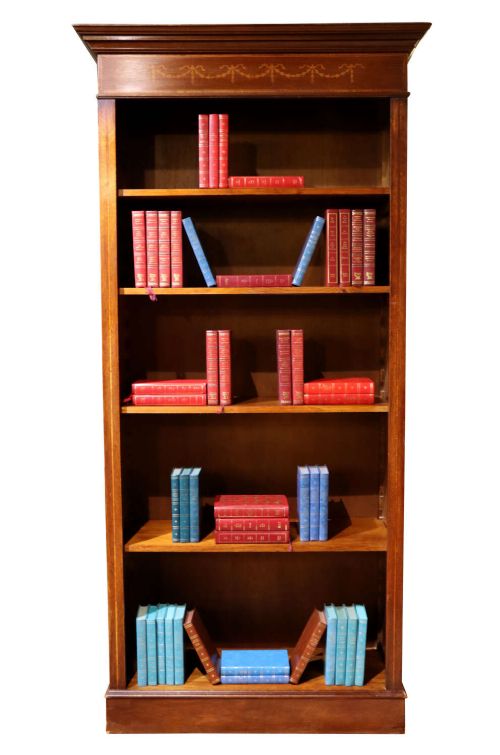
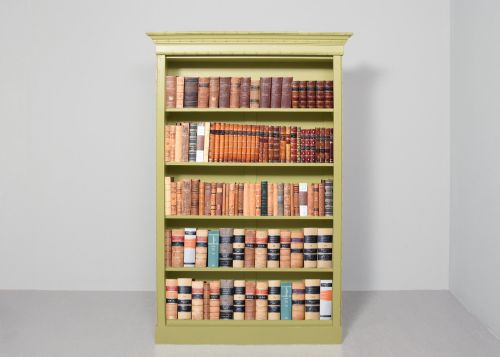
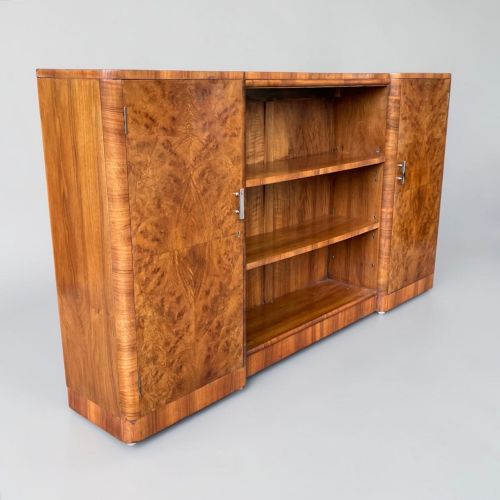
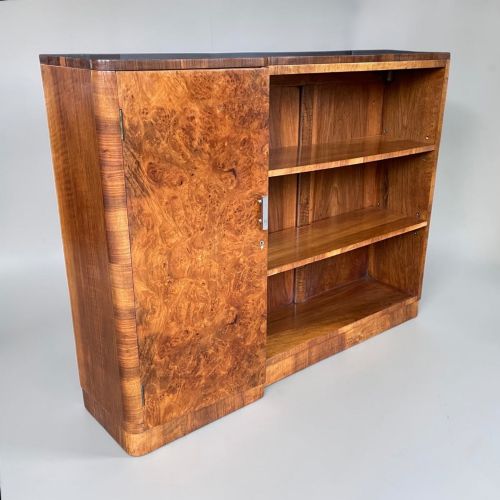
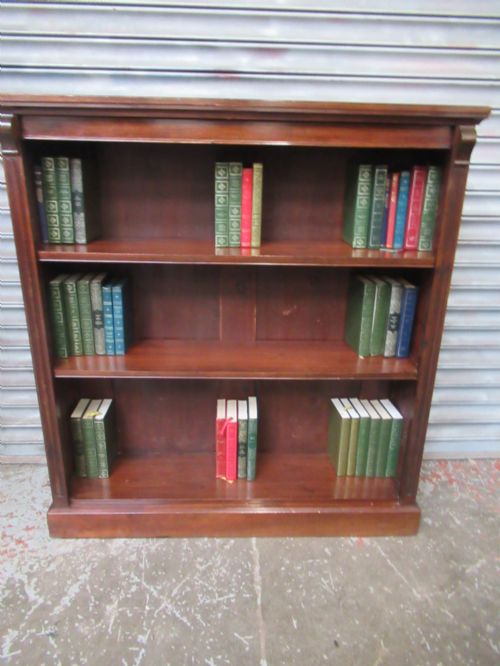
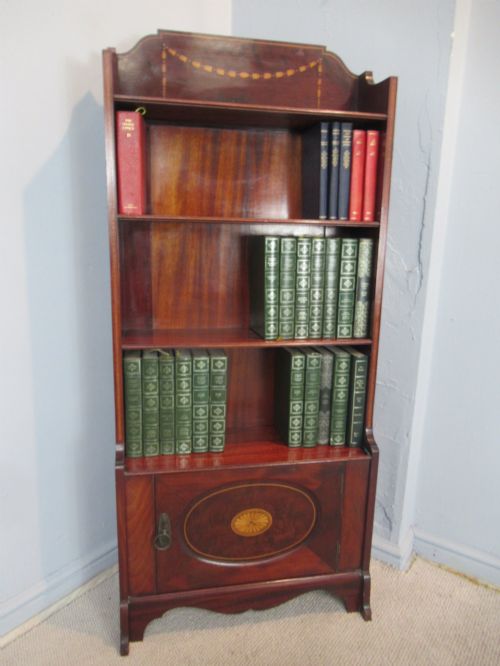
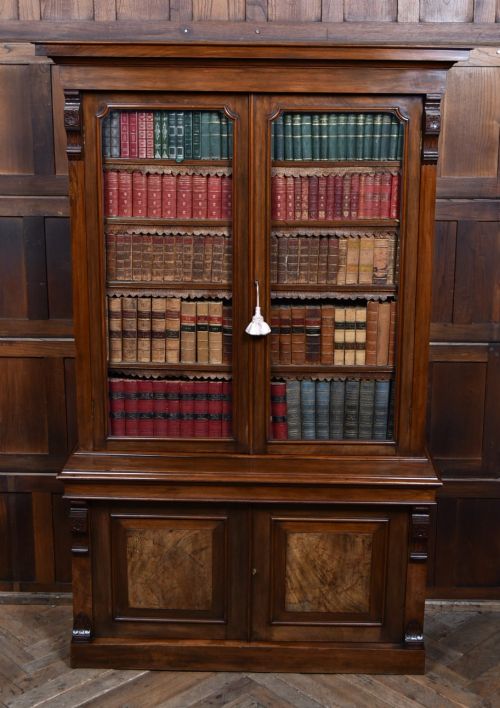
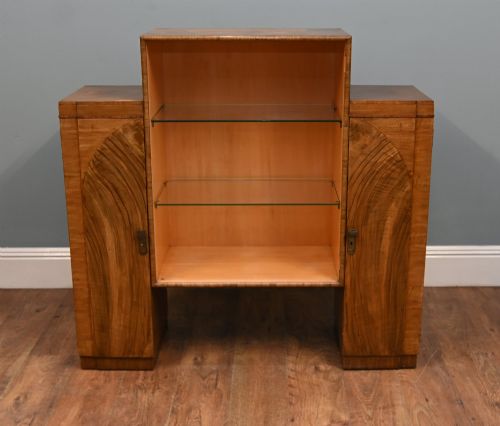
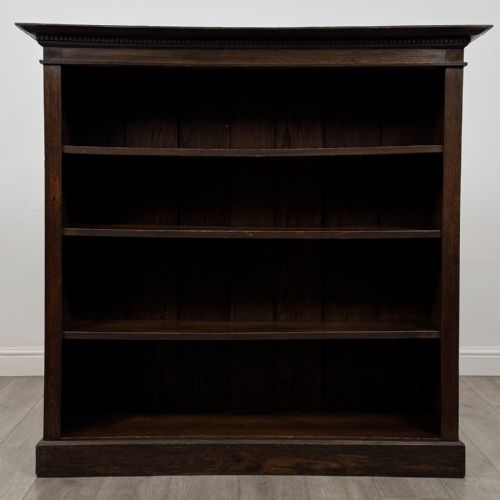
A vintage bookshelf cabinet combines open shelving for daily volumes with enclosed lower cupboards or glazed display sections, serving both practical library storage and decorative display. When searching for a vintage bookshelf cabinet, buyers encounter forms ranging from compact Edwardian and Victorian open mahogany bays to geometric Art Deco walnut designs from the nineteen thirties.
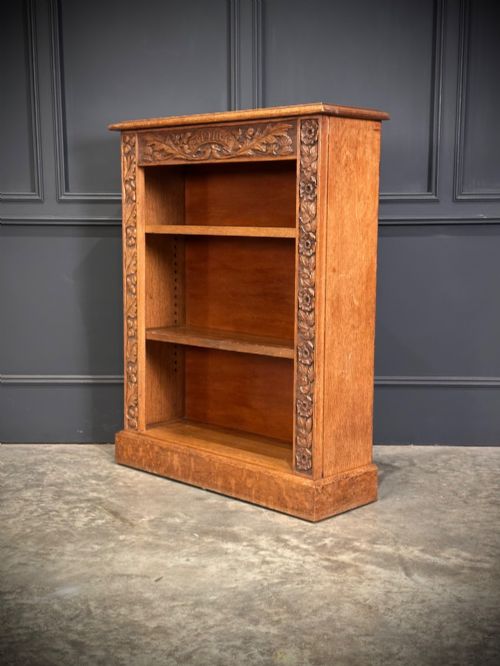
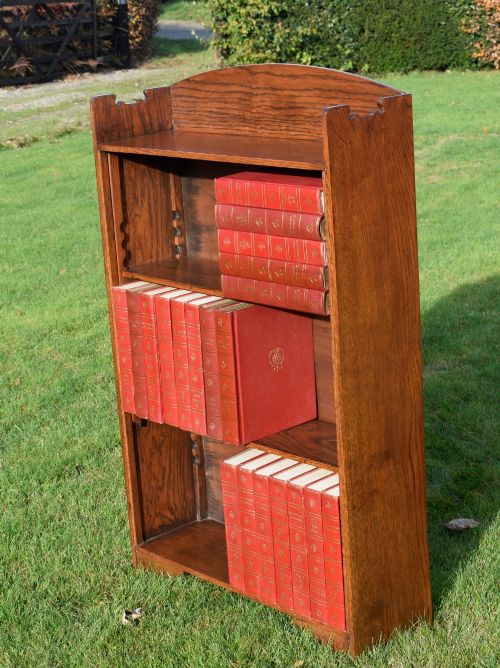
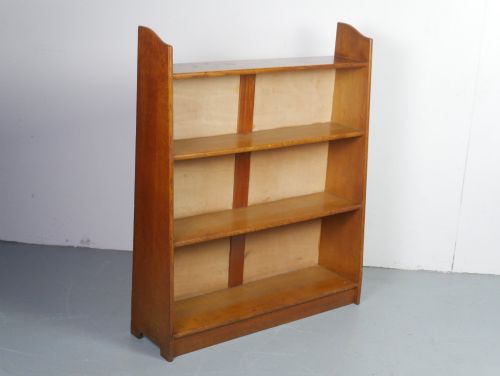
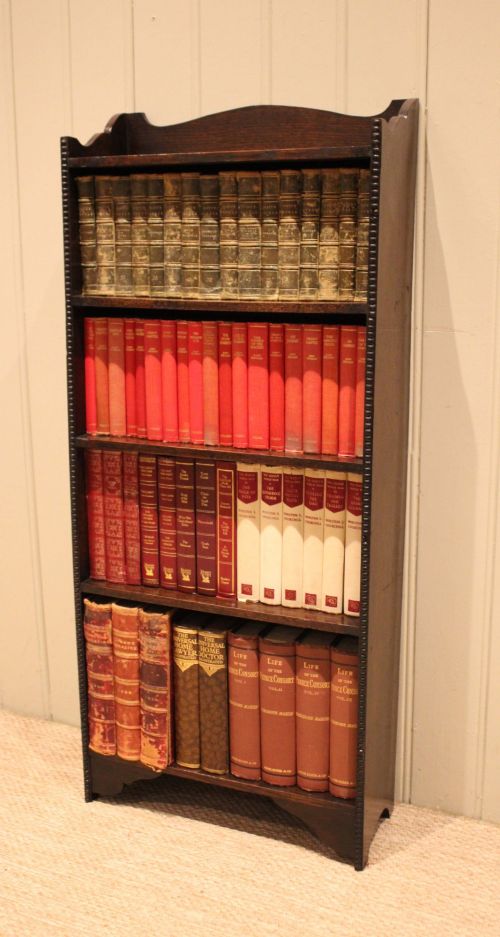
The selection spans substantial nineteenth century library pieces alongside narrow Edwardian oak and mahogany formats fitted with adjustable shelves or raised galleries. Makers utilised diverse regional styles including Arts and Crafts, Regency, Sheraton Revival, and Jacobean Revival to shape these timber containers.
Materials and construction methods
Cabinet makers relied primarily on solid mahogany and oak, frequently applying walnut veneer, burr walnut, ash, and satinwood inlay to add visual depth to the exterior surfaces. Brass hardware appears on adjustable shelf brackets and cupboard fittings, while glass panels protect delicate display contents.
Joinery methods prioritized structural durability to support heavy rows of books, integrating carved edges, beaded borders, bracket feet, and raised galleries. French polishing and wax finishes sealed the timber grain while developing a rich patina across decades of use.
Vintage Bookshelf Cabinet Retail Price Guide 2026
Typical asking prices for vintage bookshelf cabinet among the pieces listed under this phrase on Sellingantiques today, from the lower quarter to the upper quarter. They describe what is for sale here now, not the wider market.
A revolving bookcase lets you spin your entire library with a gentle nudge, turning mundane shelf browsing into an office amusement.
Distinctions in construction and design
The standard of a piece rests on the selection of timber veneers and the crispness of carved details such as satinwood inlay and beaded edge work. Finer examples integrate adjustable shelf mechanisms and solid brass fittings that operate smoothly without binding.
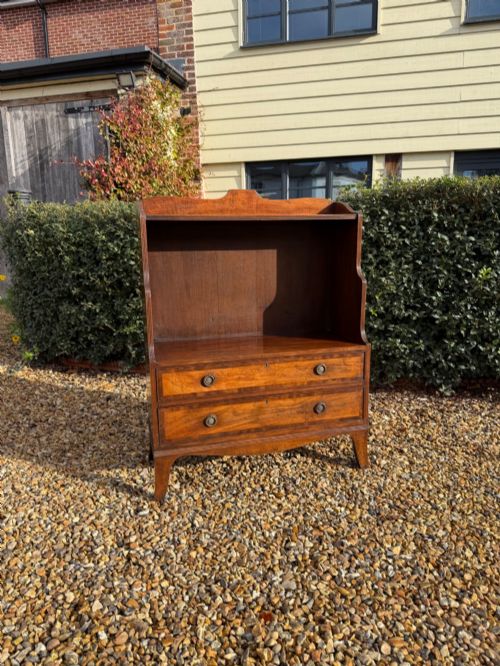
Proportion and structural integrity separate standard utility pieces from exceptional design works, particularly in items featuring specialised formats like revolving tiers or waterfall shelving.
Ercol·Maurice Adams
The Vintage Bookshelf Cabinet Glossary
- Waterfall bookcase
- A tiered shelving unit where each lower shelf steps out wider than the one above, creating a cascading silhouette.
- Open bookcase
- A timber storage unit with exposed shelves and no doors, designed for quick access to frequent reading material.
- Satinwood inlay
- A decorative technique inserting contrasting pale satinwood timber into darker mahogany surfaces to form geometric or floral patterns.
- Display cabinet
- A glazed enclosure intended for exhibiting porcelain and decorative objects alongside or separate from book storage.
Vintage Bookshelf Cabinet: Frequently Asked Questions
How do I style a vintage bookshelf cabinet?
Balance vertical rows of books with horizontal stacks and small decorative objects to create visual breathing room on the shelves.
Allow the timber tones of the mahogany, oak, or walnut to anchor the room scheme while coordinating with existing furniture periods.
Are shelves in vintage cabinets adjustable?
Many Edwardian and Victorian designs feature removable or adjustable wooden shelves supported by brass pins or rack systems.
Solid wood fixed shelves also appear frequently, particularly in earlier nineteenth century library pieces and specific Arts and Crafts builds.
What is the difference between an open bookcase and a display cabinet?
Open bookcases provide direct, doorless access to books and papers, whereas display cabinets utilise glass doors to protect sensitive volumes or collections.
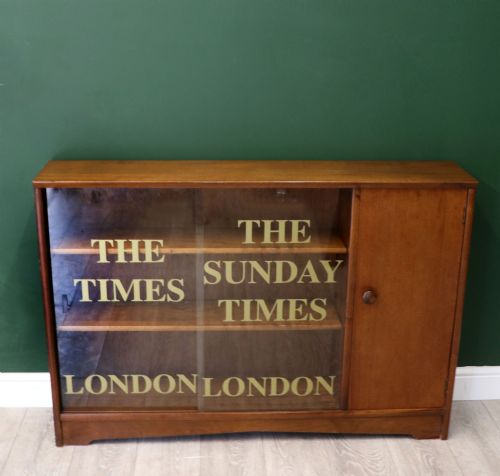
Some hybrid forms combine open upper shelving with enclosed wooden cupboards at the base.
How do I identify an Edwardian bookcase?
Edwardian pieces often display lighter timbers such as satinwood inlay, satinwood banding, and golden oak framing constructed around nineteen hundred.
They frequently favor neat, slender proportions influenced by Sheraton Revival aesthetics rather than the heavier dark masses of earlier Victorian eras.