


Vintage Bone Inlay Furniture
These vintage bone inlay furniture pieces bring intricate, hand-worked geometric patterns and rich hardwoods into modern rooms.
Vintage Bone Inlay Furniture
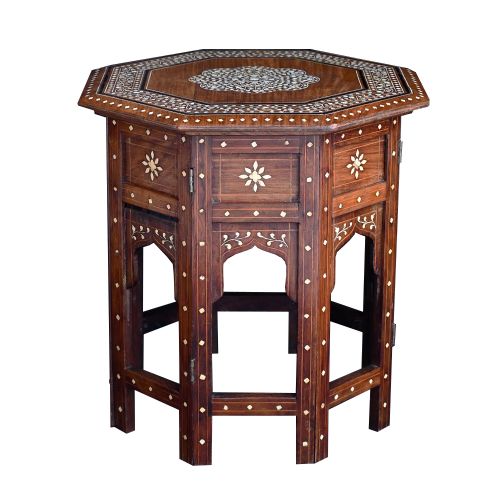
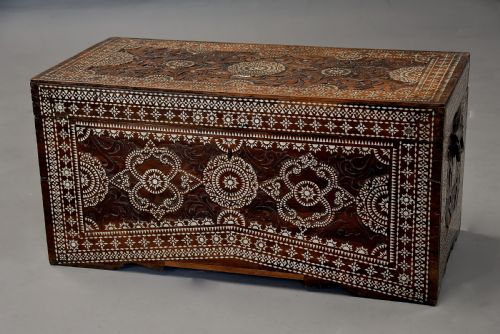
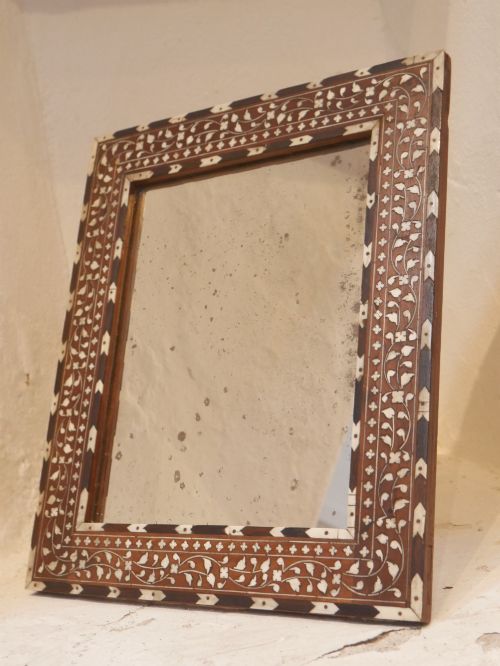
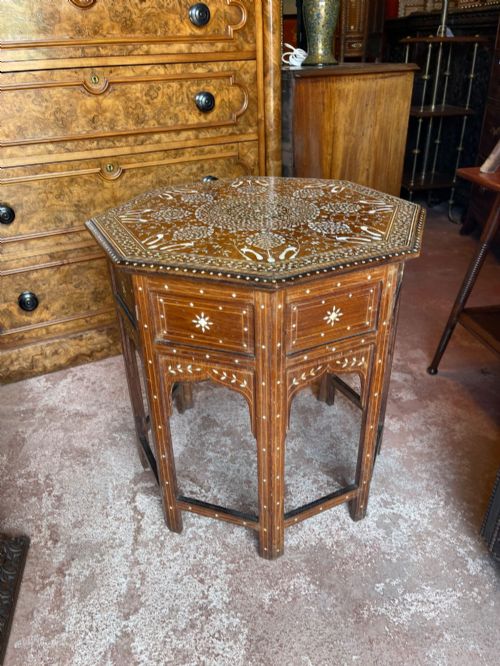
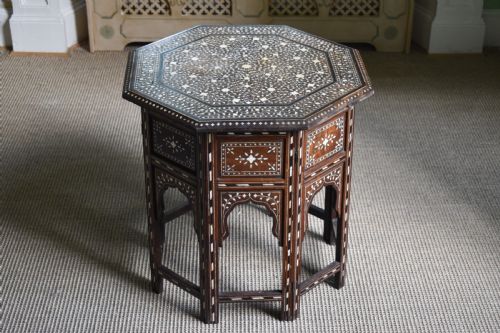
Vintage bone inlay furniture encompasses decorative side tables, wall mirrors, trunks, and collector chests dating from the late nineteenth century through to the 1930s. Buyers searching for vintage bone inlay furniture encounter diverse regional traditions, including Anglo-Indian Hoshiarpur work, Ottoman and Syrian pieces, Moorish Revival designs, and Egyptian cupboards.
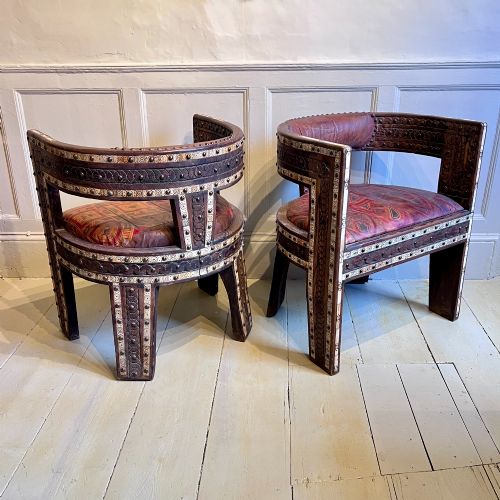
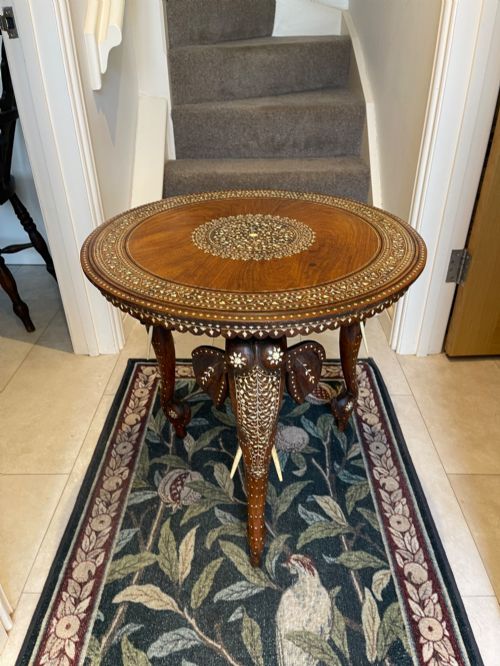
The most common forms on this page are octagonal and occasional tables, often featuring carved elephant motifs or Taj Mahal silhouettes alongside intricate surface decoration. Alongside these tables, the selection includes hardwood armchairs, games tables, and brass-accented cabinets that demonstrate the global reach of late nineteenth and early twentieth-century craftsmanship.
How they were made
Pieces in this category rely on dense tropical hardwoods such as teak, rosewood, walnut, and general hardwood frames that provide a stable foundation for detailed surface work. Artisans channelled these timbers into structural forms before applying complex geometric or figurative surface decoration.
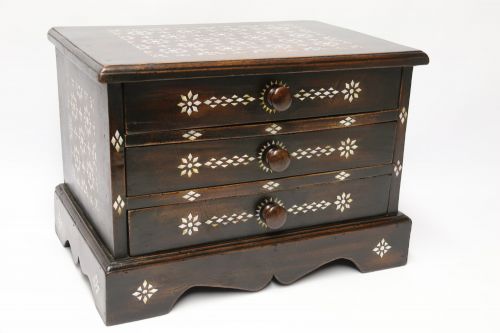
Organic elements including bone and mother of pearl were painstakingly carved into small tesserae and set into recesses within the wooden substrate. Additional detailing often incorporates brass wire or leather elements, secured by hand to create tactile, high-contrast patterns across the surfaces.
Several tables rely entirely on carved wooden elephants to hold up the top, proving that nineteenth-century desks appreciate a touch of theatre.
What varies in quality
Quality in these pieces depends heavily on the density and precision of the inlay work, where tightly fitted bone and mother of pearl segments demonstrate superior artisan skill. Finer examples maintain an even, flush surface where individual inlay pieces sit securely within the hardwood without excessive filler.
The ambition of the carved wooden framework also distinguishes exceptional items, ranging from simple occasional tables to complex structural forms with figural elements like elephant supports or extensive piercing. The harmony between the timber carving and the inlaid detailing dictates the overall visual impact.
The Vintage Bone Inlay Furniture Glossary
- Bone inlay
- A decorative technique where small pieces of shaped bone are pressed and glued into carved recesses in a wooden base. This method creates striking geometric or floral patterns.
- Hoshiarpur
- A specific regional centre in Punjab renowned for intricate inlaid woodwork involving shesham or teak. Pieces from this tradition frequently incorporate dense floral and animal motifs.
- Mother of pearl
- The iridescent inner layer of certain mollusc shells used as a contrasting inlay material alongside bone. It catches the light to add depth to dark hardwood surfaces.
- Occasional table
- A small, movable table designed for specific, intermittent uses within a room layout. These form a large portion of the portable inlaid items available.
Vintage Bone Inlay Furniture: Frequently Asked Questions
How do I clean vintage bone inlay furniture?
Dust surfaces gently with a soft, dry cloth to prevent particles from settling into the microscopic gaps around the bone segments. Avoid commercial liquid polishes and moisture, which can loosen the natural glues securing the inlay.
Keep these pieces away from direct sunlight and strong heat sources to prevent the underlying hardwood from warping and the delicate bone elements from drying out.
Are these pieces sturdy enough for daily use?
Most items are constructed from durable tropical hardwoods like teak or rosewood, offering solid structural integrity for everyday placement in a home. However, the intricate surface decoration requires care to avoid sharp impacts that could dislodge individual bone pieces.
Side tables and small cabinets function well for holding light objects, books, or lamps while retaining their decorative integrity over decades of domestic life.
How do I identify Hoshiarpur furniture?
Hoshiarpur pieces typically feature dense overall surface patterning composed of bone and delicate floral woodcarvings across teak or shesham frames. Look for characteristic motifs such as stylized foliage, lattice work, and occasional figural elements like elephants.
This specific regional style originated in northern India during the nineteenth century and dominated export markets through the early twentieth century.
What is Moorish Revival style?
Moorish Revival incorporates design elements from Islamic North Africa and Spain, reinterpreted by Western and local makers in the late nineteenth and early twentieth centuries. It relies heavily on geometric strapwork, inlaid panels, and horseshoe arch forms.
Items in this style bring an eclectic, architectural quality to interiors, often pairing dark hardwood with contrasting bone and metal details.