




Vintage Bombe Chest
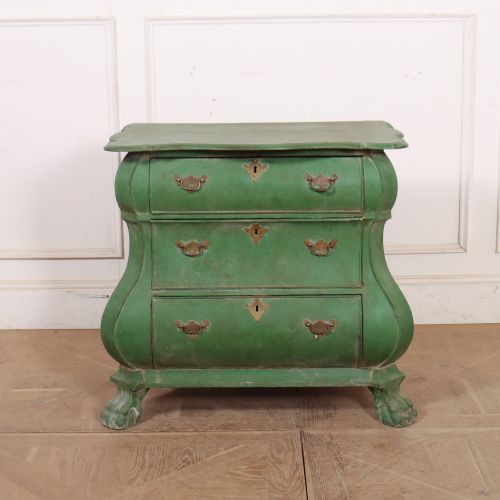
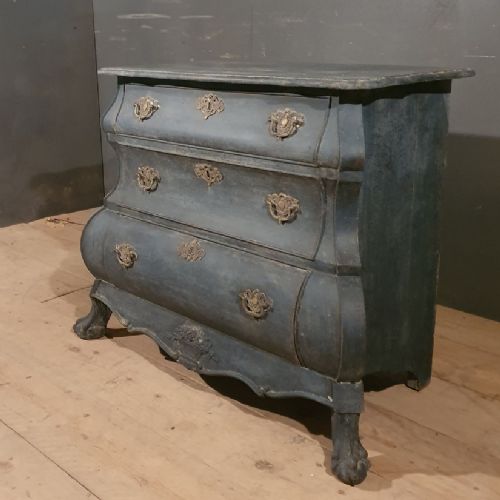
A vintage bombe chest brings swelling curves and striking Continental presence to a room, offering generous storage wrapped in rich marquetry or polished wood.
Vintage Bombe Chest
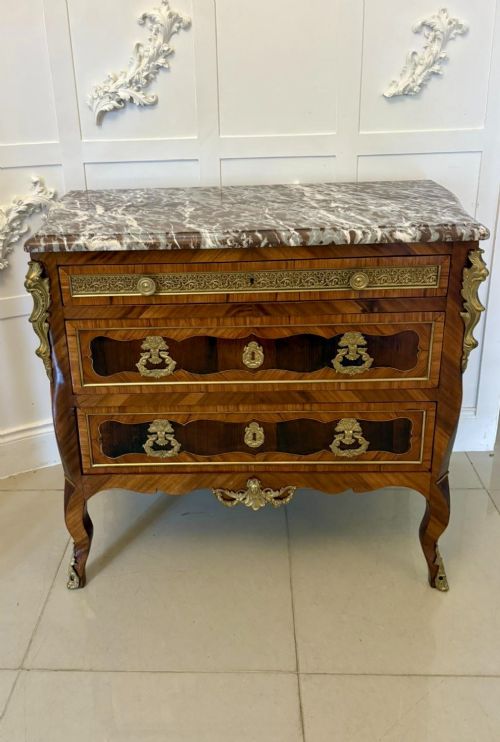
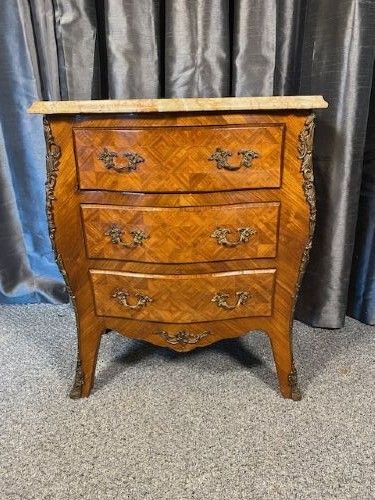
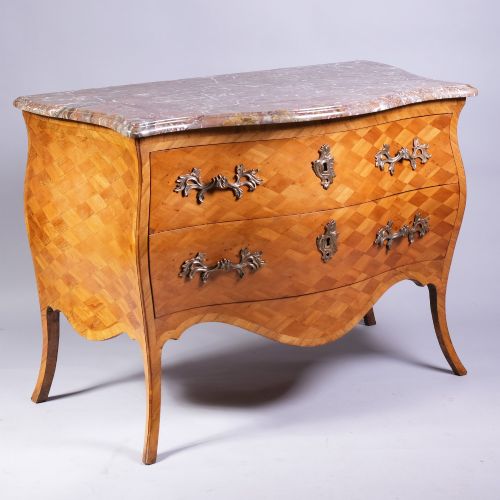
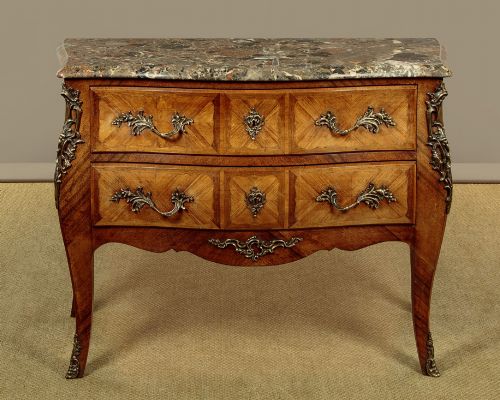
A vintage bombe chest presents a distinctive convex silhouette, bulging outwards along the front and sides in the manner of eighteenth-century Continental prototypes. When searching for a vintage bombe chest, buyers encounter pieces spanning from the nineteenth century into the early twentieth century, drawing heavily on Dutch Baroque, French Rococo, and Louis XV revivalism.
The commode or chest of drawers forms the most common manifestation of this design, frequently topped with shaped marble slabs. Alongside these chests, the listings reveal bureaux, display cabinets, and smaller items adopting the same swelling outline.
Materials and construction methods
Cabinet makers built these pieces using substantial timber carcasses of walnut, burr walnut, oak, fruitwood, and mahogany, often applying intricate floral marquetry and pictorial inlay across the curved drawer fronts. Ormolu mounts and cast brass handles accent the corners and aprons, framing the sweeping contours.
Marble tops, predominantly in white or veined varieties, were individually shaped to follow the undulating profile of the chest beneath. Painted wood surfaces appear frequently, particularly on Dutch and Italian examples decorated with floral motifs or pastoral scenes.
Vintage Bombe Chest Retail Price Guide 2026
Typical asking prices for vintage bombe chest among the pieces listed under this phrase on Sellingantiques today, from the lower quarter to the upper quarter. They describe what is for sale here now, not the wider market.
The listings span the eighteenth century to the 1930s, encompassing walnut, burr walnut, kingwood, fruitwood, marble, and ormolu.
Distinguishing quality across the range
Quality rests in the harmony of the swelling proportions and the precision of the timber matching. Superior examples display continuous, balanced grain patterns across drawers that curve simultaneously in multiple directions, requiring immense skill from the joiner.
The execution of the marquetry and the weight of the cast ormolu mounts separate standard production from exceptional work. Secondary details, such as the thickness of the marble top and the neatness of the interior drawer construction, mark the distinction.
The Vintage Bombe Chest Glossary
- Bombe
- A French term describing furniture with outward-swelling or convex fronts and sides. This spirited silhouette defines the entire form.
- Marquetry
- Decorative patterns formed by inserting thin veneers of different coloured woods into a wooden background. It creates intricate floral and geometric designs on the curved surfaces.
- Ormolu
- Gilded bronze mounts applied to furniture for decoration and edge protection. The metalwork follows the swelling contours of the piece.
- Commode
- A low chest of drawers, typically of French origin and standing on short legs. Many versions feature marble tops.
- Serpentine
- A line or front curving inward at the centre and outward at the ends. It shares shelf space with the more pronounced bombe profile.
Vintage Bombe Chest: Frequently Asked Questions
Where should I place a bombe chest?
These pieces demand space to let their curved profiles breathe, making them well suited as focal points in hallways, living rooms, or bedrooms.
Because they project outward further than standard straight-fronted chests, ensure walkways remain clear around the swell of the drawers.
How do I care for the marble top?
Wipe the marble surface regularly with a soft, damp cloth and neutral soap to prevent staining from liquids or cosmetics.
Avoid placing acidic substances like citrus or vinegar directly onto the stone, as they can etch the polished finish.
Are these chests heavy?
The combination of dense hardwood carcasses, thick timber drawers, and fitted marble slabs makes these pieces exceptionally heavy.
Two people are required to move them safely, particularly when lifting the removable marble top separately from the base.
How do I distinguish Dutch from French styles?
Dutch examples tend to feature deeper, more robust curves with rich burr walnut and elaborate floral marquetry. French pieces often lean towards lighter, more refined Louis revival details with prominent ormolu mounts and painted finishes.