

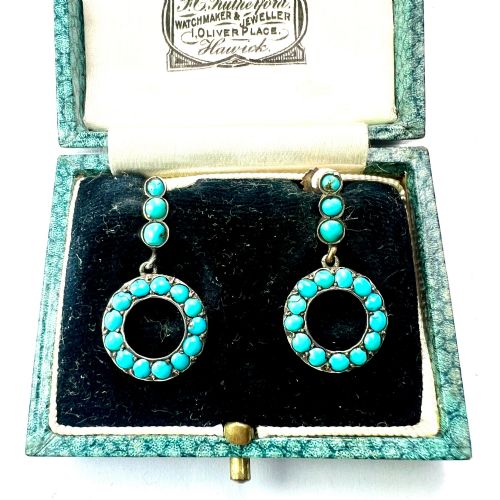


Vintage Blue Earrings
Vintage blue earrings span periods from the Victorian era to the mid-century, bringing together varied blue stones and precious metals in drop, stud, and cluster forms.
Vintage Blue Earrings
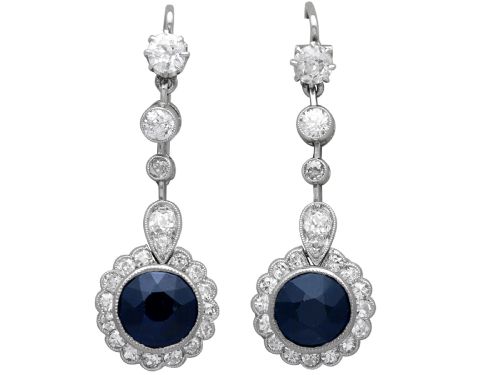
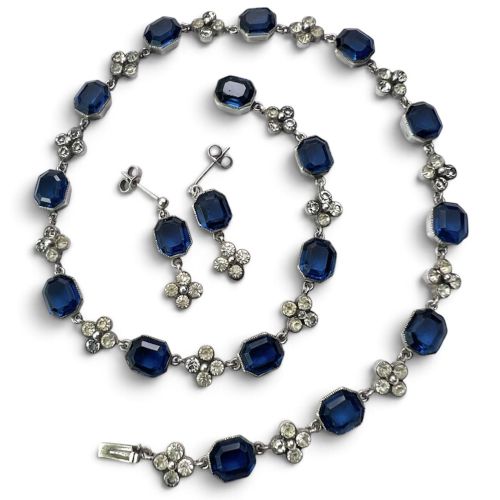
Vintage blue earrings encompass jewellery pieces sourced from periods spanning the nineteenth century through to the mid-twentieth century, including Victorian, Edwardian, Art Deco, and 1950s designs. Buyers searching for vintage blue earrings encounter forms ranging from simple studs and hoop earrings to elaborate drop earrings and matching jewellery sets.
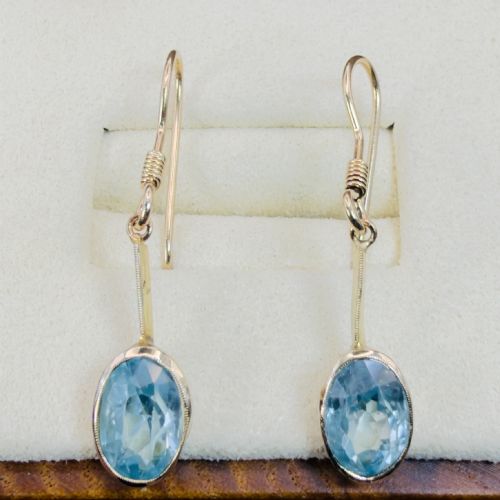
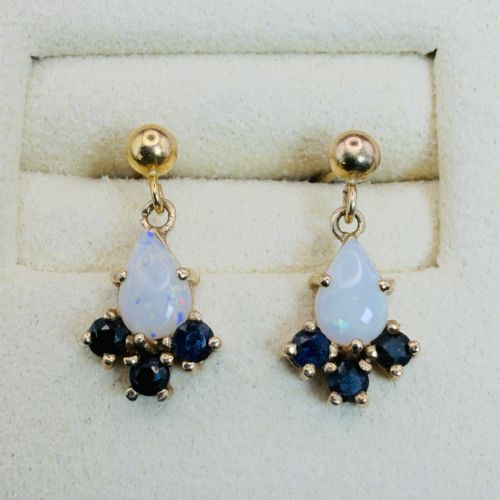
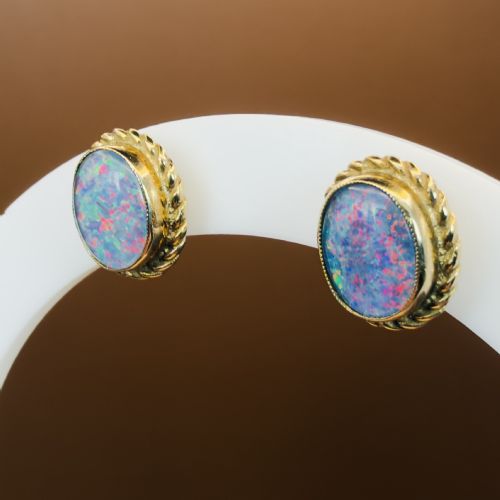
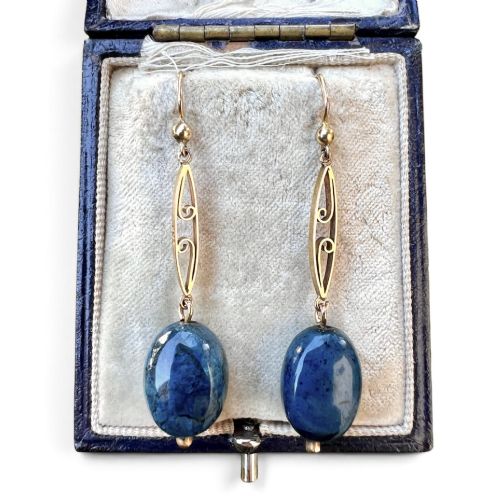
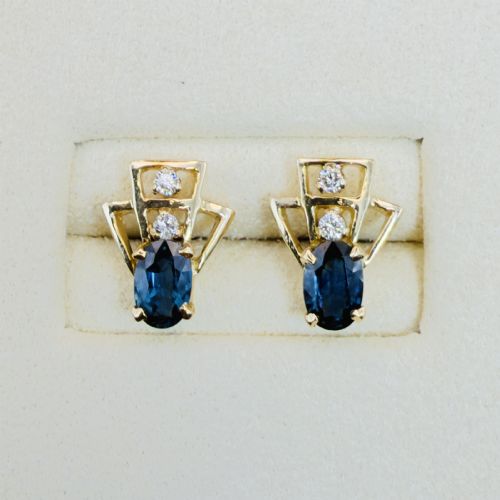
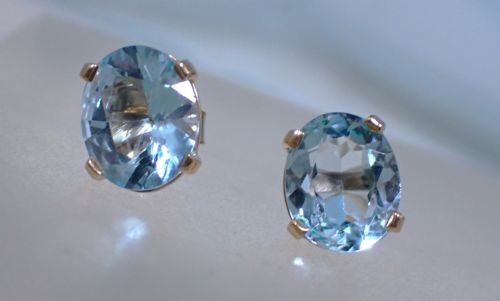
The blue hues in these pieces derive from a diverse selection of materials recorded in the listings, including sapphire, aquamarine, blue zircon, turquoise, lapis lazuli, blue john, blue topaz, apatite, and enamel. Settings utilise yellow gold, white gold, platinum, silver, and palladium to frame these stones, frequently accompanied by diamonds, pearls, or marcasite.
How they were made
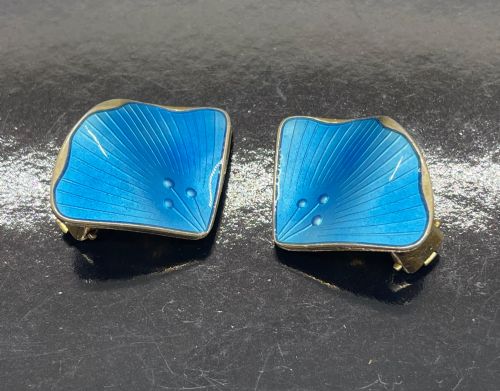
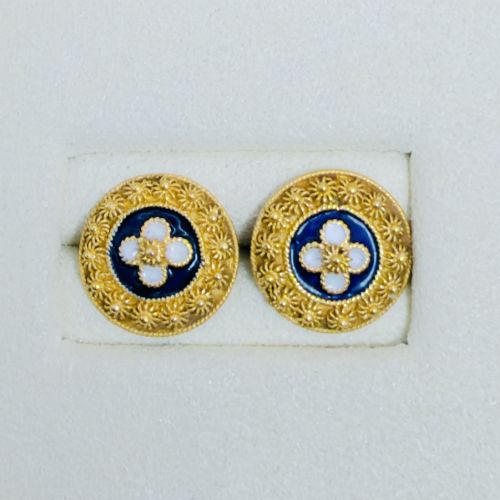
Construction methods rely on working precious metals such as 9ct gold, 18ct gold, platinum, and silver into secure settings for cluster, drop, and stud configurations. Jewellers combined casting and fabrication techniques to produce detailed mounts, filigree work, and silver gilt guilloche enamel.
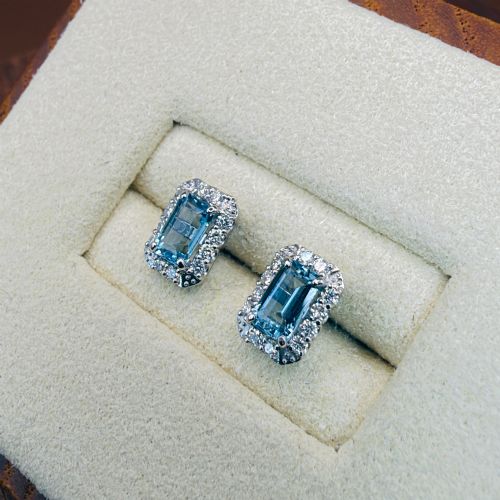
Gemstones are shaped into oval, pear, emerald, square, and old cuts to maximise light return and colour impact within the metal framework. Diamonds and smaller accent stones are grain set, bezel set, or claw set alongside the central blue stones.
Blue john adds a splash of Derbyshire fluorite to the mix.
What varies in quality
Quality differences relate to the choice of materials and the complexity of the design, distinguishing standard commercial production from finer artisan work. Heavier gold weights, platinum mounts, and substantial gemstone carat weights indicate superior specification in the construction of the pieces.
The clarity and saturation of the blue stones, combined with the presence and quality of supporting diamond accents, dictate the distinction between simpler items and elaborate cluster or drop earrings.
The Vintage Blue Earrings Glossary
- Cluster earrings
- A central gemstone surrounded by a border of smaller stones, typically diamonds or pearls. This arrangement maximises visual impact and light reflection.
- Guilloche enamel
- A decorative technique involving precise mechanical engraving beneath translucent enamel layers. This method produces intricate repeating geometric patterns with colour depth.
- Basaltic sapphire
- Corundum originating from alkali basalt terrains, known for deep blue colouration. These stones often display strong saturation and distinct inclusions.
- Blue zircon
- A natural silicate mineral containing zirconium, valued for high refractive index and dispersion. It provides vivid blue tones often seen in Art Deco pieces.
Vintage Blue Earrings: Frequently Asked Questions
What periods do these earrings cover?
The pieces span from the late nineteenth century through the Edwardian and Art Deco eras up to the mid-century 1950s and 1960s.
Each period brings distinct metal choices and stone cuts, ranging from Victorian silver-topped gold to mid-century white gold and platinum designs.
What metals are used in these settings?
Listings feature yellow gold in 9ct and 18ct, white gold, platinum, silver, silver gilt, and palladium.
Different eras favoured particular metals, such as platinum and white gold during the Art Deco period and yellow gold in mid-century clusters.
Which blue stones appear most often?
Sapphire and aquamarine dominate the inventory, accompanied by blue zircon, turquoise, lapis lazuli, blue topaz, apatite, and blue john.
Enamel is also utilised to introduce blue colouration into floral and geometric motifs.
How do drop earrings differ from studs?
Stud earrings sit directly on the earlobe, often taking the form of single stones or tight clusters.
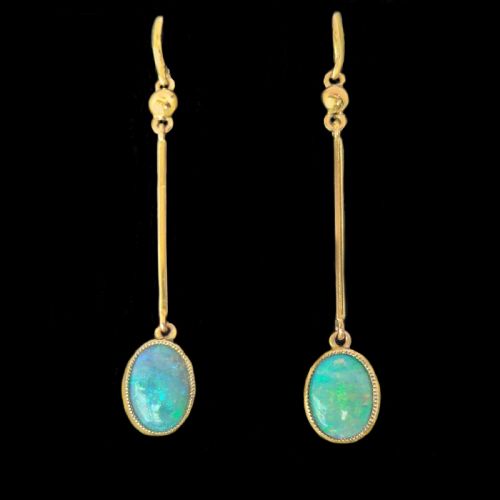
Drop and dangly earrings extend below the lobe using articulated links or fixed pendants that move with the wearer.