

Vintage Bag Chandelier
A vintage bag chandelier brings glittering tiers of cut glass and brass into a room, catching light from every angle.
Vintage Bag Chandelier
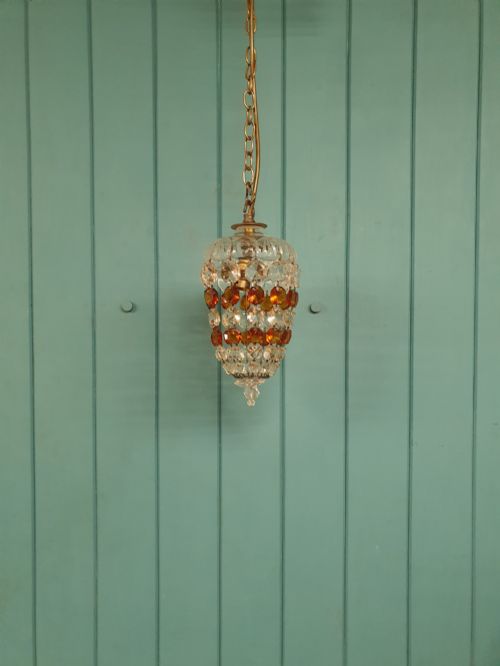
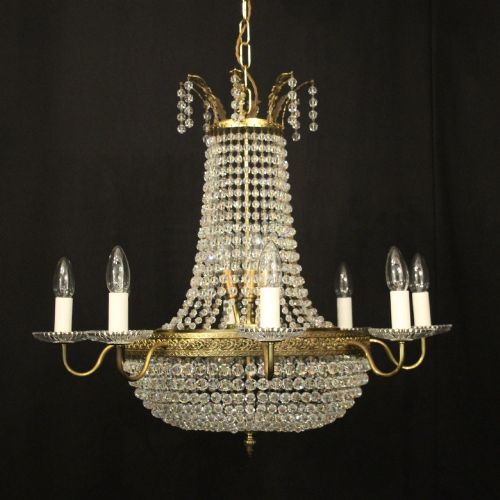
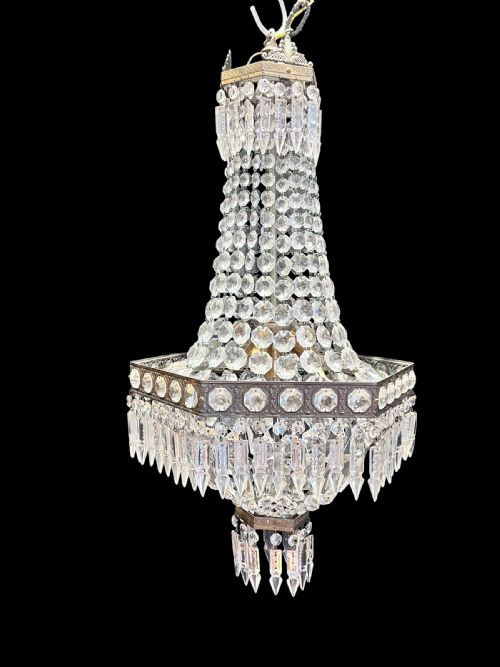
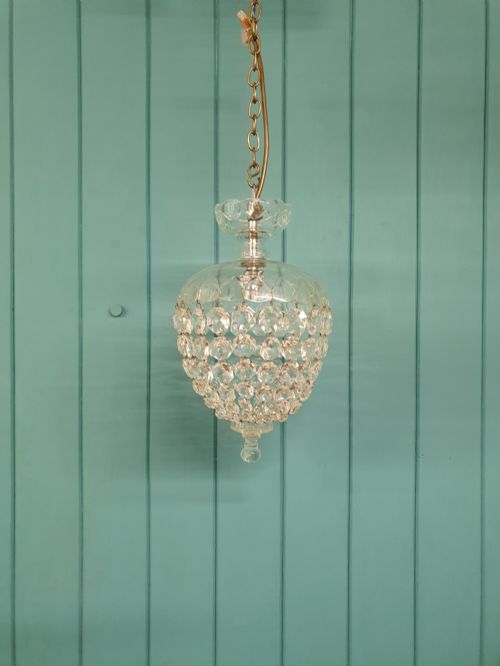
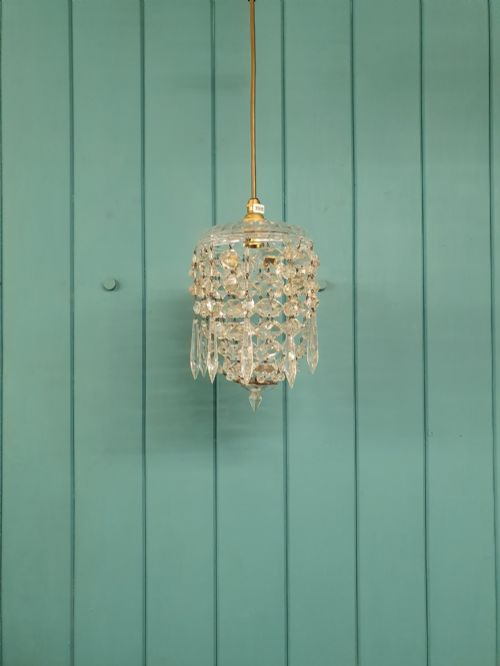
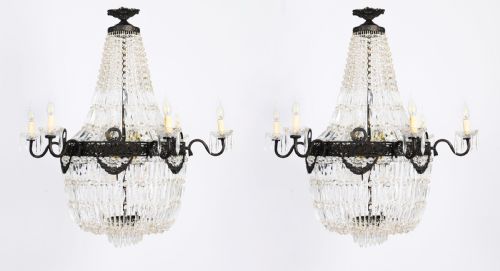
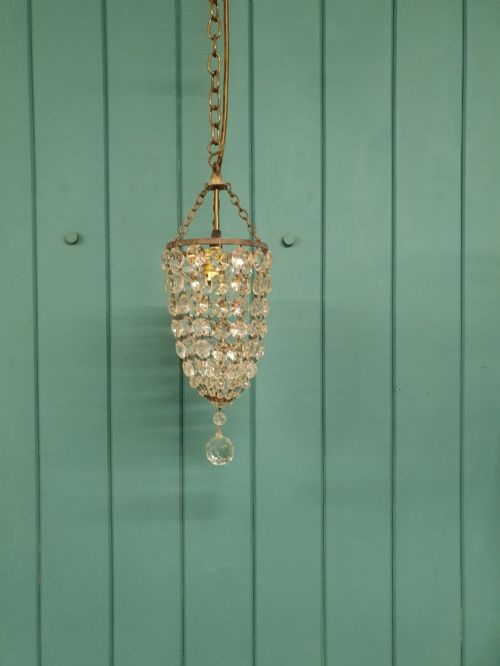
When you search for a vintage bag chandelier, you are looking at elaborate hanging light fittings featuring gathered crystal drops suspended beneath a brass or bronze frame. These pieces range from small domestic examples measuring only a few inches to large ballroom fixtures with numerous lights.
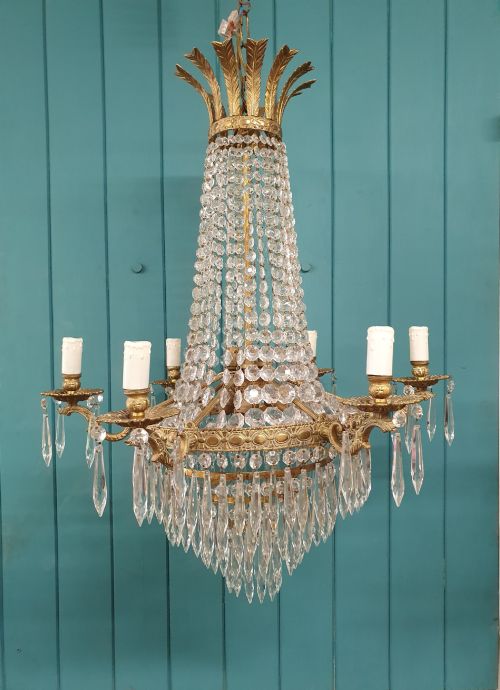
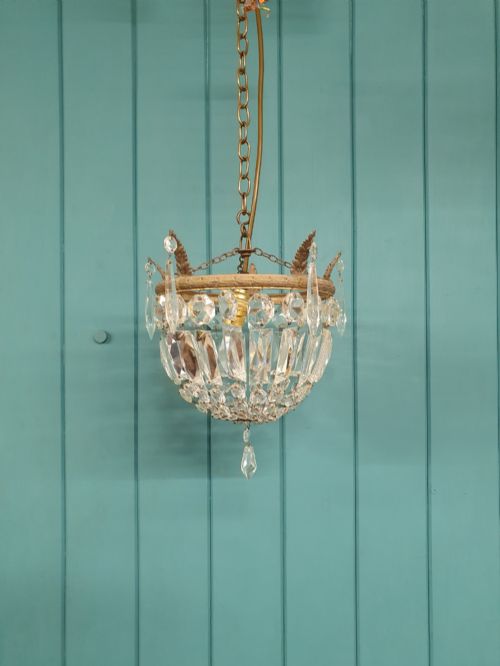
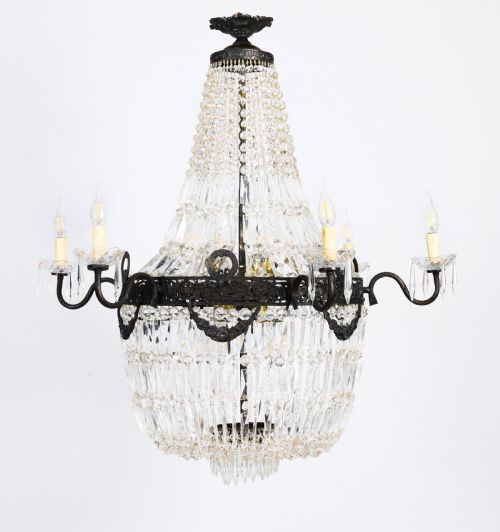
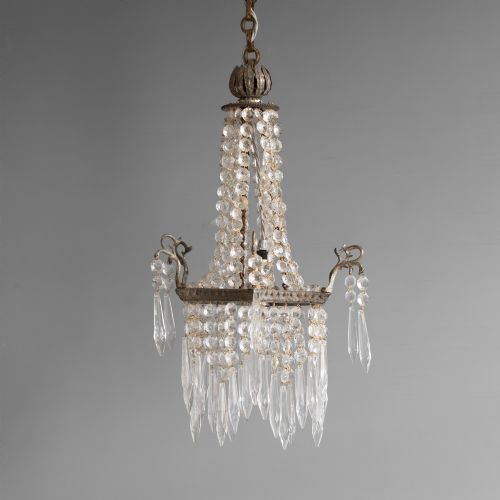
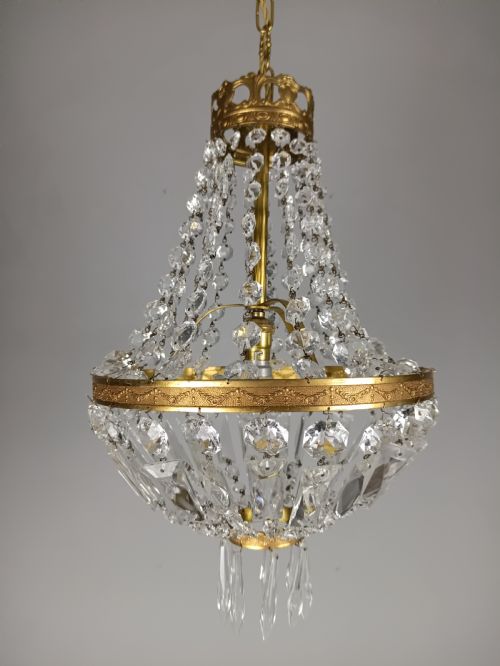
The pieces on this page originate predominantly from the early twentieth century, the Edwardian era, and the nineteenth century. Common forms include tent designs with lower bag sections, dome tops, and basket shapes influenced by French Empire and Louis Revival styles.
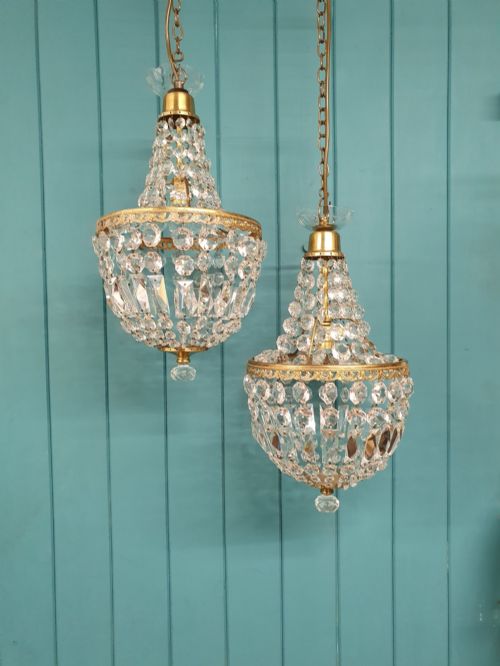
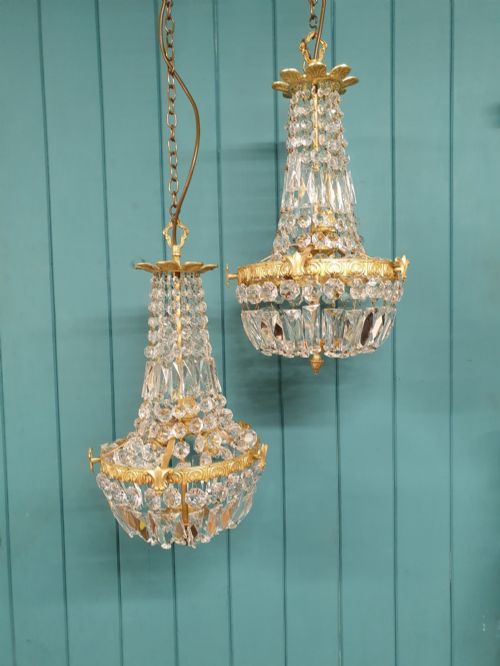
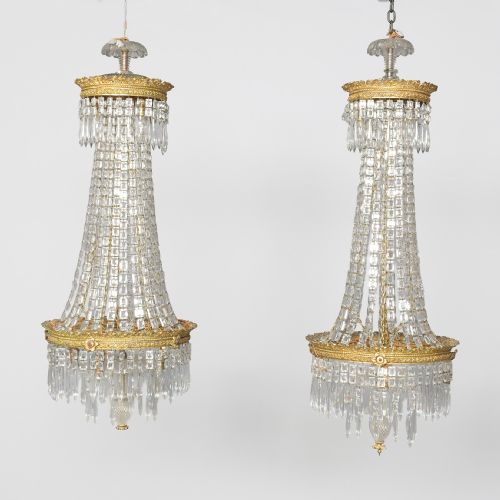
Makers and workshops across England and France produced these lighting fixtures utilising cut glass, crystal beads, and metal mounts. Buyers will encounter both single fixtures and matched pairs suitable for hanging in reception rooms or hallways.
How They Were Made
The construction of these light fittings relies on a combination of cast metal frames in brass, bronze, or other metals paired with hand-cut glass and crystal elements. Metal mounts secure the upper crowns and lower rings, holding networks of wire that suspend thousands of individual glass beads and prisms.
Craftsmen utilised various cutting techniques to shape the crystal drops, tent strands, and lower bag sections so they would refract light effectively. Wiring and fittings were integrated into the metal frames to support electrical bulbs while maintaining the historic aesthetic of the piece.
Vintage Bag Chandelier Retail Price Guide 2026
Typical asking prices for vintage bag chandelier among the pieces listed under this phrase on Sellingantiques today, from the lower quarter to the upper quarter. They describe what is for sale here now, not the wider market.
Listings span from the eighteenth century through the nineteenth century, Edwardian period, and into the 1930s, featuring brass, bronze, and cut crystal.
What Varies in Quality
The distinction between standard examples and superior pieces rests upon the precision of the glass cutting and the weight of the metal frame. Higher quality fittings feature deeply cut crystal prisms that produce sharp light refractions alongside substantial brass or bronze mounts.
Design complexity also separates the ranges, with grander examples incorporating detailed leaf decoration, cherubs, or multi-tiered tent sections rather than simple wire baskets. The completeness of the original glass beads and the integrity of the structural metal determine the overall standard of the surviving piece.
The Vintage Bag Chandelier Glossary
- Bag chandelier
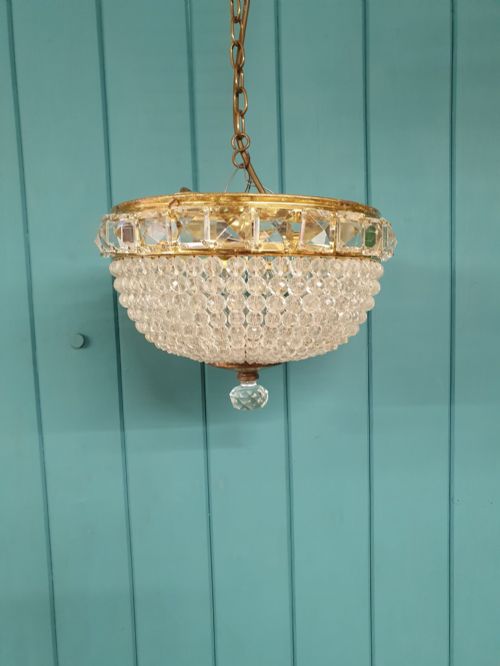
- A light fitting featuring a lower rounded section resembling a small bag or pouch composed of dense crystal or glass beads.
- Tent chandelier
- A style where strings of glass beads extend upwards from a central ring to form a tent-like canopy beneath the ceiling mount.
- Cut glass
- Glass that has been shaped and faceted on a wheel to create decorative patterns that catch and scatter light.
- Prism
- A geometric piece of cut glass or crystal designed to refract light into spectral colours.
- Louis Revival
- A nineteenth and early twentieth century decorative style drawing on French court aesthetics from the reigns of Louis XIV, XV, and XVI.
Vintage Bag Chandelier: Frequently Asked Questions
Where should I hang a bag chandelier?
These compact or medium ceiling lights suit entrance hallways, bedrooms, or dining spaces where a touch of period elegance is desired. Smaller examples work well in lower ceilings, whilst larger pairs make an impact in principal rooms.
Ensure the hanging height allows adequate clearance beneath the lower bag section, particularly in walkways or above furniture where people pass frequently.
How do I date an antique chandelier?
Dating relies on examining the metal composition, the style of the brass or bronze mounts, and the cut of the glass prisms. Edwardian and early twentieth century pieces often show specific wiring channels and mounting techniques distinct from nineteenth century examples.
Stylistic markers such as French Empire motifs or Louis Revival details also help place the fixture within a specific period.
Are these chandeliers wired for modern homes?
Most surviving examples have been adapted or rewired for modern electrical standards over time. It is advisable to have a qualified electrician inspect the internal wiring and ceiling fixings prior to installation.
Matching the bulb type and wattage to the delicate frame ensures the lighting remains safe and atmospheric.