



Vintage Arts and Crafts Mirror
A vintage arts and crafts mirror brings handcrafted integrity to a wall, combining honest timber frames with worked metal mounts.
Vintage Arts and Crafts Mirror
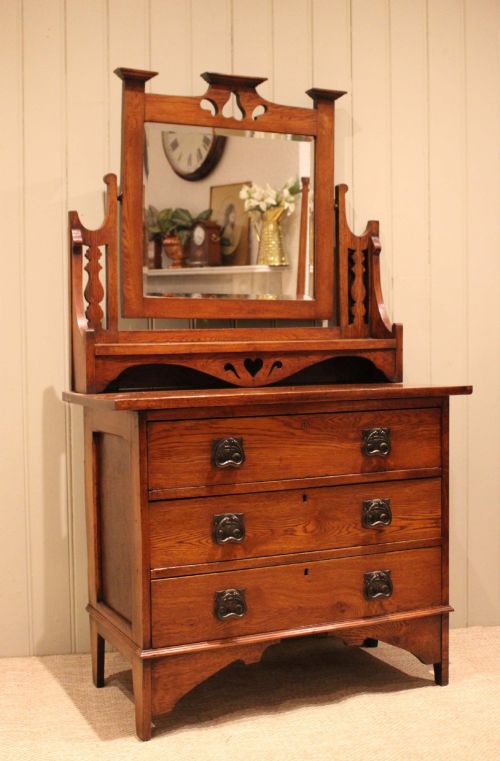
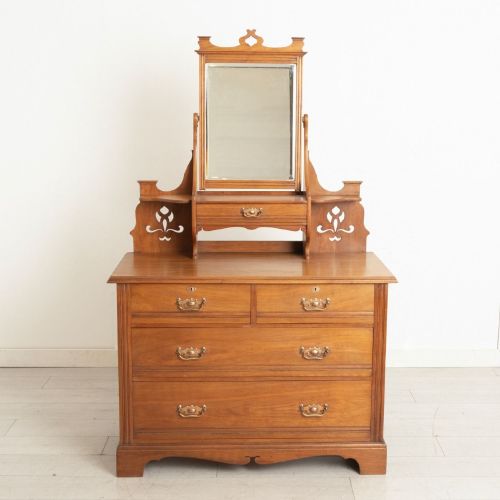
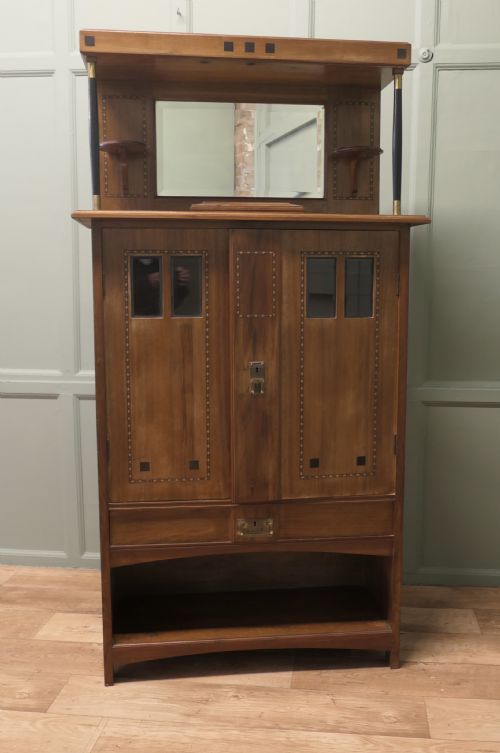
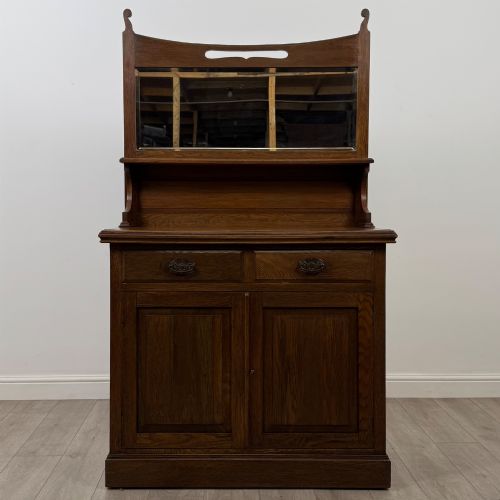
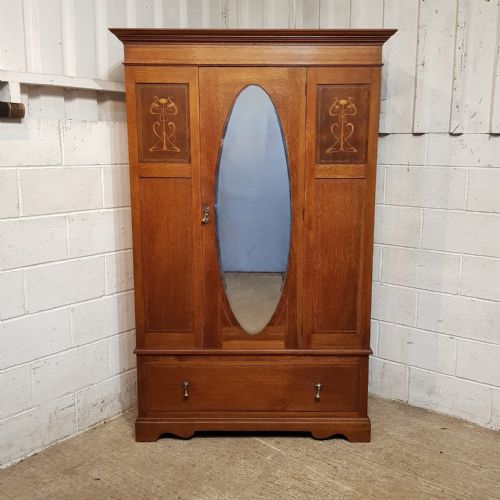
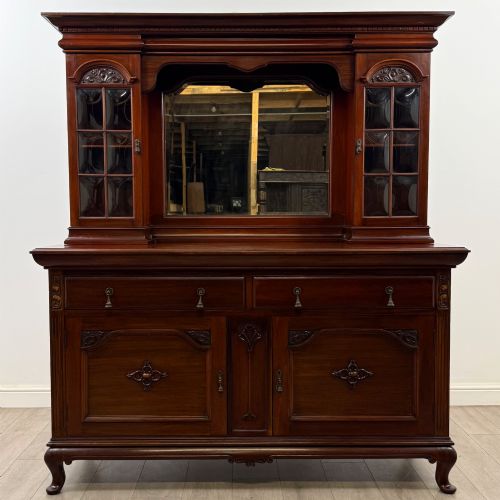
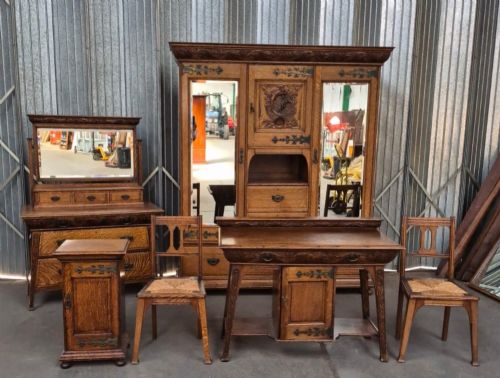
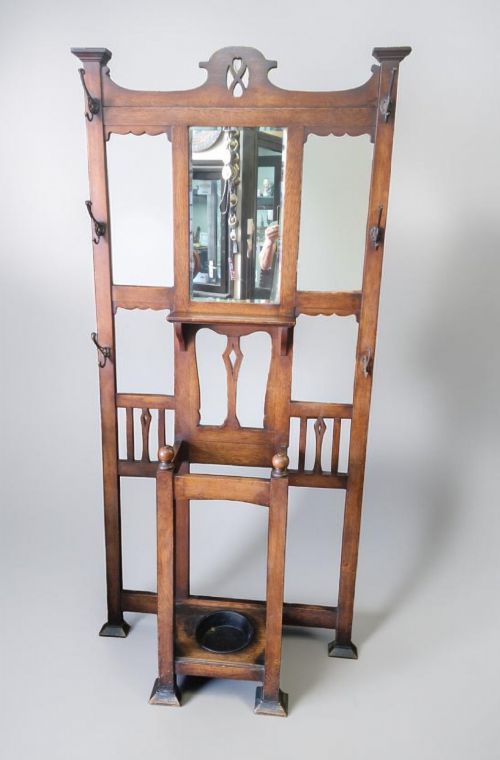
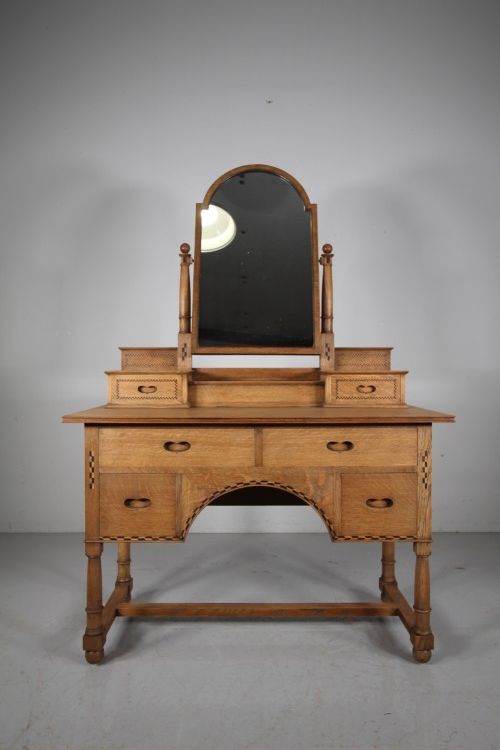
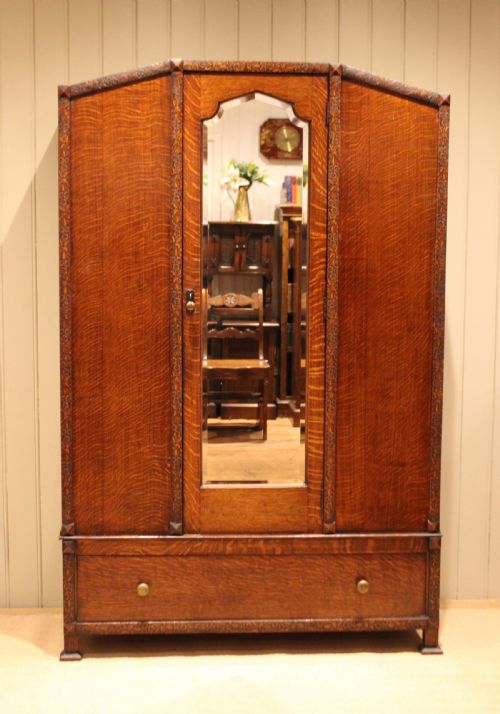
A vintage arts and crafts mirror is a functional domestic object produced primarily during the late nineteenth and early twentieth centuries, spanning periods from the Victorian era through the Edwardian years and into the 1930s. Buyers searching this phrase encounter wall-mounted looking glasses alongside larger furnishings incorporating mirrors, such as oak hall stands, mahogany sideboards, and dressing chests.
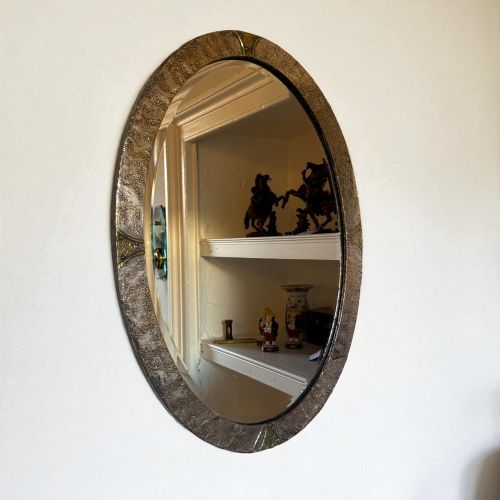
The wall-mounted versions appear most frequently on this page, shaped in rectangular, oval, or round formats designed to hang in hallways, bedrooms, and living spaces. These pieces reflect the broader output of the Arts and Crafts movement, often intersecting with Art Nouveau, Secessionist, and Cotswold School design aesthetics.
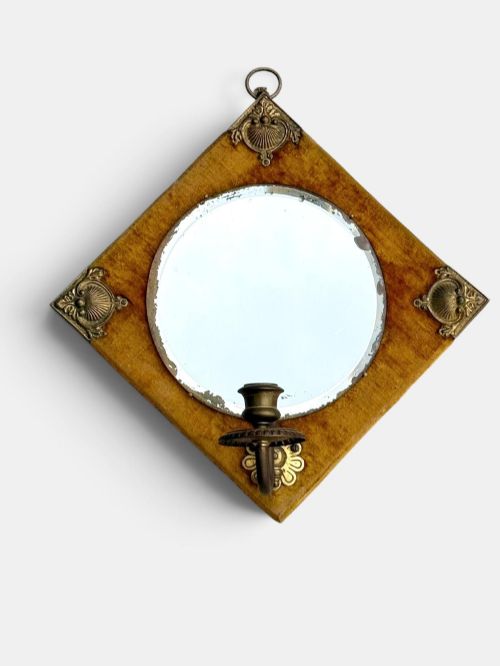
Construction forms vary from simple wooden borders to complex setups featuring integrated shelving, velvet backings, and decorative framing. Alongside dedicated wall mirrors, the selection includes dressing table mirrors with brass easels and hall stand attachments that place the looking glass within a larger architectural piece.
How they were made
Maker workshops utilised solid timbers such as oak, ash, walnut, and mahogany to build durable frames and supporting furniture structures. Wood was frequently finished in natural wax to highlight the grain, or occasionally painted according to period taste.
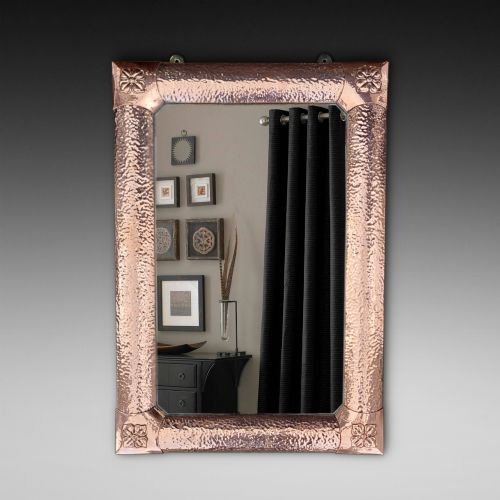
Metalwork forms a defining element of the construction, utilising brass, copper, and iron shaped through hammering, repoussé work, and riveting. Artisans mounted beaten metal panels and applied brass mounts directly onto the wooden frames to secure the mirror glass.
Glass production relied on bevelled mirror plates fitted securely into rebated wooden backs, sometimes complemented by decorative cabochons or ceramic inlays.
Vintage Arts and Crafts Mirror Retail Price Guide 2026
Typical asking prices for vintage arts and crafts mirror among the pieces listed under this phrase on Sellingantiques today, from the lower quarter to the upper quarter. They describe what is for sale here now, not the wider market.
Some copper mirrors wear the subtle thumbprints of the artisan who hammered the metal plate over a century ago.
What varies in quality
The distinction between standard domestic pieces and superior examples rests on the depth of hand-craftsmanship and the distinction of the designer or workshop. Pieces displaying fully hand-hammered metalwork, substantial solid oak construction, and thoughtful integration of decorative elements like ceramic cabochons stand apart from simpler factory-produced items.
Makers known for exceptional design standards, such as Liberty and Co or Heal's, demonstrate superior attention to proportion and finish in their framing and woodwork. The quality of the mirror glass itself, particularly the presence of authentic bevels and original backing materials, also dictates the standing of the piece.
Shapland and Petter·Heals·Liberty and Co
The Vintage Arts and Crafts Mirror Glossary
- Repoussé
- Metalworking technique where the design is hammered into relief from the reverse side. This method allowed artisans to create raised floral and geometric patterns on copper and brass mirror frames.
- Secessionist
- A design style emerging from Central European art movements that favored geometric abstraction and clean lines. It appears in the more avant-garde cabinets and mirrors of the early twentieth century.
- Compactum
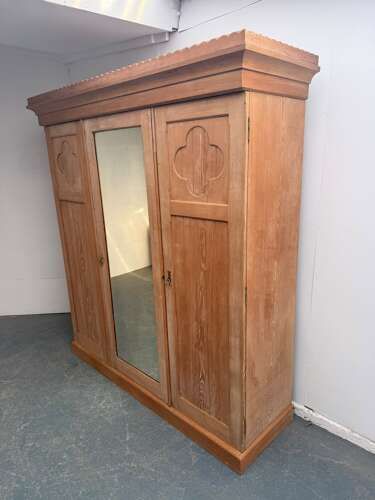
- A large multi-door wardrobe designed to maximise internal storage capacity. These pieces often feature central mirrored doors flanked by hanging space and drawers.
- Bevelled
- A mirror edge cut at an angle to create a sloped border that catches the light. This technique adds depth and a finished appearance to antique looking glasses.
- Cabochon
- A polished, convex gemstone or ceramic piece lacking facets, often set into metal mounts. Ruskin pottery cabochons frequently adorn the copper frames of higher-end Arts and Crafts mirrors.
Vintage Arts and Crafts Mirror: Frequently Asked Questions
Where should I hang a copper mirror?
Copper mirrors suit hallways, living rooms, and bedrooms where natural light can strike the hammered metal surface. They pair effectively against dark paneling or neutral plastered walls.
Ensure the hanging wire and wall fixings match the considerable weight of solid timber and metal frames.
How do I clean a brass repoussé frame?
Dust the frame gently with a soft dry cloth to remove surface particles without disturbing the aged patina. Avoid harsh chemical polishes that strip the historic finish from the brass.
Keep moisture away from the timber borders and the edges of the mirror glass during cleaning.
Are these mirrors heavy to hang?
Many Arts and Crafts mirrors use solid oak or mahogany combined with heavy metal mounts, creating significant weight. Secure the hanging hardware directly into wall studs or use appropriate wall anchors.
Check the integrity of the original wooden frame and wire backing before mounting.
How do I distinguish Arts and Crafts from Art Nouveau?
Arts and Crafts design emphasises visible construction, honest materials, and medieval or folk-inspired simplicity. Art Nouveau favors flowing, organic, whip-like lines derived from plant forms.
Many mirrors on this page blend both movements, featuring solid oak frames with sinuous copper repoussé work.