




Victorian Writing Chair
A victorian writing chair brings period character and practical function to a study, offering the sturdy timber frame and supportive seating required for daily desk work.
Victorian Writing Chair
A victorian writing chair encompasses desk chairs, library chairs, and corner chairs produced across the nineteenth century and into the early twentieth century. These seating pieces serve the practical demands of writing, reading, and correspondence in period libraries and studies.
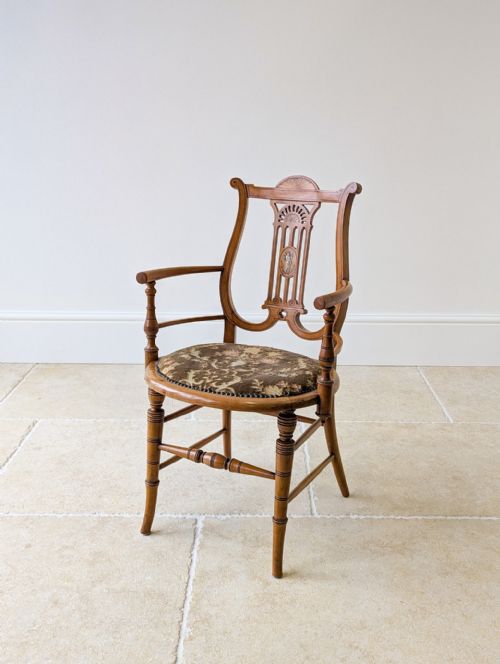
The versions most commonly met on this page include mahogany, oak, and satinwood examples dating from the 1850s to the 1900s. They range from solid oak desk chairs to Sheraton Revival lyre-back forms and caned bergère library models.
Makers and manufacturers such as the Boston Chair Company contribute to the broader mix of desk furniture found alongside seating. Buyers encounter stylistic influences spanning William IV, Regency, and Renaissance Revival periods.
Materials and construction
Makers constructed these chairs using hardwoods such as mahogany, oak, walnut, and satinwood, often embellishing surfaces with marquetry inlay and carved details. Structural stability relies on solid timber frames built to withstand regular use at a desk.
Upholstery materials include oxblood and brown leather, alongside various fabrics and caning for seat panels. Brass hardware provides functional detailing on reclining mechanisms and adjustable components.
Listings feature pieces spanning the nineteenth century, utilising oak, mahogany, walnut, satinwood, leather, and cane across various desk and armchair forms.
What separates the finest examples
Quality in these seating pieces rests upon the selection of timber and the crispness of carved or inlaid decoration. Satinwood and rosewood examples with intricate marquetry demand higher levels of cabinetmaking skill than plain utility frames.
The integrity of the structural joinery and the survival of original leather upholstery or caning determine the standing of an individual piece. Refined proportions and distinctive stylistic references like lyre-backs elevate certain chairs above standard workshop production.
Boston Chair Company
The Victorian Writing Chair Glossary
- Bergère
- An enclosed upholstered armchair with wooden framing and a cane back and sides, originating in France. These chairs often feature loose squab cushions for seating comfort.
- Lyre-back
- A chair back shaped in the outline of a musical lyre, frequently utilised in Sheraton Revival and Regency designs. This decorative feature adds classical symmetry to the seating frame.
- Marquetry
- The art of applying pieces of veneer to a structure to form decorative patterns and pictures. Craftsmen use contrasting woods to create detailed geometric or floral motifs.
- Satinwood
- A durable, lustrous timber with a golden yellow sheen, popular in fine cabinetmaking from the late eighteenth century onwards. It provides a pale, reflective surface for inlaid furniture.
- Corner chair
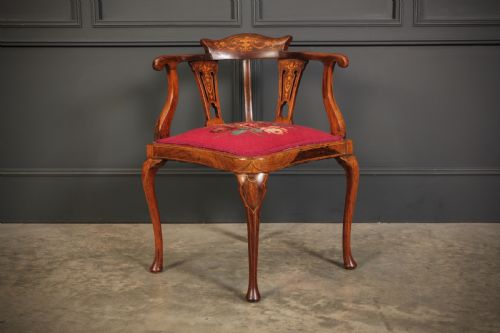
- A chair designed to fit into the corner of a room, featuring a diagonal seat and a curved back rail supported by posts. These forms often double as desk or writing chairs.
Victorian Writing Chair: Frequently Asked Questions
What is a victorian writing chair?
A victorian writing chair is a nineteenth-century seat designed specifically for use at a desk or writing table. These chairs combine supportive backrests with sturdy timber frames to suit study and library environments.
They appear in various timber forms, including mahogany, oak, and satinwood, often incorporating leather upholstery or caned panels for comfort during extended periods of work.
How do I identify the period?
Period identification relies on examining the timber, construction methods, and stylistic details present in the frame. Nineteenth-century examples often reflect overarching design movements such as William IV, Regency, or Sheraton Revival.
Look at the turning of the legs, the type of wood used, and any inlay work, as these elements shift noticeably between the 1850s and the turn of the twentieth century.
Were these chairs used at desks?
Yes, these chairs were primarily built to accompany desks, library tables, and writing slopes in period homes. Their proportions allowed a person to sit comfortably while writing letters or managing household accounts.
Many examples feature low backs or pivoting mechanisms that allowed the user to move easily around a study while accessing different pieces of furniture.
How do I care for leather upholstery?
Caring for leather upholstery involves keeping the material clean and nourished to prevent it from drying out over time. Regular dusting with a soft cloth removes grit that can abrade the surface.
Applying a specialist leather conditioner periodically helps maintain the suppleness of nineteenth-century hide without altering its natural colour or finish.