

Victorian Wooden Knob Chest
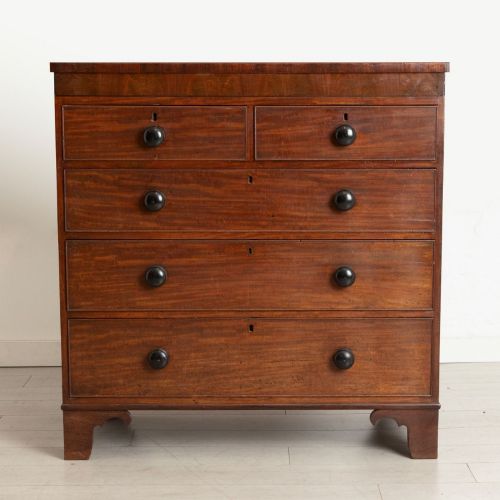
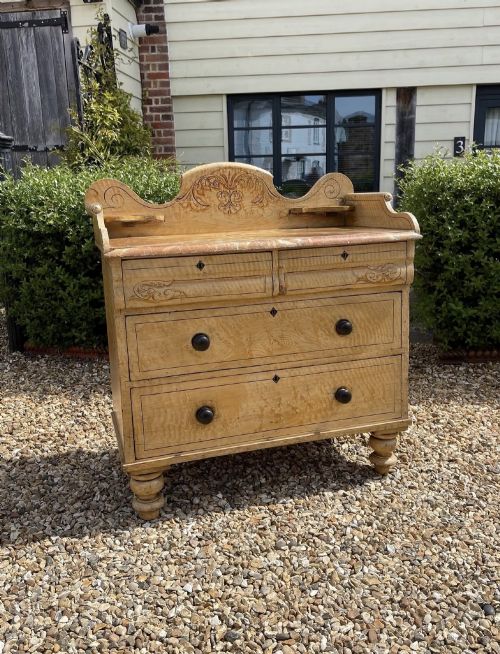
A victorian wooden knob chest offers robust domestic storage built in mahogany or pine during the nineteenth century.
Victorian Wooden Knob Chest
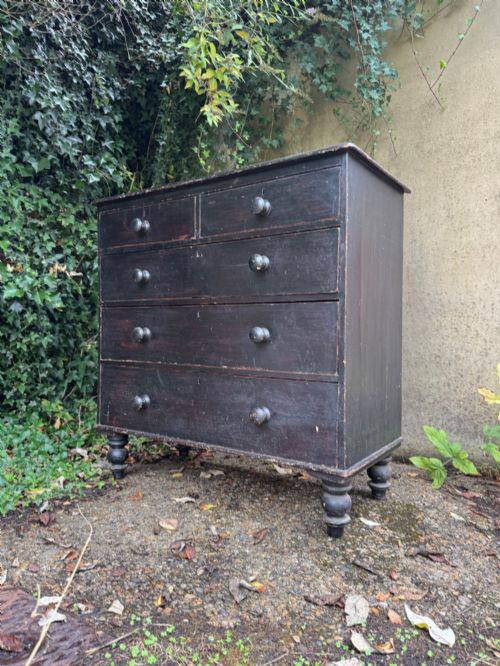
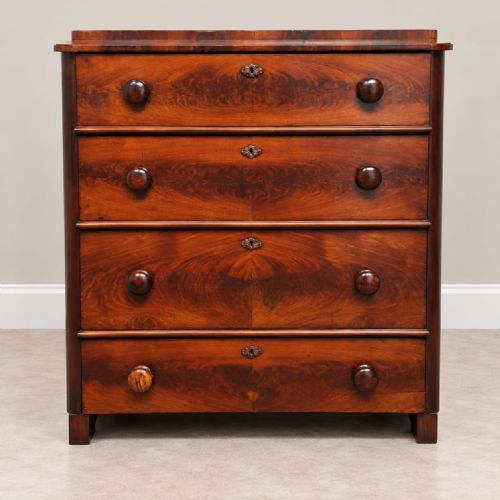
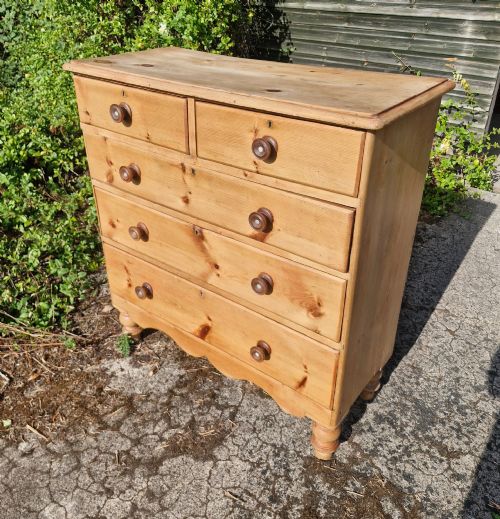
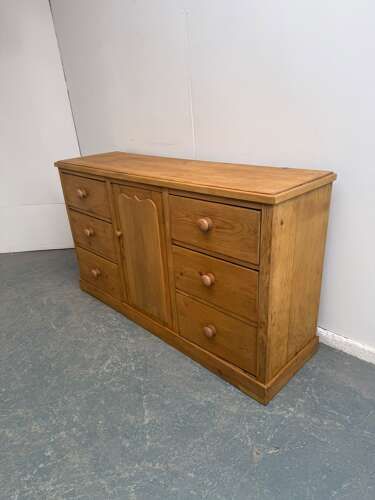
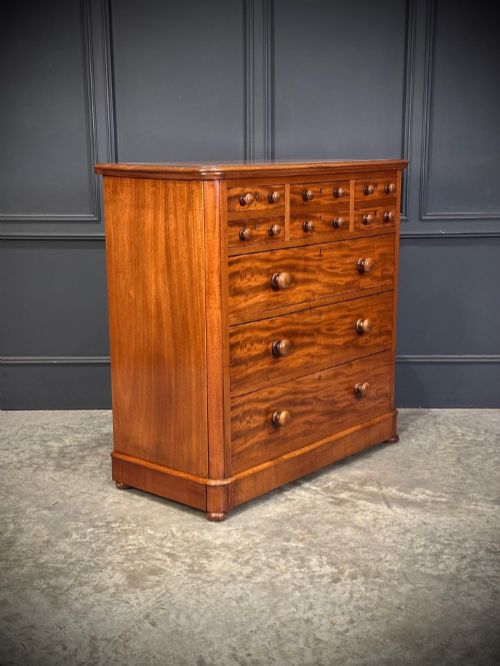
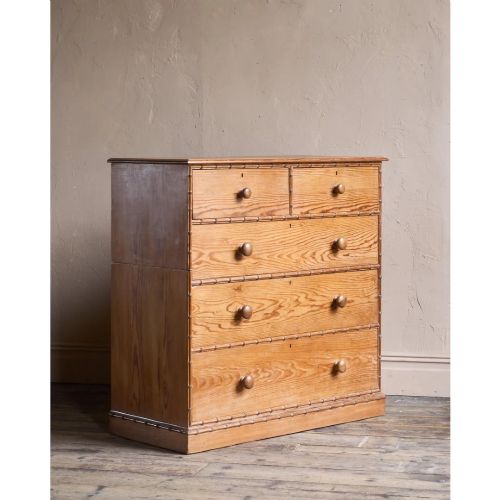
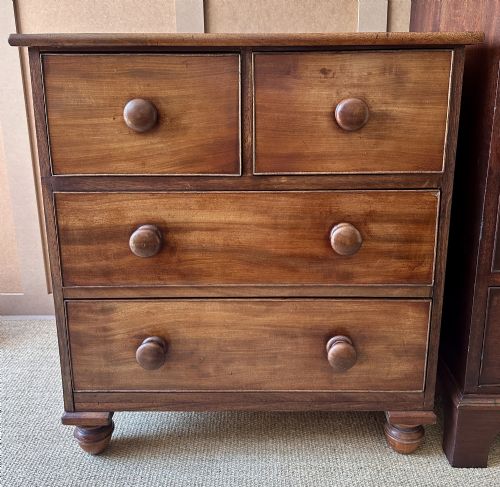
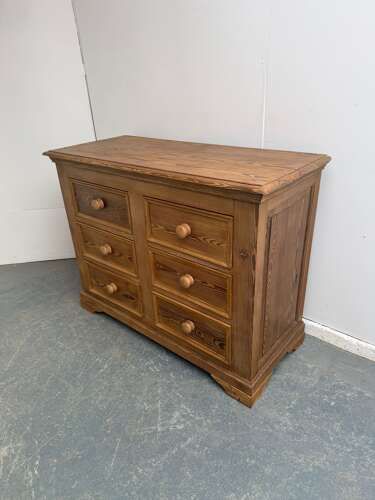
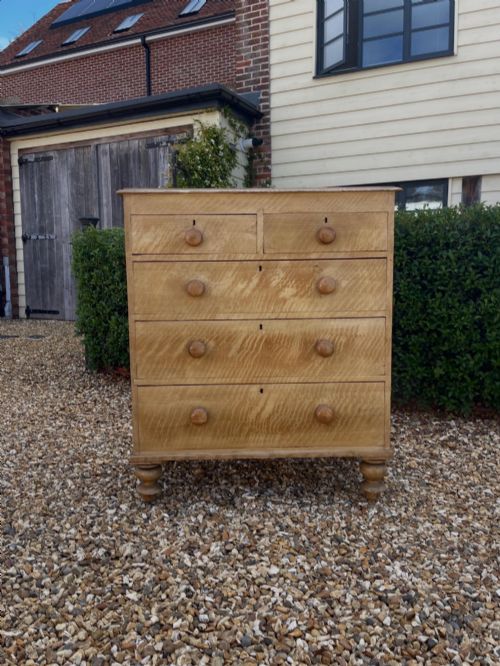
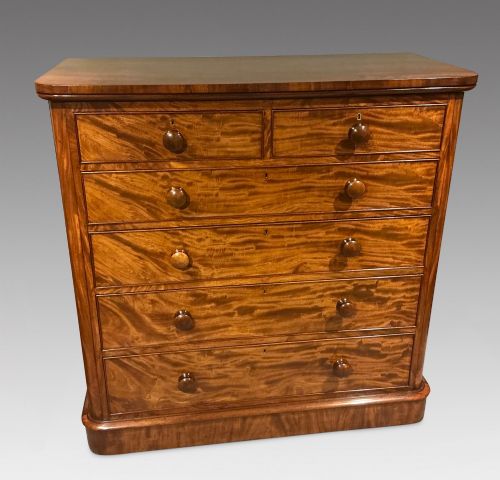
A victorian wooden knob chest is a solid domestic storage piece typically constructed from pine or mahogany during the nineteenth century, ranging from compact miniature apprentice items to large multi-drawer bedroom furniture. The version most frequently met on this page is the traditional upright chest of drawers, built either as a straightforward utilitarian pine carcass or a more formal mahogany piece.
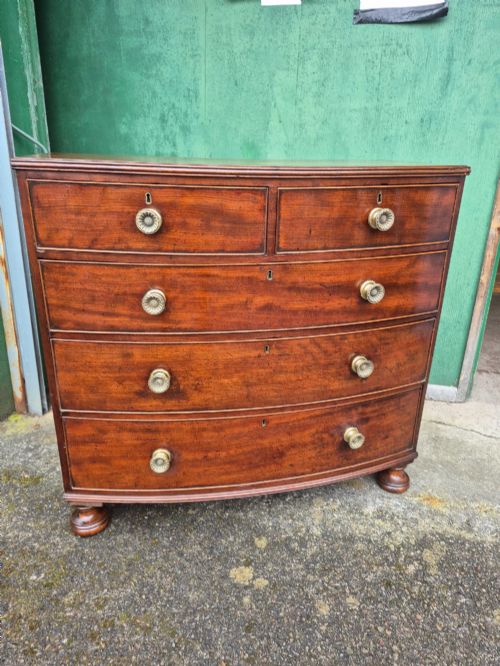
Many examples date from the middle decades of the nineteenth century, with specific pieces recorded from eighteen fifty through to the early twentieth century. Alongside standard bedroom chests, the forms include bow front designs, narrow panelled formats, and examples retaining their original painted or waxed surfaces.
How they were made
These chests rely principally on solid timber construction using pine and mahogany, often enhanced with wax finishes or retained in original paint. Cabinet makers formed the characteristic turned wooden knobs by hand or on a lathe, fixing them centrally to drawer fronts that frequently incorporated secret top compartments or deep bottom configurations.
Structural framing employed traditional joinery techniques suited to domestic use, occasionally incorporating brass elements, iron fittings, or glass details depending on the specific workshop origin. Surface treatments varied from plain waxed pine to richly figured mahogany veneers, reflecting the intended domestic setting of the furniture.
Listings feature pieces spanning the nineteenth century from eighteen fifty to nineteen ten, using pine, mahogany, and original paint.
What varies in quality
The standard of timber selection and the integrity of the original surface finish largely determine the standing of an individual piece. Examples retaining original paint or high-grade flame mahogany veneer represent a different tier of craftsmanship compared to utilitarian painted pine storage.
Proportion and decorative restraint also separate standard utility items from finer workshop output, such as bow front chests or pieces with integrated galleries and turned feet. The survival of original turned wooden knobs and smoothly running drawers further distinguishes the better examples.
Howard and Sons
The Victorian Wooden Knob Chest Glossary
- Bow front
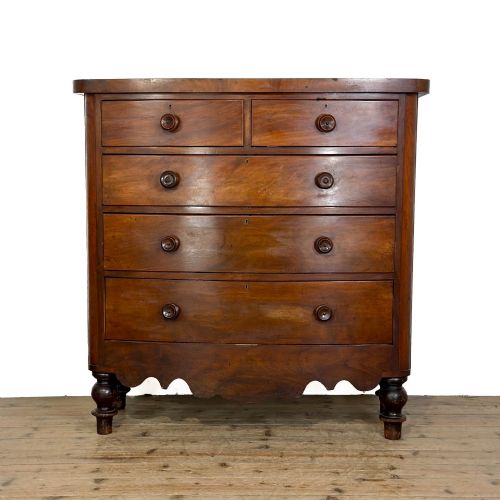
- A convex curved drawer front that projects outward from the main frame. This curved profile requires skilled carpentry to ensure the drawers operate smoothly within the carcass.
- Apprentice chest
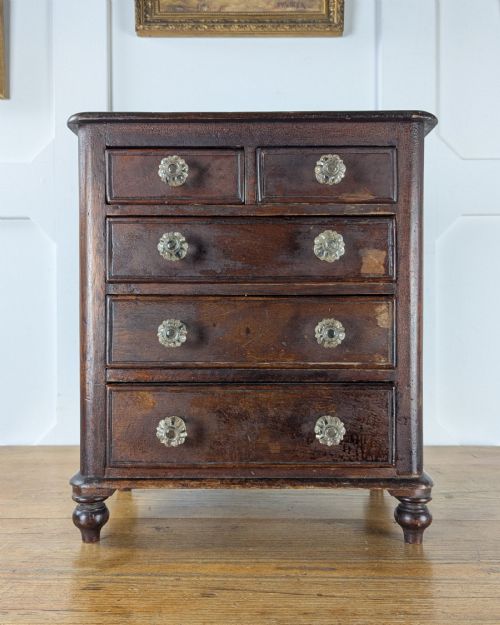
- A small-scale miniature chest created to demonstrate a cabinet maker's proficiency or as a master's sample piece. These delicate items replicate full-size construction methods in miniature.
- Waxed pine
- A softwood surface treatment involving the application and buffing of natural wax to protect the timber. This finish deepens the tone of the wood while preserving its natural grain.
- Secret drawer
- A concealed compartment built into the upper section of a chest, often hidden behind the moulding or top frieze. It provided a secure space for small valuables.
Victorian Wooden Knob Chest: Frequently Asked Questions
What is a victorian wooden knob chest?
A victorian wooden knob chest is a nineteenth-century storage unit made primarily from pine or mahogany, featuring characteristic turned wooden handles on the drawer fronts.
These pieces served as essential bedroom furniture for storing clothing and household linens in domestic settings.
How do I date a pine chest?
Dating relies on construction methods, timber characteristics, and style markers recorded across the nineteenth century from eighteen fifty onward.
Earlier examples often display specific regional characteristics, such as Scottish or Irish workshop traits, alongside original painted or waxed surfaces.
Were these chests always painted?
Many pine chests retained their original paint finishes, while others were left exposed as waxed softwood or constructed from polished mahogany.
Surface treatment depended largely on whether the piece was intended for a formal parlour or a more utilitarian domestic space.
How are bow front chests different?
Bow front chests feature a curved projecting front facade that distinguishes them from standard flat-fronted storage designs.
This curved configuration is found on both mahogany and pine variants produced during the Victorian period.