




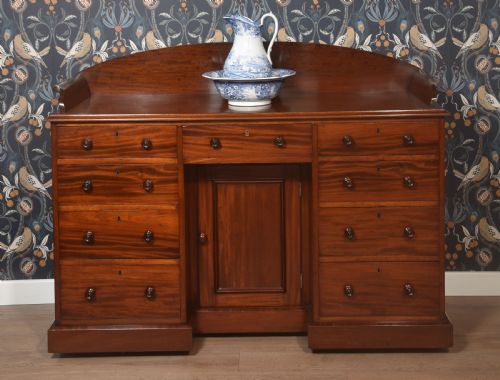


Victorian Washstand Unit
These pieces of a Victorian washstand unit combine practical personal hygiene with period craftsmanship, offering marble tops, timber frames, and brass fittings for daily use.
Victorian Washstand Unit
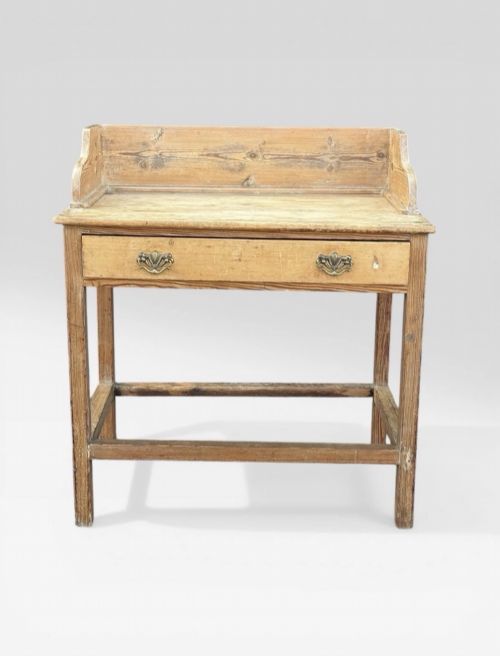
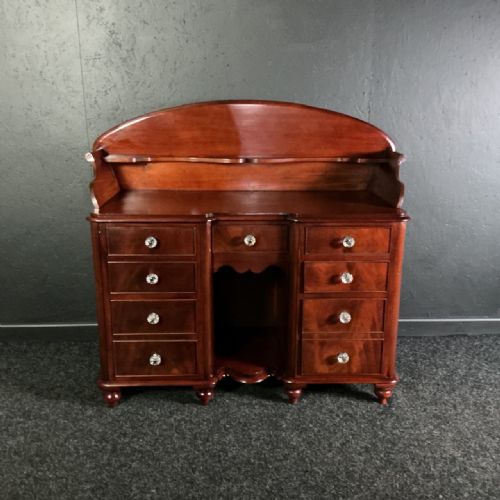
A Victorian washstand unit represents a functional piece of bedroom furniture designed during the nineteenth century to hold basins, ewers, and washing paraphernalia before plumbed bathrooms became standard. Buyers searching for a victorian washstand unit will encounter variations ranging from rustic pine side tables to sophisticated marble-topped mahogany cabinets.
The inventory on this page spans the Victorian and Edwardian periods, including specific years like 1850, 1880, 1890, 1900, and 1910, alongside styles such as Arts and Crafts, Aesthetic Movement, and French Rococo Revival. Forms include washstands, shaving stands, dressing tables, storage cabinets, and console tables.
Materials and Construction Methods
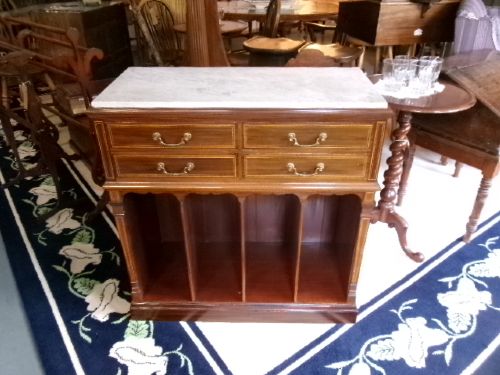
Cabinetmakers utilised dense hardwoods like mahogany and walnut alongside more accessible softwoods such as pine, often applying inlay work or satinwood banding to elevate the visual appeal of the cabinetry. Structural integrity relied on traditional joinery techniques suited to supporting heavy stone surfaces.
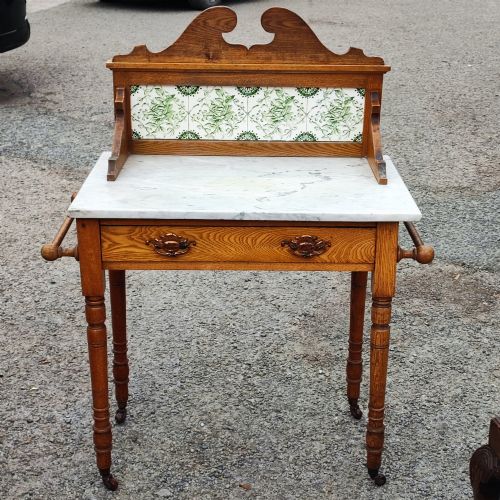
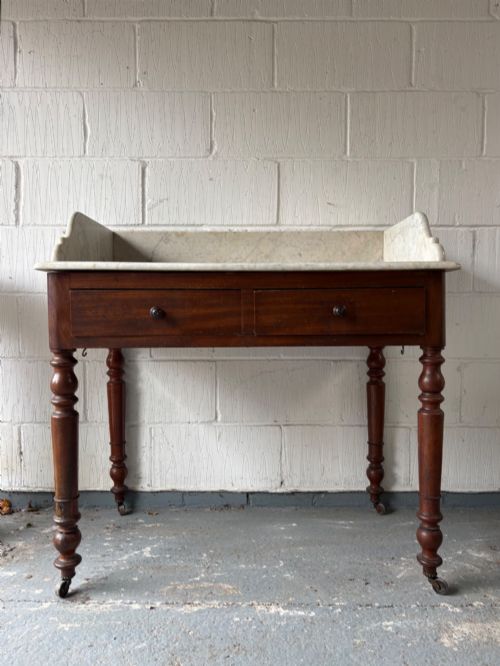
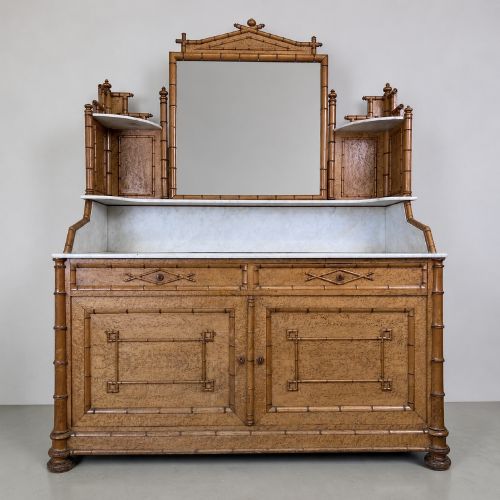
Slabs of marble provided durable, waterproof surfaces for the washing area, while brass fixtures, handles, and towel rails offered corrosion-resistant metalwork that complemented the dark timbers. Painted finishes and faux-bamboo turning appeared on specific regional or stylistic variations.
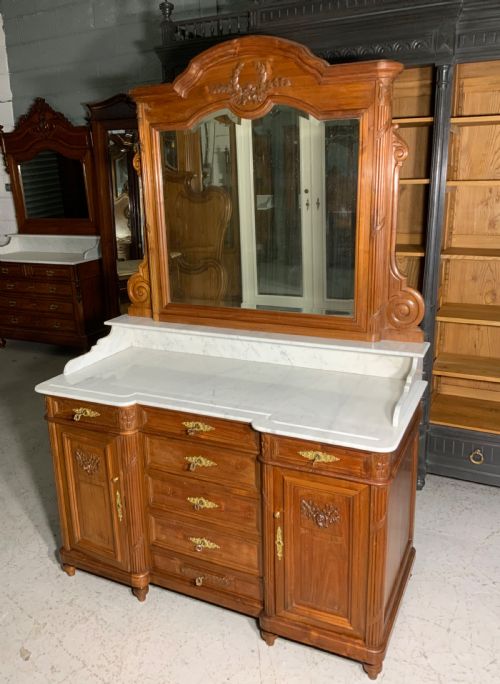
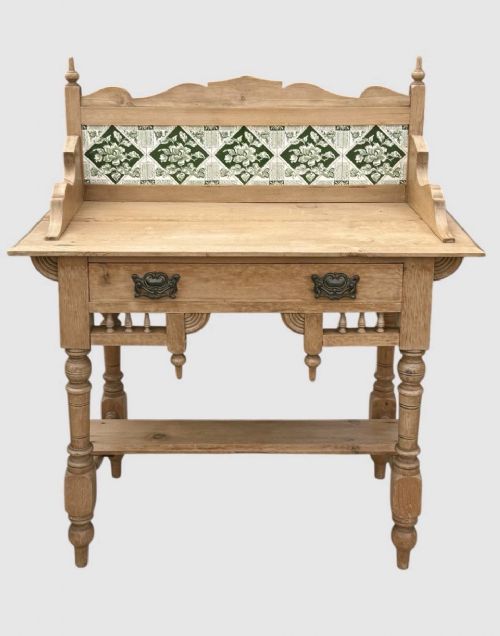
Mirrors found on dressing stands and shaving cupboards were bevelled and set into adjustable wooden frames, whilst ceramic tiles occasionally lined the backsplashes to protect walls from water damage.
Victorian Washstand Unit Retail Price Guide 2026
Typical asking prices for victorian washstand unit among the pieces listed under this phrase on Sellingantiques today, from the lower quarter to the upper quarter. They describe what is for sale here now, not the wider market.
Listings feature woods like mahogany, pine, oak, walnut, satinbirch, and bird's-eye maple alongside marble and brass.
Distinguishing Quality in Period Washstands
The grade of materials dictates the initial impression, separating standard pine utility pieces from high-end mahogany and satinwood commissions fitted with thick slabs of marble and fine brass hardware. Cabinetmaking execution, seen in the precision of the dovetail joints and the stability of the frame, marks the difference between vernacular workshop output and superior production.
Stylistic ambition also separates everyday items from exceptional examples, with Aesthetic Movement and Arts and Crafts pieces demonstrating thoughtful design details like specialised tile surrounds, carved panels, and integrated towel arms. Maker attribution, confirmed by stamps or signatures on the timber, elevates the standing of a piece considerably.
Condition retention matters greatly, particularly the integrity of the marble top free from deep staining or fractures, and the original pairing of brass handles, mirrors, and ceramic components.
Gillows·J. Shoolbred
The Victorian Washstand Unit Glossary
- Marble top
- A polished stone slab fitted to the upper surface of the washstand to resist water damage and staining during washing routines. It provides a cool, impermeable workspace.
- Aesthetic Movement
- A late nineteenth-century design style focusing on art for art's sake, often featuring simplified lines, ebonised or inlaid details, and Japanese-influenced motifs. Pieces from this movement display a lighter touch than heavy high-Victorian furniture.
- Arts and Crafts
- A design philosophy prioritising traditional craftsmanship, visible construction, and simple forms over mass-produced ornamentation. It values honest materials and utility.
- Faux-bamboo
- A decorative wood-turning technique where pine or maple is carved and painted to resemble bamboo stalks. This finish was popular in nineteenth-century French and English coastal or bedroom furniture.
- Splashback
- The raised wooden, tiled, or marble panel at the rear of the washstand designed to protect the wall from water splashes. It frequently incorporates towel rails or mirror fixings.
Victorian Washstand Unit: Frequently Asked Questions
What was a washstand used for?
These units served as the primary washing station in nineteenth-century bedrooms before indoor plumbing became common. They held a basin, ewer, soap dish, and water pitcher for morning and evening routines.
Today, buyers repurpose them as bathroom sink vanities, hallway storage consoles, or decorative sideboards in period homes, making use of the durable marble surfaces.
How do I care for a marble top?
Marble requires gentle cleaning with warm water and a neutral soap to avoid dulling the polished surface or etching the stone with acidic liquids. Avoid harsh chemical cleaners and abrasive scrubbing pads.
Wipe away standing water promptly and apply a suitable stone sealer periodically to protect the porous material from staining by cosmetics or toiletries.
Are these pieces suitable for modern bathrooms?
Many buyers adapt these stands to hold modern vessel sinks and plumbing fixtures, leveraging the sturdy wooden frames and stone tops. Professional modification of the interior shelving is usually required to accommodate pipework.
The timber and marble withstand domestic humidity well, provided the wood is treated with appropriate oils or waxes to repel moisture.