






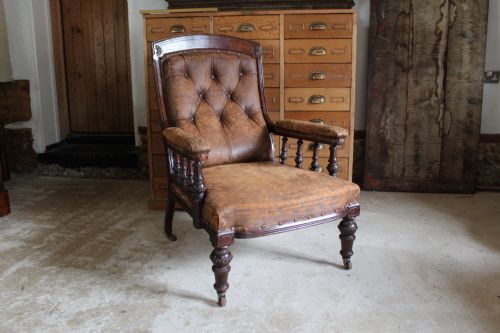


Victorian Walnut Club Chair
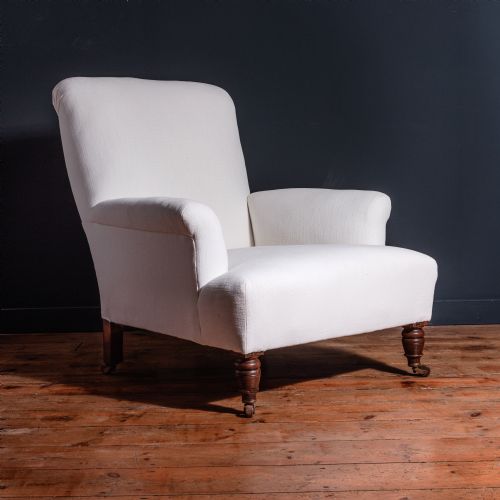
A victorian walnut club chair brings deep-seated comfort and rich timber frames to a room, offering a sturdy yet graceful seat built for daily use.
Victorian Walnut Club Chair
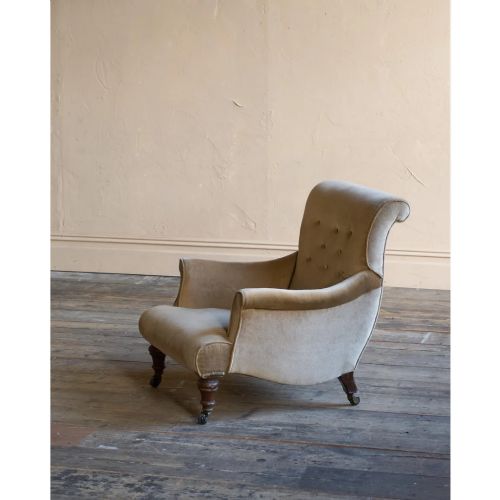
A victorian walnut club chair forms part of a tradition of heavy seating, often found as deep-seated armchairs, library chairs, or low tub chairs originating across the nineteenth century. These pieces emerge from periods spanning the mid nineteenth century through to Edwardian revivals, carrying the distinct hallmarks of English country house comfort.
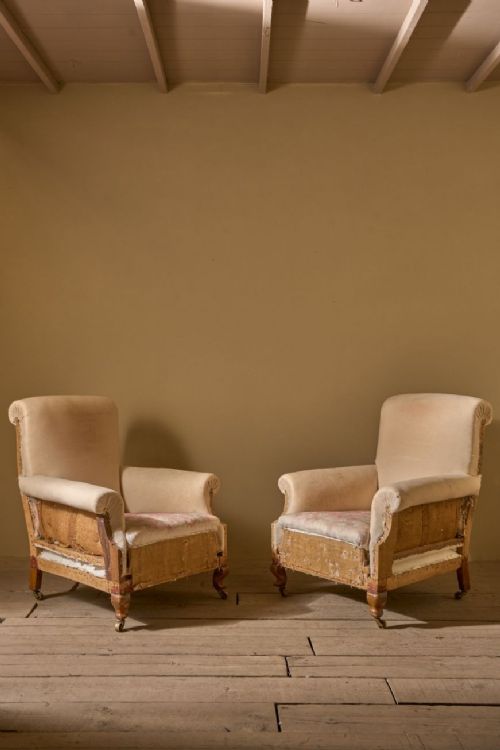
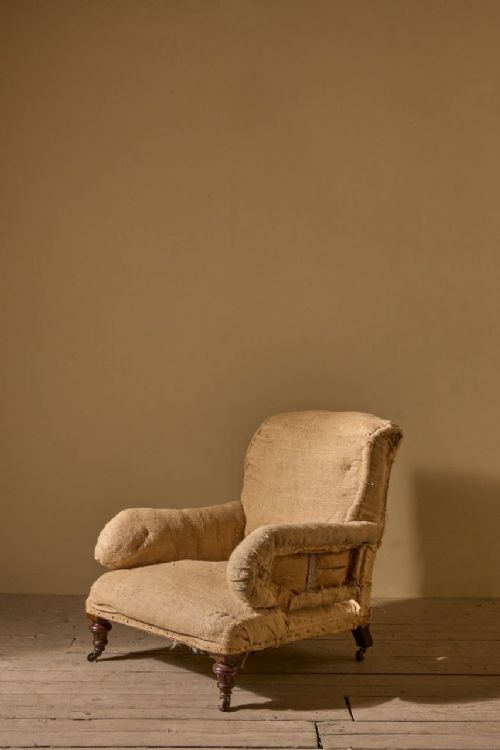
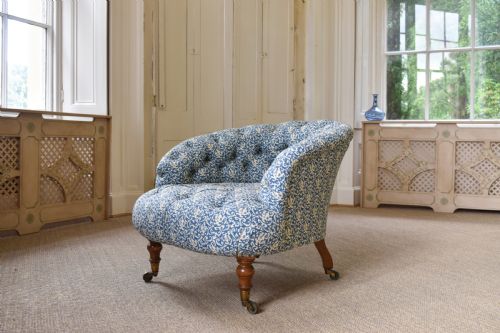
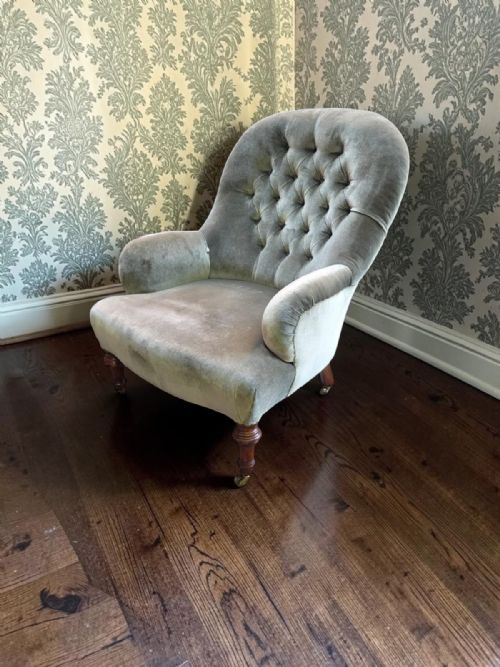
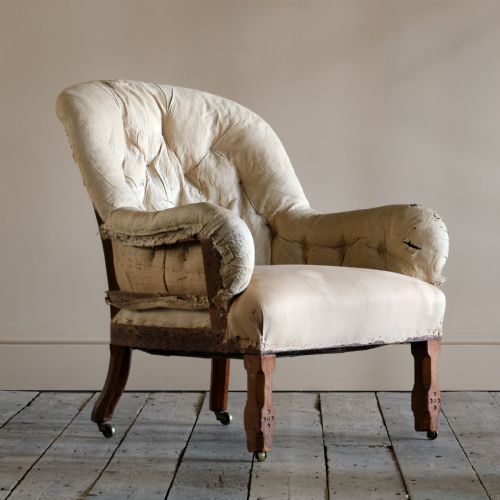
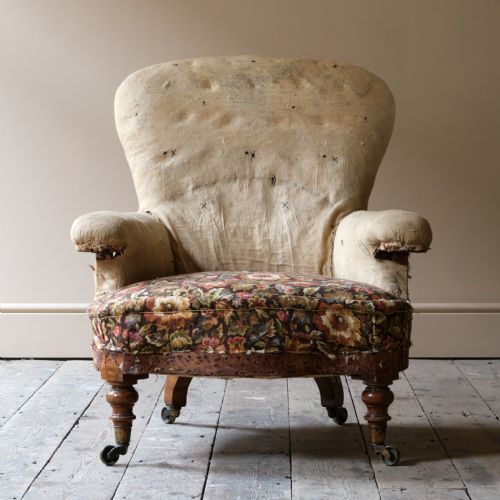
Buyers encounter numerous variations on this page, including button-backed reading chairs, scroll back designs, and low-slung club models upholstered in leather, ticking, velvet, or hessian. Many examples reflect specific stylistic influences such as Arts and Crafts carving or country house proportions.
The timber framework relies heavily on walnut, frequently shaped into cabriole legs, sometimes featuring brass castors or claw and ball feet. Makers ranged from esteemed London cabinet makers to provincial workshops adopting popular styles.
Assessing quality in walnut seating
Quality rests significantly on the integrity of the walnut frame and the precision of its carving, where crisp lines on cabriole legs or arm scrolls indicate superior workshop origins. Pieces attributed to notable London makers demonstrate finer proportions and more resilient internal framing than standard provincial alternatives.
The standard of upholstery and the preservation of original materials, such as hand-coloured leather or period ticking, heavily influence the overall character. Chairs retaining their original castor wheels and uncompromised internal webbing hold greater authenticity.
Victorian Walnut Club Chair Retail Price Guide 2026
Typical asking prices for victorian walnut club chair among the pieces listed under this phrase on Sellingantiques today, from the lower quarter to the upper quarter. They describe what is for sale here now, not the wider market.
Howard and Sons·Hindley and Sons·Gillows
The Victorian Walnut Club Chair Glossary
- Cabriole leg
- A furniture leg that curves outward and then tapers inward, terminating in a foot such as a claw and ball. This design appears frequently on nineteenth-century walnut armchair frames.
- Button back
- An upholstery style where depressions are formed in the padding by sewing buttons through to the frame in a grid pattern. It adds structural tension and distinct visual depth to Victorian seating.
- Tub chair
- A low, curved armchair where the back and arms form a continuous semi-circular enclosure. These compact seats offer supportive wrapping comfort.
- Hessian
- A coarse woven fabric, typically made from jute fibres, utilised as the foundational internal support layer beneath final upholstery fabrics. It holds the stuffing securely within the chair frame.
- Ticking
- A durable cotton or linen fabric tightly woven in characteristic multi-coloured stripes. It serves as traditional upholstery lining on high-quality nineteenth-century English armchairs.
Victorian Walnut Club Chair: Frequently Asked Questions
What defines a club chair from this period?
A club chair is characterised by its deep seat, low back, and padded arms designed for relaxed lounging. The nineteenth-century versions combine sturdy walnut frames with substantial sprung upholstery.
These chairs were built for studies, libraries, and drawing rooms, offering enduring comfort alongside formal nineteenth-century aesthetics.
How do I identify a Victorian walnut frame?
Victorian walnut frames display a dark, rich timber grain with natural warmth, often shaped into cabriole legs or scroll arms. Examining the exposed wood beneath the arms or around the legs reveals the quality of the carving and finish.
Many pieces from this era also incorporate brass castors or detailed stylistic touches reflecting popular nineteenth-century design movements.
Are these chairs suitable for daily use?
These armchairs were originally constructed for heavy everyday use in English country houses and town residences. Their robust timber frames and traditional sprung interiors make them remarkably durable for modern living.
Many surviving examples have been carefully prepared or restored to ensure the internal support handles contemporary seating demands.
What fabrics are typically found on these chairs?
Original and period-appropriate upholstery includes hand-coloured leather, plush velvet, traditional ticking, and patterned textiles like kilim. Leather finishes often acquire a rich patina over decades of use.
Inner construction layers commonly feature hessian and calico beneath the outer textile covering to maintain structural firmness.