

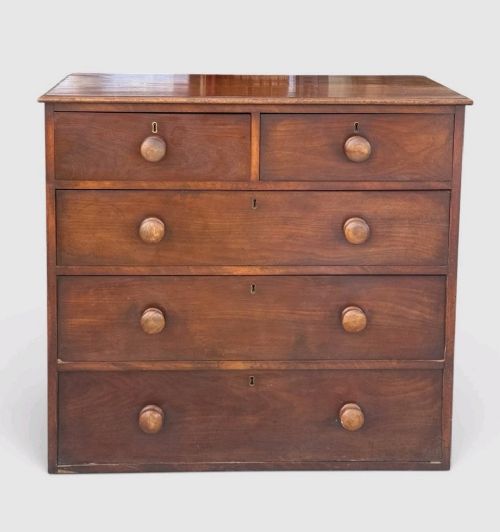
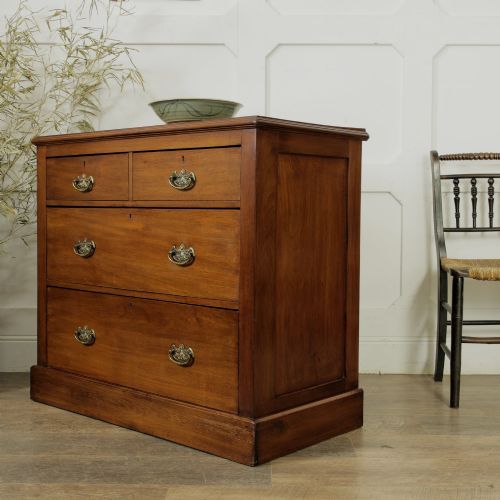
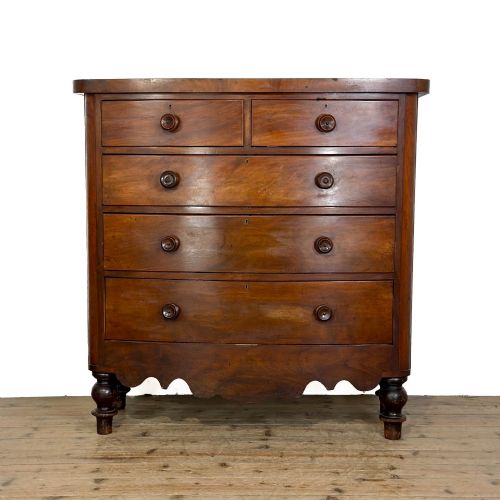
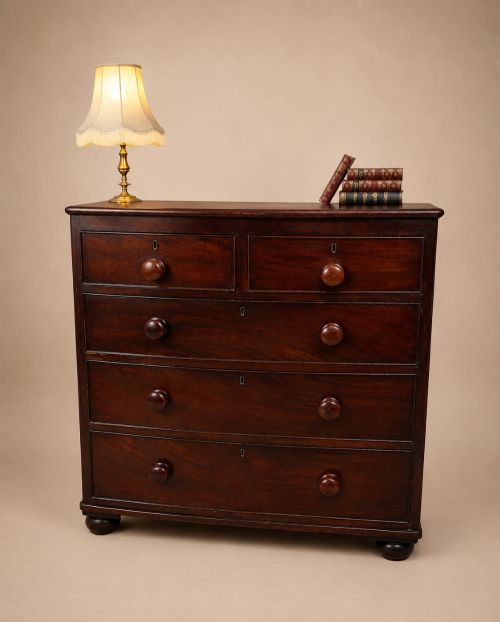
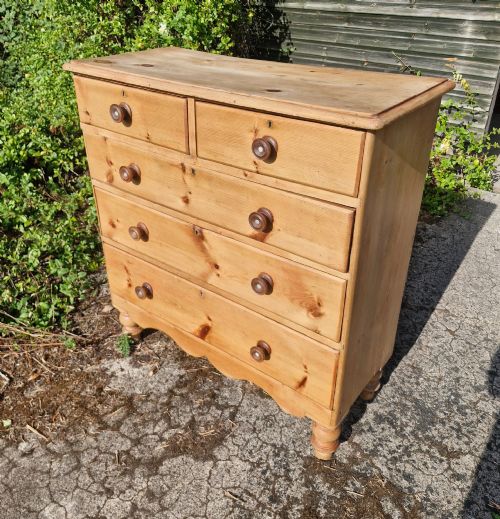
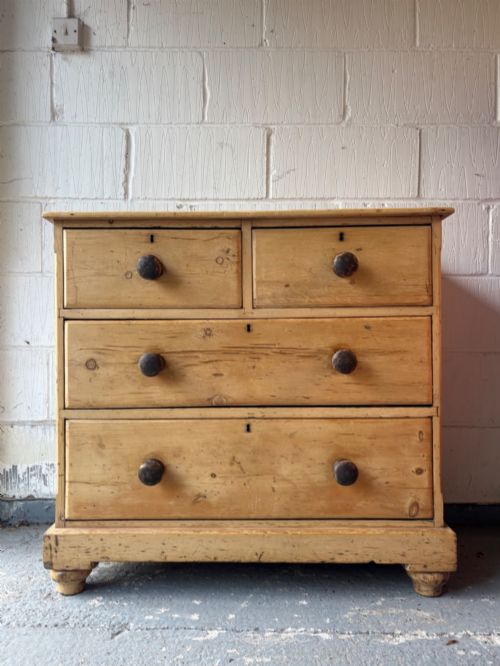
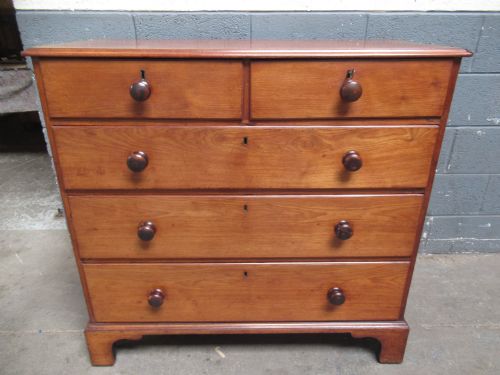
Victorian Two Drawer Chest
A victorian two drawer chest offers compact proportion and honest storage, bringing period character directly into a bedroom.
Victorian Two Drawer Chest
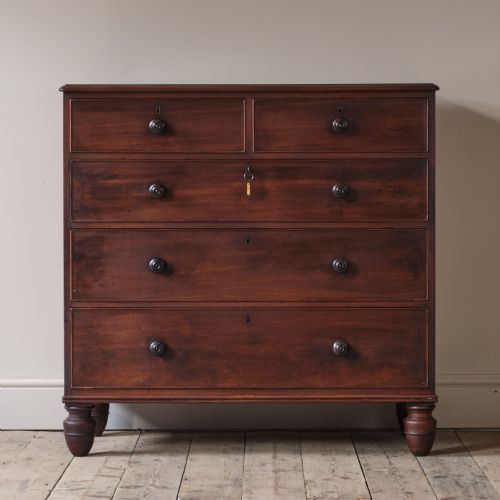
A victorian two drawer chest typically appears as a compact configuration within a larger tradition of nineteenth century bedroom storage furniture. These pieces combine practical timber construction with the characteristic scale of the Victorian period, spanning mahogany, pine, and teak variations.
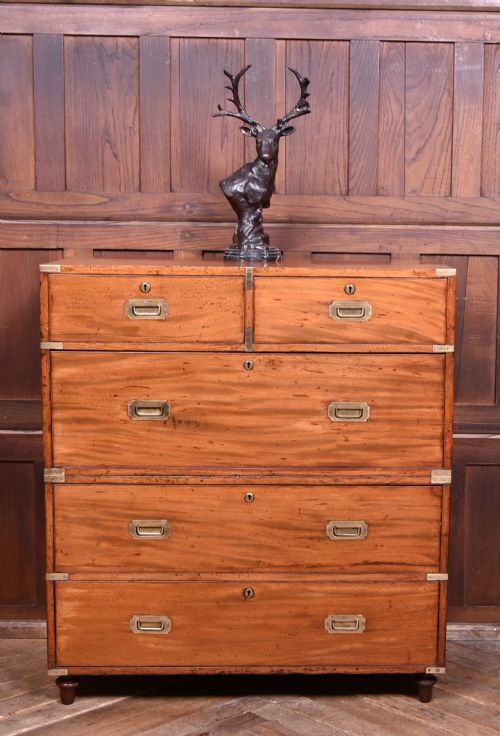
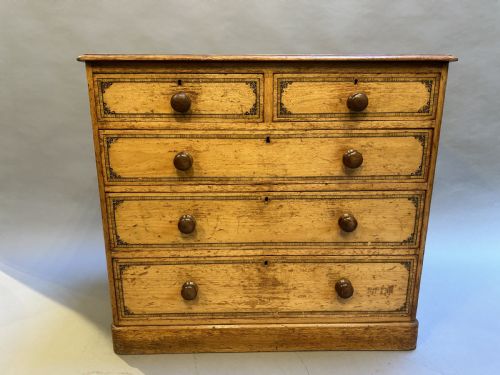
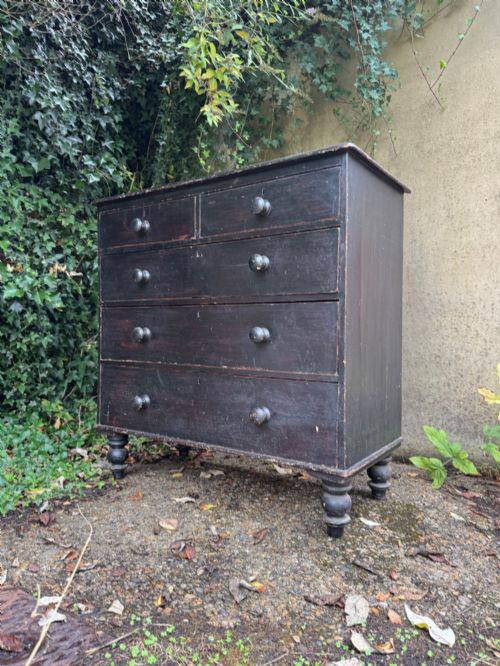
The selection ranges from sturdy pine country examples to refined mahogany and walnut iterations, occasionally including campaign forms built in two parts with brass hardware. Buyers encounter pieces originating across the nineteenth century, from mid Victorian workshops to later Edwardian adaptations.
Assessing quality and execution
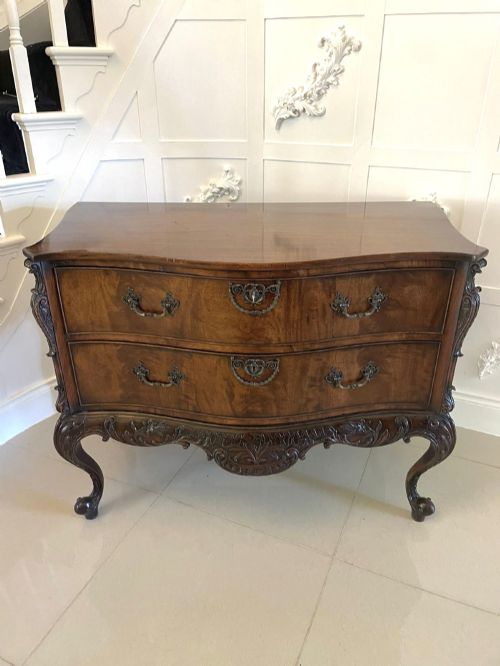
The distinction between tiers rests upon timber selection and surface preservation, where figured veneers and original paint finishes elevate a piece beyond standard utility furniture. Finer examples display meticulous attention to proportion, particularly in bow front and serpentine profiles.
Hardware integrity and the retention of original surfaces govern the standing of individual chests. Pieces retaining untouched patination and specialist maker attribution demonstrate superior manufacturing pedigree compared to heavily altered domestic items.
Listings feature woods spanning mahogany, pine, ash, teak, walnut, and satinwood alongside iron and brass hardware.
T & G Seddon·Heal & Son·Howard and Sons
The Victorian Two Drawer Chest Glossary
- Campaign chest
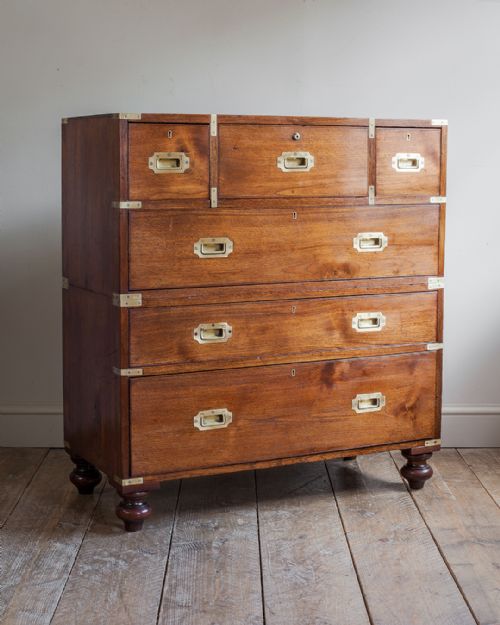
- A portable chest of drawers built in two separate sections with recessed brass handles, designed for military transport.
- Bow front
- A cabinet front curved outward in a convex shape, requiring specialist woodworking skill to execute properly on nineteenth century chests.
- Flame mahogany
- A decorative wood veneer displaying a distinctive flickering flame pattern, cut from the fork where a branch meets the tree trunk.
- Scumbled paint
- A decorative surface finish applied by dragging a translucent glaze over an opaque base coat to simulate wood grain.
- Tongue and groove
- A method of fitting boards together where a projecting rib on one edge fits into a corresponding groove on another.
Victorian Two Drawer Chest: Frequently Asked Questions
How do I date a victorian chest?
Dating relies on timber choices, construction methods, and hardware styles recorded across the nineteenth century. Earlier pieces often employ solid mahogany and hand-cut dovetails, while later examples incorporate pine framing and machine-standardised fixings.
Changes in aesthetic preferences also guide the timeline, shifting from early Victorian proportion to later Victorian and Edwardian variations. Examining secondary woods inside the drawers provides further clues regarding the manufacturing decade.
What is a campaign chest?
A campaign chest is a piece of modular furniture designed to separate into two distinct sections for easy transport by military officers. These chests feature flush brass corners and recessed carrying handles to prevent snagging during travel.
Materials like teak, mahogany, and walnut appear frequently in these travel-hardened units. Brass bound edges protect the corners from impact during transit across the empire.
How should I clean pine furniture?
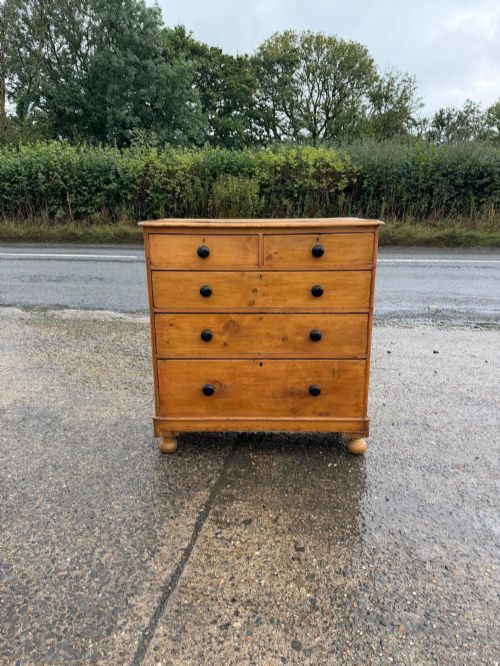
Maintenance of nineteenth century pine requires gentle dusting with a dry cloth and the occasional application of traditional beeswax to nourish the wood. Avoid modern chemical sprays that can strip original paint or aged surface patination.
Keeping timber away from direct heat sources prevents the panels from shrinking or splitting over time. Preserving the dry scrubbed finish or original paint layer maintains the historical character of the piece.
Where were these chests used?
These chests served primarily as bedroom storage furniture for holding linens, garments, and personal effects throughout nineteenth century homes. Smaller formats functioned effectively as bedside or dressing table companions.
Military variants travelled with officers on active service, functioning as portable wardrobes and desks in campaign tents. Domestic pine iterations equipped farmhouse chambers and Victorian townhouses alike.