


Victorian Towel Airer
These Victorian towel airer pieces are practical nineteenth-century stands built to dry and display linen, offering solid utility and period character for a traditional interior.
Victorian Towel Airer
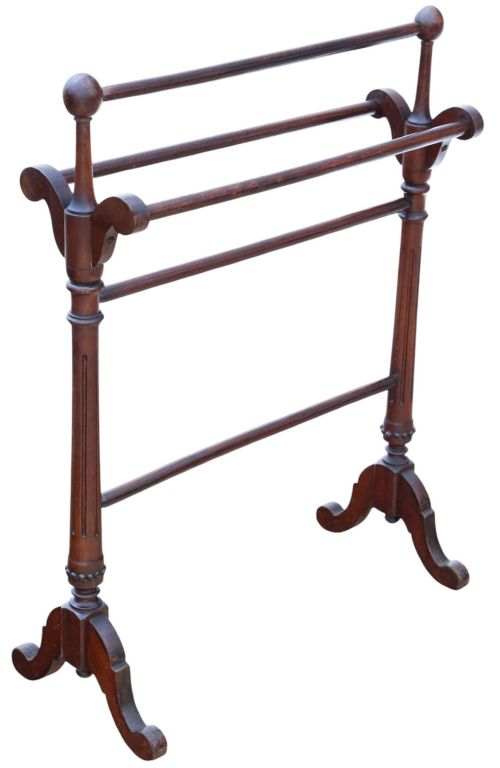
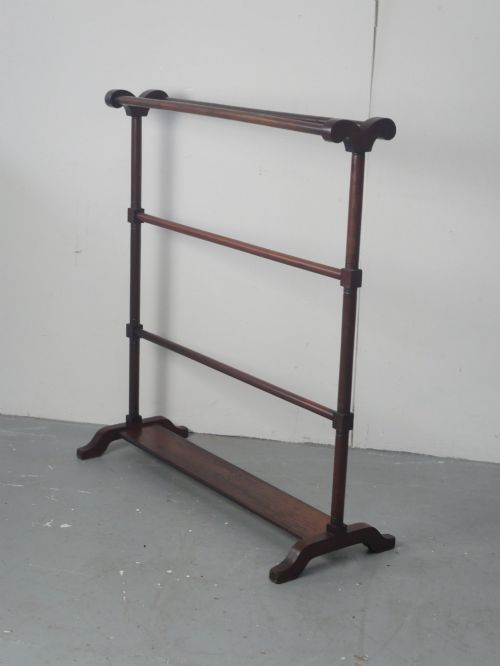
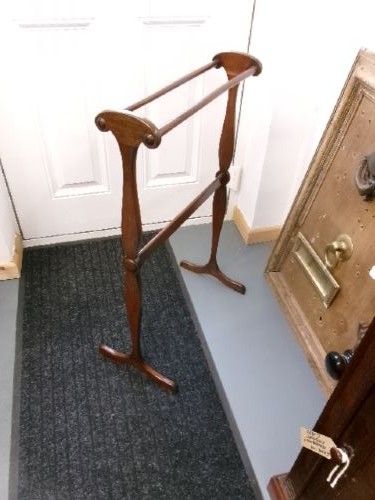
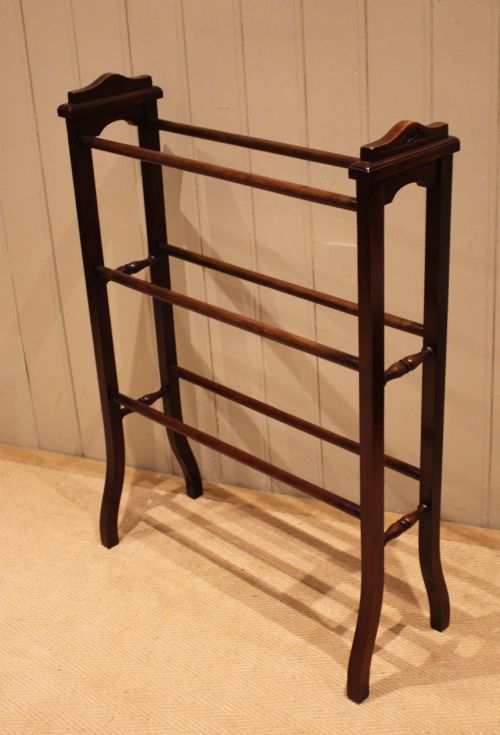
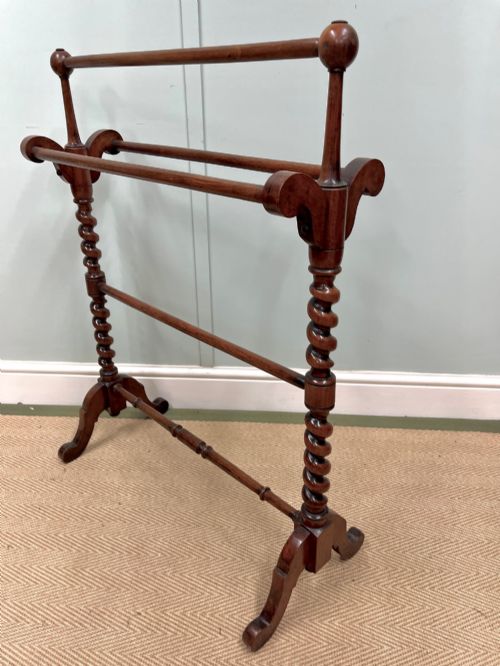
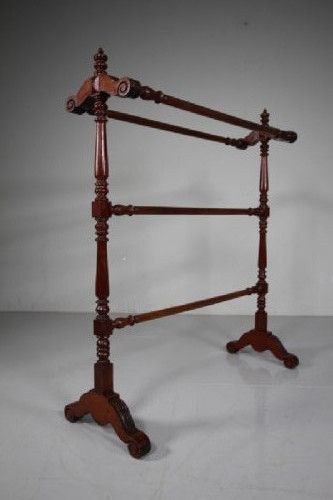
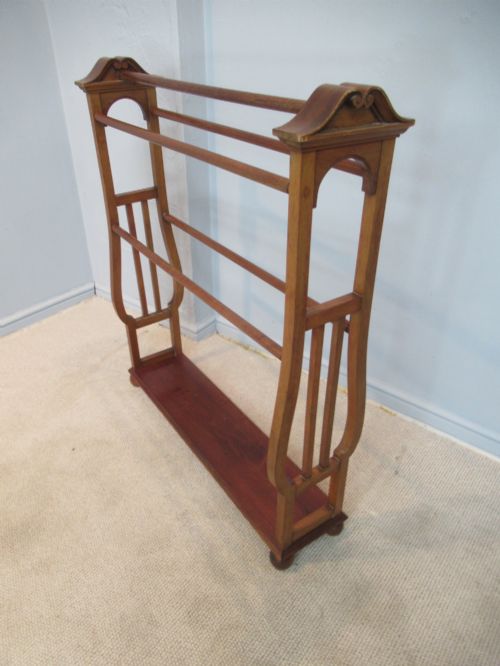
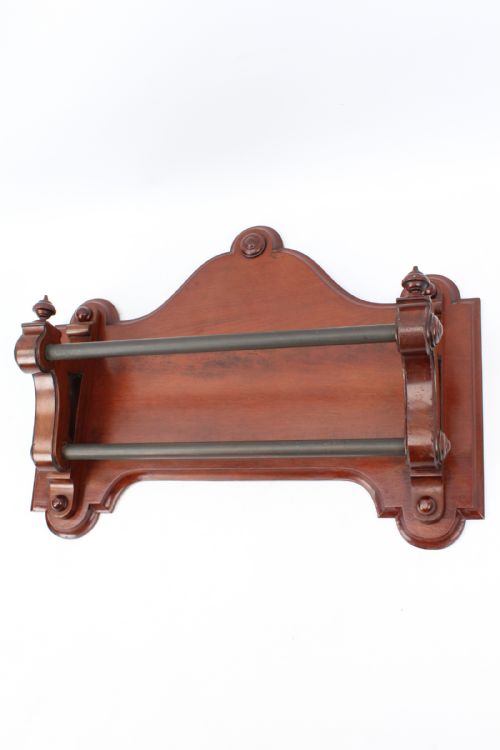
A victorian towel airer is a functional wooden frame designed for domestic use during the nineteenth and early twentieth centuries, appearing in forms such as standing rails, folding cheval designs, and hanging double units. The listings show a strong presence of 19th Century and Victorian examples alongside related pieces from the Regency, Edwardian, and William IV periods.
Buyers encounter various formats on this page, ranging from small table or wall-mounted versions to large oversized clothes and towel rails with multiple bars. Mahogany is the predominant wood across these listings, accompanied by walnut, pine, oak, and ebonised wood.
Regional and stylistic variations include robust Arts and Crafts oak stands, decorative pine pieces, and architectural Victorian Gothic Revival walnut designs. These items served a daily purpose in bedrooms and bathrooms, transitioning today into decorative bathroom furniture.
What varies in quality
Quality rests in the selection of timber and the proportion of the frame, where finely figured mahogany or rich walnut distinguishes a superior piece from utilitarian pine. The complexity of the construction also marks the grade, separating simple single-rail stands from large multi-fold cheval or silhouette models.
Design details elevate certain examples, such as architectural mouldings found in Victorian Gothic Revival pieces or the honest craftsmanship visible in Arts and Crafts oak stands. The structural integrity of the joints and the retention of original turning further divide standard items from exceptional survivals.
Mahogany is the dominant material across the listings, appearing alongside walnut, pine, oak, and ebonised wood in various nineteenth-century forms.
The Victorian Towel Airer Glossary
- Cheval rail
- A standing towel airer built with a supporting frame that allows sections to swing or fold. This design provides stability while accommodating multiple rails for hanging.
- Ebonised wood
- Timber treated with a dark stain or finish to imitate ebony. This technique was popular in the nineteenth century for achieving a formal, dramatic appearance.
- Gothic Revival
- An architectural and decorative style drawing on medieval forms. Pieces often feature pointed arches, heavy moulding, and deep chamfering.
- William IV
- The design period spanning the reigns preceding early Victorian furniture, charactered by heavy proportions and classical revival motifs. Pieces from this era often display robust mahogany construction.
Victorian Towel Airer: Frequently Asked Questions
Where were towel airers used in the home?
These stands were placed near hearths in bedrooms, dressing rooms, and nurseries to warm and dry household linens.
Today, they function effectively in modern bathrooms or bedrooms for hanging towels and garments.
How do I distinguish a Victorian rail from an Edwardian one?
Victorian pieces often employ heavier timbers like mahogany and walnut with rich, dark patination and solid turnings. Edwardian examples tend to show lighter construction, reflecting changing domestic tastes at the turn of the century.
Checking the wood type and joinery style provides clear clues to the manufacturing date.
Are folding rails stable?
Multi-fold and cheval designs rely on hinged joints to expand and contract without losing balance. Well-built nineteenth-century frames distribute weight evenly across their feet.
Properly maintained hinges ensure the wings stay aligned during daily use.