





Victorian Sterling Napkin Rings
These robust victorian sterling napkin rings are table silver built to last, sought after for their solid weight and detailed nineteenth-century chasing.
Victorian Sterling Napkin Rings
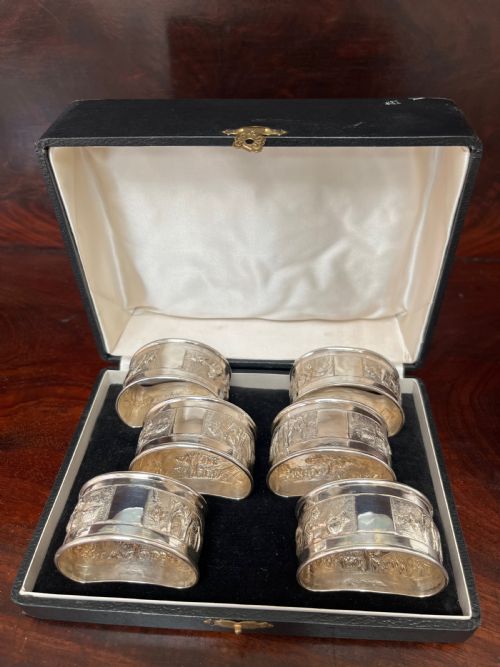
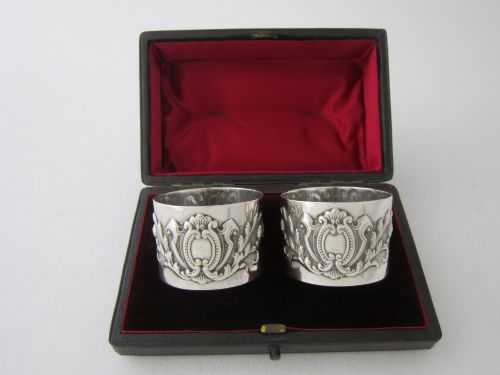
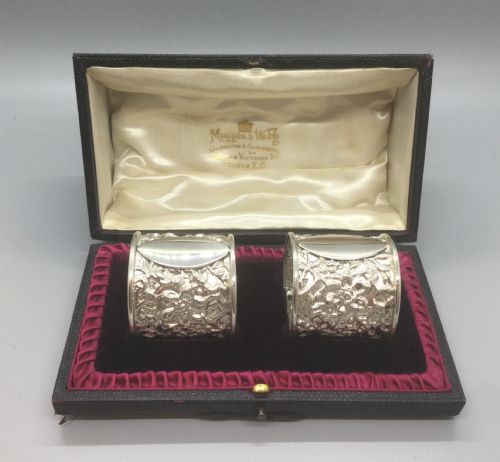
Victorian sterling napkin rings emerge primarily as individual table accessories, pairs, or complete matched sets housed in fitted presentation boxes lined with velvet and silk. When searching for victorian sterling napkin rings, collectors frequently encounter individual pieces, pairs, or sets of four and six bearing hallmarks from the nineteenth century and the Edwardian era.
The physical forms include simple bands alongside ornate figural creations and specialised christening sets incorporating matching spoons and forks. These items span the decades from the mid-nineteenth century through to the turn of the twentieth century, occasionally extending into later twentieth-century production.
Originating largely from English assay offices, these napkin rings represent the domestic silver output of a period that valued coordinated dining accessories. Many survive inside original leatherette cases, preserving the interior linings intact alongside the silver pieces.
Materials and Techniques
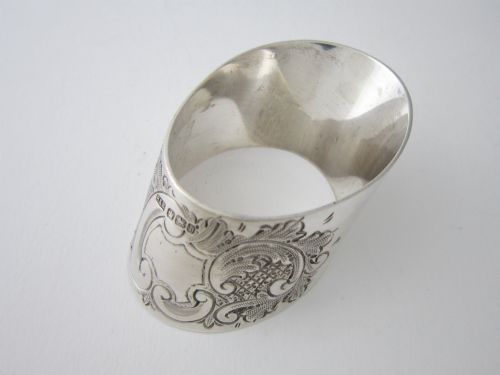
Makers utilised sterling silver and solid silver, shaping sheet metal into cylindrical bands and applying decorative motifs through embossing, chasing, and filigree work. Natural themes such as birds, angels, and grape vines appear rendered in high relief upon the metal surface.
Storage housings combine leatherette exteriors with internal linings of velvet and silk, creating fitted recesses designed to hold pairs or sets securely. Assay offices stamped these objects with hallmarked details to confirm the silver standard and year of production.
Victorian Sterling Napkin Rings Retail Price Guide 2026
Typical asking prices for victorian sterling napkin rings among the pieces listed under this phrase on Sellingantiques today, from the lower quarter to the upper quarter. They describe what is for sale here now, not the wider market.
Angels and grape vines peer out from the silver, guarding the family napkins through decades of dinners.
Distinctions in Quality
The standard of execution separates simple plain bands from heavily embossed figural examples and detailed filigree work. Weight plays a part, with heavier gauge silver offering a more substantial feel in the hand compared to lighter stamped alternatives.
The presence of an original fitted case lined with velvet and silk elevates the completeness of a set. Furthermore, crispness in the chased motifs such as birds or vine leaves indicates the skill applied by the silversmith during production.
William Comyns
The Victorian Sterling Napkin Rings Glossary
- Sterling Silver
- An alloy of silver containing 92.5 percent pure silver and 7.5 percent other metals, usually copper, ensuring durability for daily dining use.
- Hallmark
- An official mark stamped onto silver articles by an assay office to certify the purity of the metal and the year of manufacture.
- Chasing
- A metalsmithing technique where the design is hammered into the front surface of the silver to push the metal into relief.
- Filigree
- Delicate ornamental work made from twisted silver wire soldered together in openwork patterns.
- Christening Set
- A matched grouping of silver items, often including a napkin ring, fork, and spoon, presented to mark the naming of a child.
Victorian Sterling Napkin Rings: Frequently Asked Questions
How were silver napkin rings used?
These rings served to identify individual napkins at the dining table between weekly laundering cycles.
Families kept them designated for specific household members throughout daily meals.
Why do some sets include cases?
Presents and special purchases were supplied in fitted leatherette boxes lined with velvet and silk.
These cases protected the silver from tarnish and damage while stored in sideboards.
Are these items safe for daily use?
Solid silver construction makes these pieces durable enough for regular handling at modern meals.
Gentle washing and proper storage keep the metal in good condition.
How do I identify the date?
Assay office hallmarks stamped on the silver provide specific letter codes for the year of production.
Matching style elements like grape vines or bird motifs also point to specific decades.