
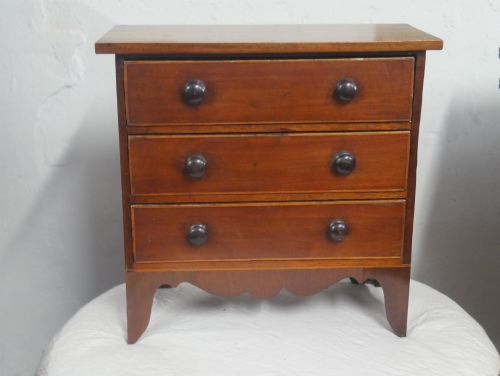
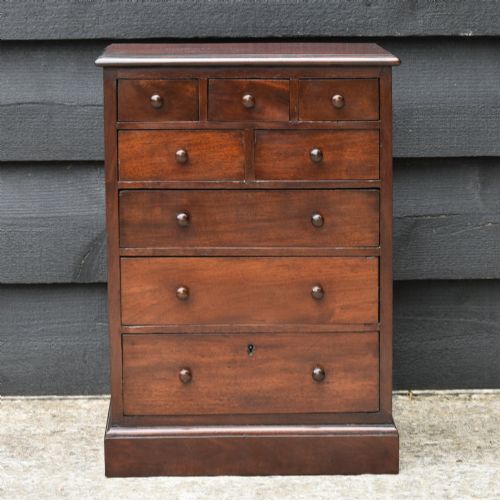
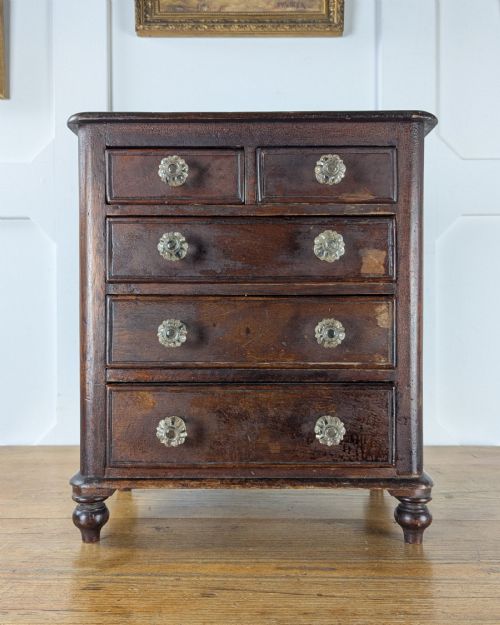
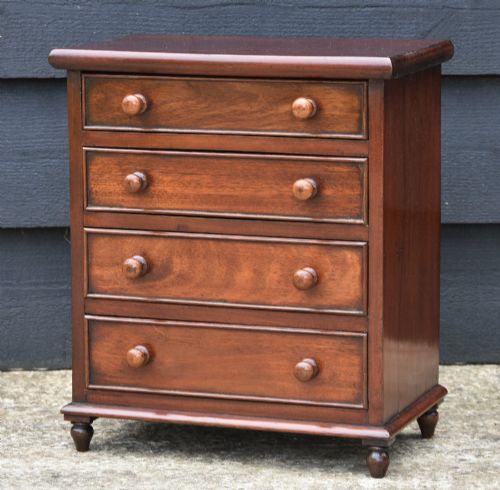


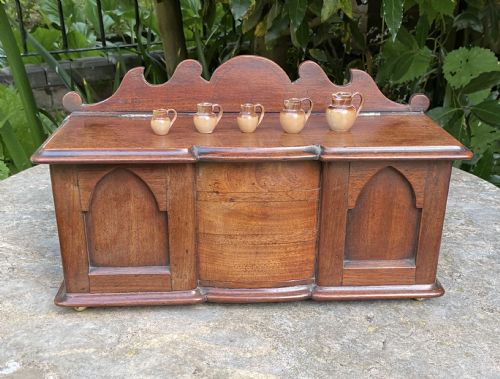
Victorian Salesman Sample Furniture
These Victorian salesman sample furniture pieces and apprentice works offer scaled-down domestic refinement crafted for travel or master tests.
Victorian Salesman Sample Furniture
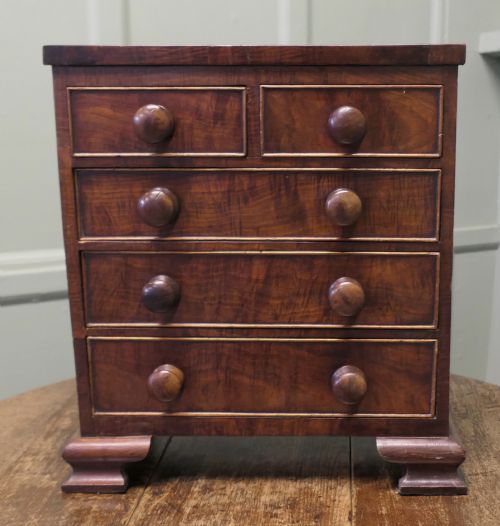
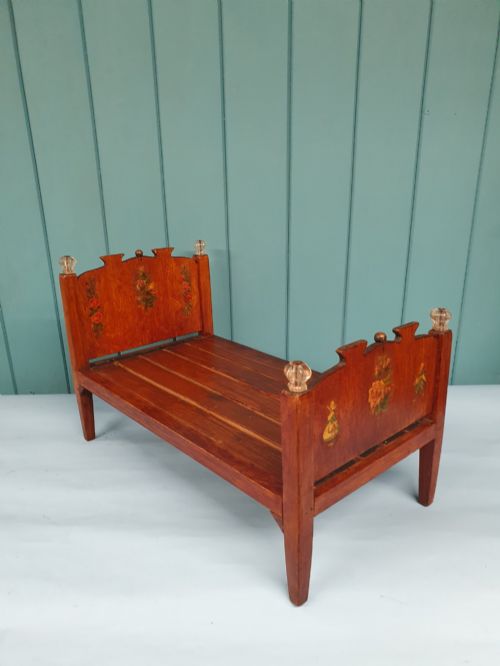
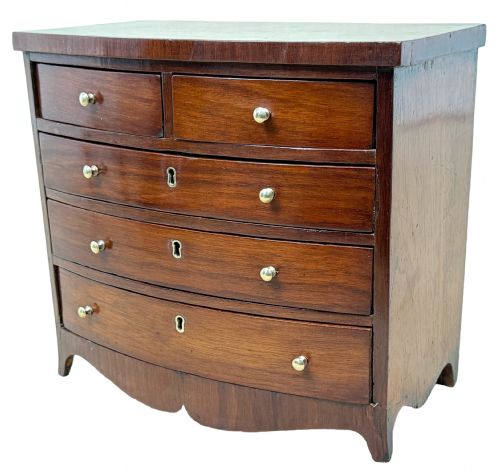
Victorian salesman sample furniture encompasses miniature chests of drawers, bureaus, tables, and seating created for commercial travellers or workshop tests. These items replicate full-scale domestic forms meticulously at a fraction of the size, spanning the nineteenth century.
Origins stretch from English workshops to Scottish centres and Anglo-Indian studios, utilising regional timbers and vernacular styles. The dating clusters largely in the Victorian era, reaching from the mid-nineteenth century into the Edwardian period.
Materials and construction methods
Makers utilised dense hardwoods such as mahogany and burr walnut, alongside pitch pine, oak, and ebonised wood for contrast. Brass hardware, glass elements, and painted finishes complete the construction of these diminutive items.
Cabinetmakers applied traditional joinery techniques seen in full-sized furniture, including dovetail joints and turned feet. French polishing sealed the timber surfaces, while carved mouldings and secret drawers demonstrate high levels of workshop skill.
Tiny drawers hide secret compartments built specifically to guard against miniature domestic espionage.
Assessing quality in miniature pieces
Quality rests upon the fidelity of proportion and the precision of the miniature scale relative to full-sized furniture. Superior examples maintain exact joinery and crisp carving despite the reduced dimensions, whereas coarser pieces rely on simplified construction.
The choice of timber significantly alters the character, with figured mahogany and burr walnut commanding greater visual depth than plain pine. Finer pieces incorporate working locks, secret drawers, and matched veneers that mirror master furniture standards.
The Victorian Salesman Sample Furniture Glossary
- Apprentice piece
- An item created by a trainee cabinetmaker to demonstrate proficiency to a trade guild or master. These objects often display ambitious joinery and experimental design.
- Bowfront
- A convex curved front on a case piece such as a chest of drawers. This shaping requires specialist woodworking skill to achieve smoothly.
- Secret drawer
- A concealed compartment built into a piece of furniture, often accessed by removing a secondary divider or sliding panel. They served to secure valuables in miniature as well as full-scale items.
- French polish
- A shellac finish applied with a rubber pad in circular strokes to achieve a glossy surface. It accentuates the grain of mahogany and walnut.
- Linen press
- A tall cupboard featuring upper sliding trays for storing textiles and lower drawers. Miniature versions replicate these large storage forms for display or travel.
Victorian Salesman Sample Furniture: Frequently Asked Questions
What is Victorian salesman sample furniture?
These pieces are scaled-down representations of domestic furniture utilised by commercial travellers to demonstrate wares to clients without hauling full-sized stock. They mirror the exact styles and construction of standard household items.
Alternatively, many function as apprentice pieces created to prove a craftsman's skill. Both categories share the characteristic of meticulous miniature proportion.
How were these miniature items used?
Salesmen carried them across regions to show clients timber choices, carving styles, and mechanisms without transporting bulky furniture. The portability allowed trade transactions in homes or offices.
Apprentice pieces remained in workshops as credentials or served as decorative items within wealthy Victorian households. Dolls also claimed some smaller examples for play.
How do I date these pieces?
Dating relies on timber selection, secondary woods, hardware styles, and construction markers that align with nineteenth-century cabinetmaking. Mahogany and walnut pieces from the mid-Victorian era show distinct dovetailing and finishing traits.
Comparing the proportions and decorative motifs to standard furniture of the same decades helps narrow the timeline. Regional variations, such as Scottish or Anglo-Indian construction, also point to specific eras.
How should I clean miniature furniture?
Dust surfaces gently with a dry, soft cloth to prevent accumulation in carved crevices and joints. Avoid modern chemical sprays that can strip historic French polish or damage aged timber.
Feed dry wood sparingly with a quality microcrystalline wax if the finish appears parched. Keep pieces away from direct sunlight and heat sources to prevent timber splitting.