


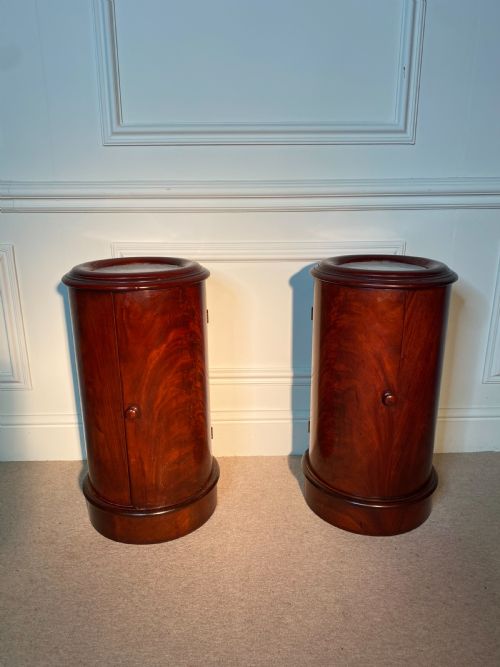


Victorian Round Cabinet
These Victorian round cabinet pieces are compact cylindrical forms offering discreet bedside storage or elegant display, prized for their figured timbers and marble tops.
Victorian Round Cabinet
A victorian round cabinet encompasses cylindrical bedside cupboards, pedestal nightstands and circular vitrines designed for nineteenth-century interiors. These circular forms stand out from standard boxy furniture through their curved doors and seamless turning.
The versions most frequently met on this page are mahogany or kingwood bedside cabinets fitted with inset marble tops. Alongside these come glazed display tables and glass domes intended for small treasures.
How they were made
Cabinet makers constructed these circular carcasses using figured timbers such as mahogany and walnut, often bent or curved to form the cylinder. Ebonised wood and kingwood also appear, sometimes paired with delicate brass mounts and inlay.
Tops frequently feature inset marble slabs, while display pieces incorporate glass panels and silk-lined interiors. The joinery demands precision to ensure doors and lids curve smoothly within the circular frame.
Some nineteenth-century glass display domes survive simply because people refused to dust their stuffed hummingbirds.
What varies in quality
Quality rests on the selection of timber veneers and the precision of the curved joinery. Superior pieces display finely matched grain patterns across the cylindrical doors and tight, flush fitting components.
The choice of secondary materials marks the difference between standard utility items and high-end pieces. Heavy marble tops, finely chased brass mounts and clear glazed vitrines elevate the overall execution.
The Victorian Round Cabinet Glossary
- Vitrine
- A glass-fronted cabinet designed for the display of small objects or curiosities. These pieces often feature glazed sides and velvet or silk linings.
- Bijouterie table
- A shallow glass-topped display table intended for jewellery and trinkets. They sit on slender legs and frequently showcase decorative French marquetry.
- Cylindrical
- Having the shape of a cylinder or tube with circular cross-sections. This curved form defines the main body of these bedside and display pieces.
- Display dome
- A blown glass cover mounted on a base to protect fragile ornaments. They provide a clear view while keeping dust away from delicate items.
Victorian Round Cabinet: Frequently Asked Questions
What is a Victorian round cabinet used for?
These circular pieces served primarily as bedside cupboards or nightstands for holding personal items out of sight. Others functioned as vitrines or bijouterie tables in drawing rooms to display small ornaments.
Their compact footprints made them versatile additions to nineteenth-century bedrooms and reception spaces alike. Today they perform the exact same roles beside lower modern beds.
How do I identify a French Victorian piece?
French examples often utilise kingwood veneers, intricate brass mounts and circular inlaid motifs characteristic of Parisian cabinet makers. They lean towards display uses such as vitrines and bijouterie tables rather than simple bedside storage.
English variants tend to focus on utilitarian strength using solid mahogany or walnut with marble tops. The framing and timber selection usually point clearly to the country of origin.
Are marble tops original to these cabinets?
Marble tops on nineteenth-century bedside cabinets were standard additions designed to provide a durable, wipe-clean surface for water jugs and glassware. They sit directly upon the wooden carcass, sometimes recessed into the top rim.
Checking the underside reveals the traditional slate or timber base supporting the stone slab. A heavy white or grey marble insert is typical for pieces dating from the mid-nineteenth century onwards.
How do I care for antique mahogany and kingwood?
Keep these timber surfaces away from direct sunlight and strong heat sources to prevent the wood veneers from drying out and splitting. Regular dusting with a dry, soft cloth maintains the natural lustre of the polish.
Avoid commercial silicone sprays and instead apply a traditional beeswax sparingly when the wood appears dry. Marble tops require only a damp cloth followed by immediate drying.