



Victorian Repousse Silver Cup
These Victorian repousse silver cup pieces are tactile items of hollowware designed for personal use and display, offering distinct chased decoration.
Victorian Repousse Silver Cup
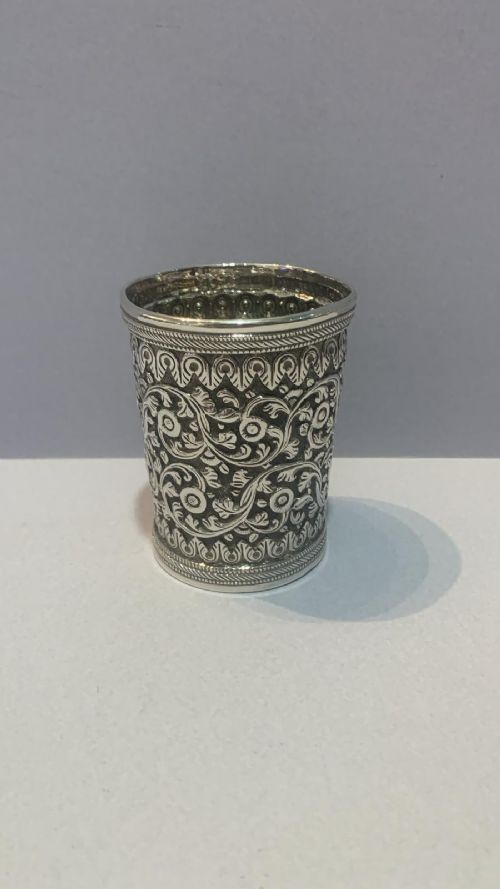
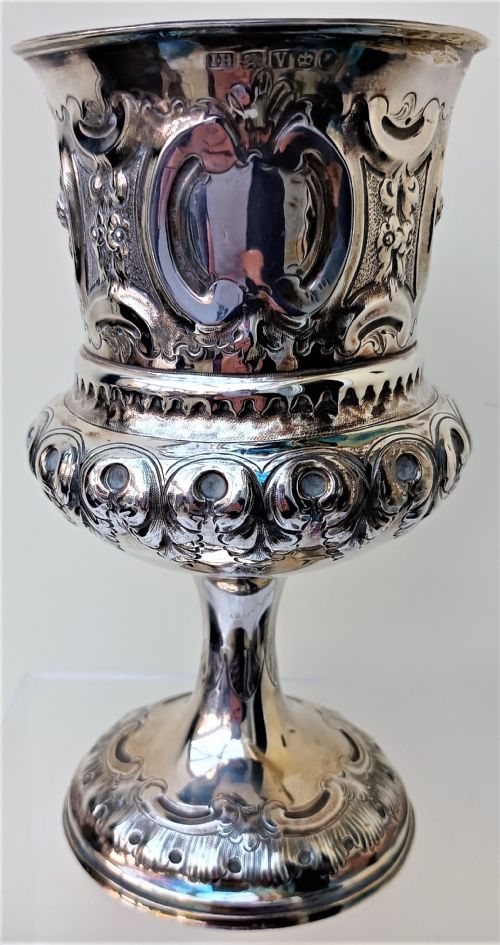
A victorian repousse silver cup brings together several historic forms intended for special occasions or daily refreshment, appearing on this page primarily as christening mugs, chalices, goblets, beakers, and wine tasters. The evidence spans the nineteenth century, taking in both standard British Victorian production and diverse regional styles such as Anglo-Indian Kutch work and nineteenth-century French pieces.
Mugs and chalices dominate the domestic offerings, often carrying dates from the mid to late nineteenth century alongside Edwardian examples. Trophy cups and wager cups broaden the selection toward celebratory and decorative vessels rather than purely utilitarian drinking items.
Materials and construction methods
Makers relied primarily on sterling silver and standard silver, supplemented occasionally by gold gilt highlights and silver plate. The defining technique involves hammering the metal from the reverse side to push out ornamental motifs while working the details from the front.
This repousse method permits deep relief work, creating scrollwork, foliage, and figurative scenes that define the surface texture of chalices, beakers, and wine tasters alike.
Victorian Repousse Silver Cup Retail Price Guide 2026
Typical asking prices for victorian repousse silver cup among the pieces listed under this phrase on Sellingantiques today, from the lower quarter to the upper quarter. They describe what is for sale here now, not the wider market.
Listings feature sterling silver, gold gilt, and silver plate across forms ranging from christening mugs to wager cups.
Distinctions in standard and execution
Quality rests heavily on the crispness of the hammered relief and the control shown by the silversmith in handling floral and scroll motifs. Pieces with well-defined depth and balanced proportions stand apart from softer, shallower examples.
The integration of the handle, the finish of the interior gilding where present, and the legibility of hallmarks provide further distinction between everyday items and superior workshop output.
John Evans·D and J Wellby
The Victorian Repousse Silver Cup Glossary
- Repousse
- A metalworking technique where the design is hammered into relief from the reverse side. This method creates raised patterns that catch the light.
- Chalice
- A large stemmed cup or goblet used historically for sacramental wine or ceremonial drinking. They often feature deep bowls and knop stems.
- Wine taster
- A small, shallow silver dish fitted with a handle, used traditionally for sampling wine. French versions often incorporate textured panels to show the colour of the liquid.
- Wager cup
- A double-cup vessel designed for use in traditional drinking games at historical banquets. One swivelling cup is balanced above a larger main vessel.
Victorian Repousse Silver Cup: Frequently Asked Questions
What were christening mugs used for?
These mugs served as traditional gifts to mark the birth or christening of a child, often engraved with initials or dates to record the event.
Over time, many families kept them on display as decorative silver rather than utilising them for daily dining.
How do I spot an Anglo-Indian beaker?
Anglo-Indian pieces typically display dense, intricate Kutch foliage and zoomorphic patterns beaten into the silver surface with distinctive regional character.
They combine British utilitarian forms like beakers with traditional South Asian repousse techniques.
What is a wine taster?
A wine taster is a small, shallow silver vessel equipped with a single loop handle for holding during a tasting.
They frequently feature dimpled bowls and embossed designs intended to reflect light through the wine.
How do I care for antique silver?
Regular, gentle dusting with a soft cloth helps prevent dust build-up on the repousse surface without wearing down the raised details.
Harsh abrasive dips should be avoided in favour of traditional silver polish applied sparingly with a soft sponge.