


Victorian Ornithology Prints
Victorian ornithology prints bring avian life into rooms through detailed nineteenth-century paper works.
Victorian Ornithology Prints
Victorian ornithology prints capture avian subjects through ink, watercolour, and lithography across nineteenth-century publishing and artistic efforts. These paper works record bird breeds and tropical species with scientific intent and decorative appeal.
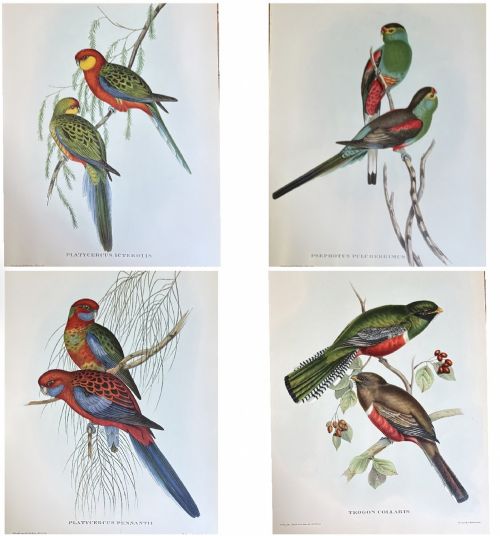
Buyers meet framed engravings, lithographs, and watercolours spanning the nineteenth century alongside later twentieth-century representations of Gould tropical birds. Sets of four or six pieces frequently appear alongside individual framed studies.
Originating from British natural history illustration, these works combine paper supports with wood, glass, and giltwood frames. The genre encompasses works by named artists alongside nineteenth-century natural history plates.
How they were made
Makers produced these ornithology pieces using ink, lithography, and watercolour upon paper supports. Many plates received hand colouring to render plumage hues accurately.
Framed examples utilise wood, ebonised timber, and giltwood mounts with glass protection. These housings reflect the framing choices of the nineteenth and early twentieth centuries.
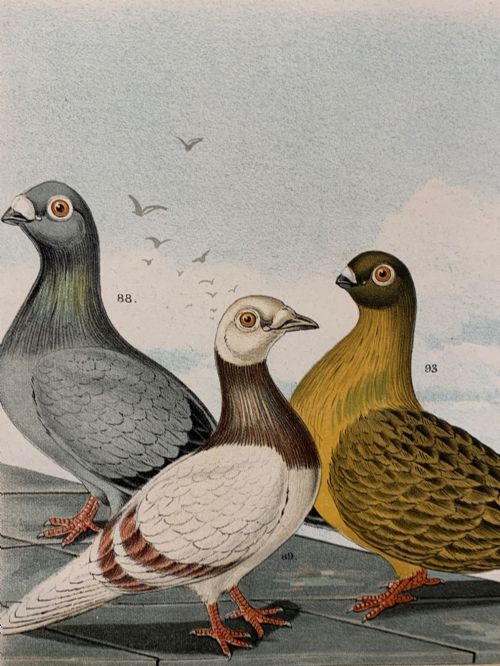
The inventory includes sets of Gould tropical birds, pigeon breeds, and water fowl studies.
What varies in quality
Quality rests in the precision of the hand colouring and the clarity of the original ink line work. Earlier nineteenth-century impressions display sharper detail than later productions.
The sophistication of the framing elements, such as deep giltwood mounts and ebonised wood, elevates the overall presentation of the paper print.
Gould·William Swainson·Edward Lear·Rev B. Morris
The Victorian Ornithology Prints Glossary
- Lithography
- A printing process using a flat stone or metal plate to produce ink transfers on paper. This technique dominated nineteenth-century illustration production.
- Engraving
- A method of cutting design lines into a hard surface to hold ink for printing. It provides fine detail for bird plumage.
- Watercolour
- A paint medium using water-soluble pigments applied directly to paper. Artists used this for original studies and hand-colouring printed plates.
- Giltwood
- Wood decorated with gold leaf or gold paint applied to the surface. It forms decorative frames and mounts for ornithological art.
Victorian Ornithology Prints: Frequently Asked Questions
What are victorian ornithology prints?
These pieces comprise nineteenth-century paper prints, engravings, and watercolours depicting birds. They were produced for scientific study and domestic display.
Publishers and naturalists issued them in plates and sets, often featuring hand-coloured details of tropical and British species.
How were bird prints used?
Naturalists and collectors bound these plates into volumes or framed them for display on library and drawing room walls. They served both educational and decorative purposes.
Owners often grouped sets of four or six subjects together to create balanced wall displays.
How should I frame these prints?
Protect paper works from direct sunlight and moisture by using glass and acid-free backing materials. Traditional ebonised wood and giltwood mounts suit the period character of the art.
Ensure the paper does not touch the glass directly to prevent condensation damage.
How do I identify periods?
Examine the paper quality, printing technique, and framing style to determine the age of the piece. Nineteenth-century examples display distinct ink and watercolour characteristics.
Signatures and publication dates within the print margins offer direct evidence of origin.