

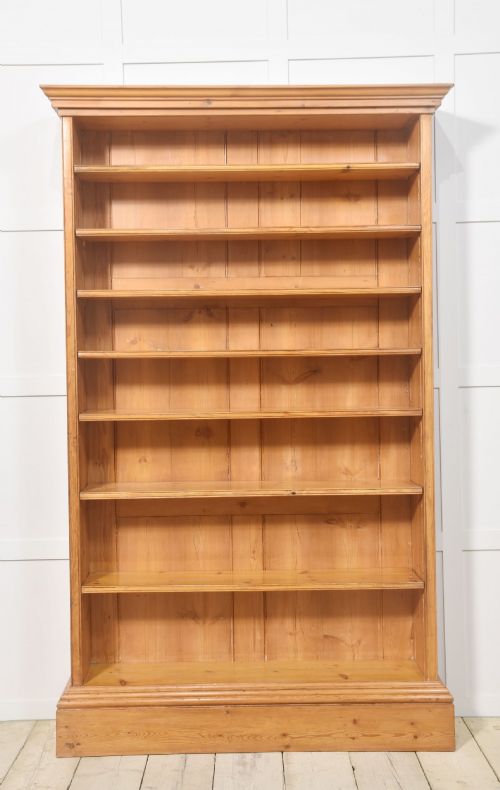
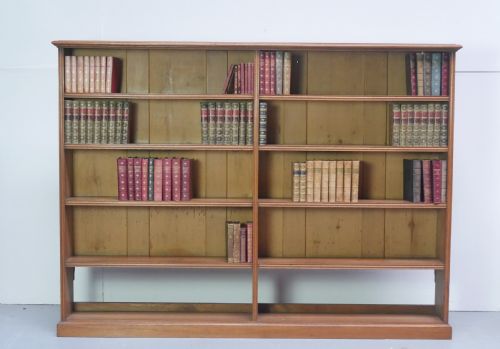


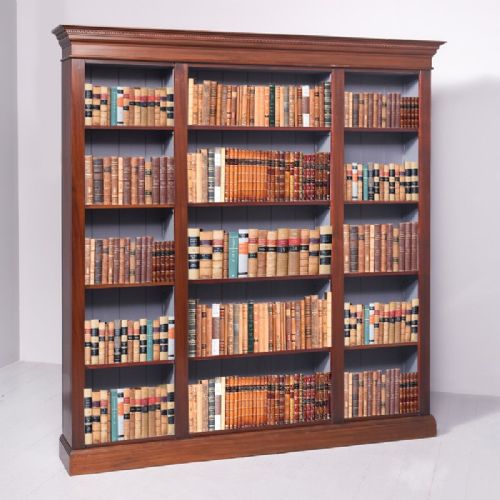


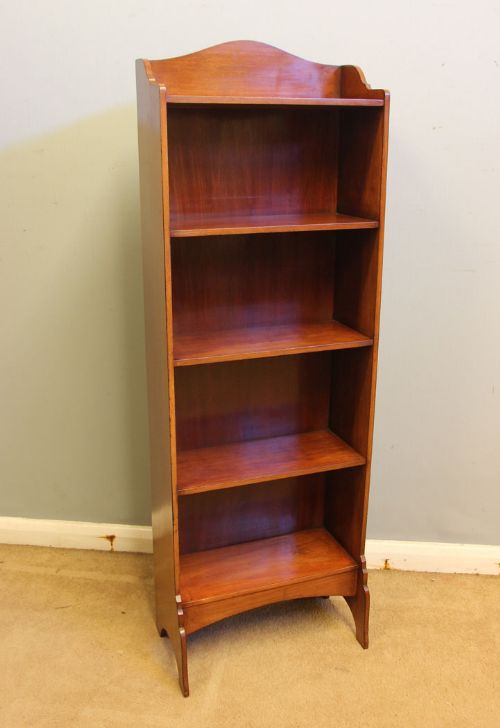


Victorian Open Display Rack
These Victorian open display rack pieces offer practical storage and display for books, ceramics, and kitchenware, combining utility with period craftsmanship.
Victorian Open Display Rack
When you search for a Victorian open display rack, you encounter a variety of forms designed to hold books, plates, and ornamental objects in domestic and commercial spaces.
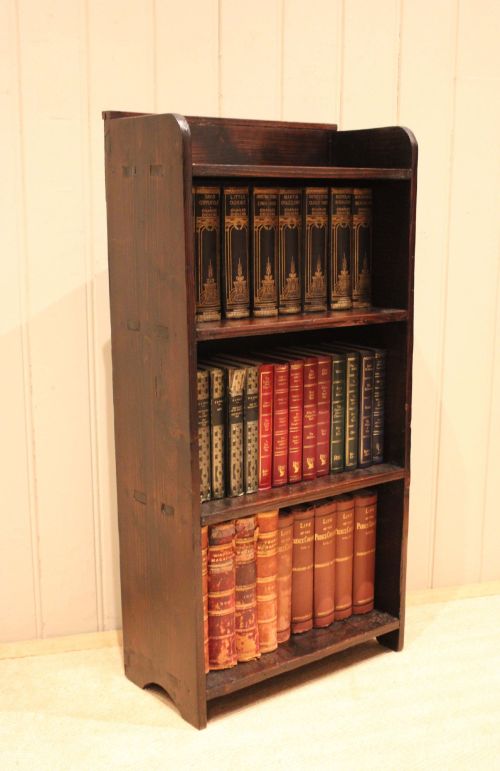
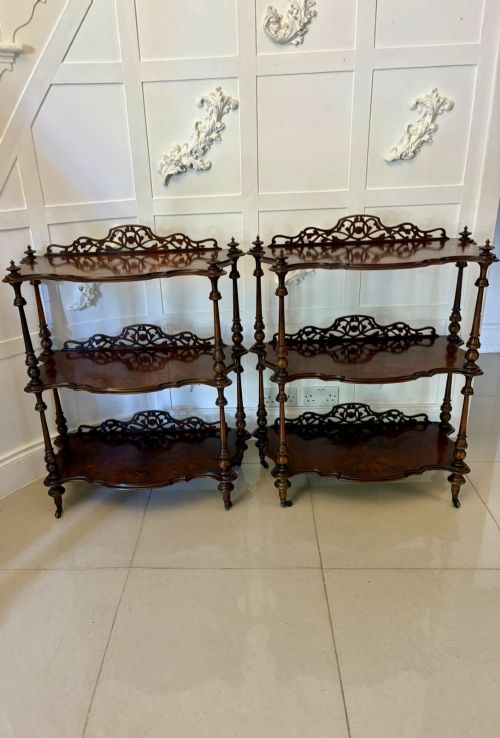
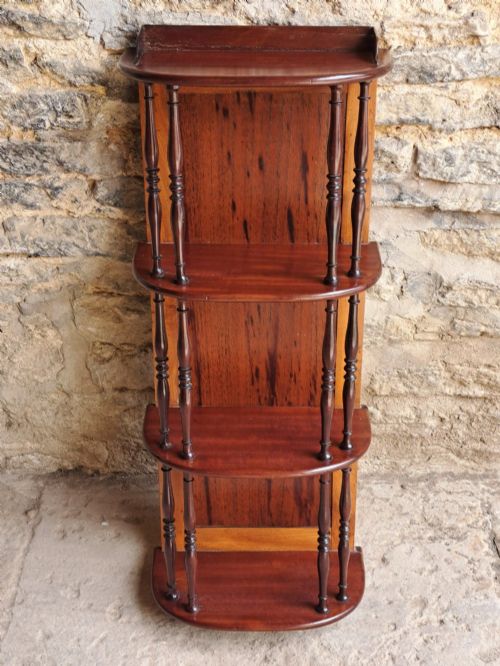
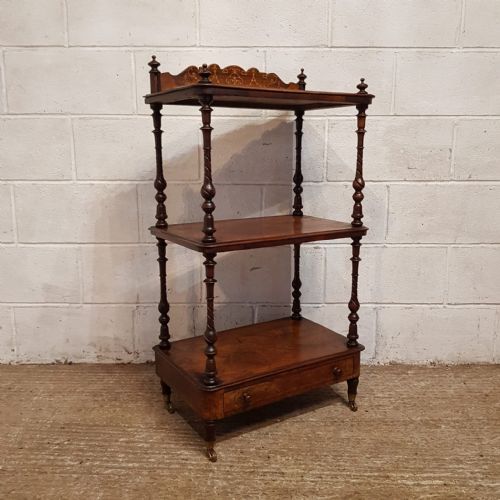
The selections on this page span several practical formats, including freestanding bookcases, tiered whatnots, wall-hanging shelves, and kitchen dressers.
Mahogany, pine, and oak form the backbone of these pieces, alongside specialised walnut and burr walnut examples dating from the nineteenth century.
Materials and construction methods
Cabinetmakers utilised solid timbers such as mahogany, oak, and pine for structural frames and shelving, while decorative veneers like burr walnut enhanced display surfaces.
Iron and brass appear in specific pieces such as baker racks and scroll-work bakeries, introducing contrasting metal elements to wooden frameworks.
Joinery methods range from simple pegged pine construction in kitchen dressers to fine dovetailing and carved embellishments on formal mahogany bookcases and étagères.
Assessing quality and construction
The choice of timber heavily dictates the grade of a piece, moving from utilitarian pine storage units to finely figured burr walnut and dense mahogany display pieces.
Refinement in carving, the presence of architectural elements like breakfront drawers, and the delicacy of tiered shelf supports separate standard domestic furniture from finer examples.
The Victorian Open Display Rack Glossary
- Whatnot
- A freestanding open shelving unit with multiple tiers designed for displaying ornaments and books. It originated in the eighteenth century and remained popular through the Victorian era.
- Étagère
- A French term for a piece of furniture consisting of a set of open shelves for displaying small objects. These often feature slender vertical supports.
- Breakfront
- A piece of furniture whose front projects forward in the centre section. This architectural device adds visual depth and structure to larger bookcases and dressers.
- Welsh Dresser
- A traditional kitchen or dining room furniture form comprising open upper display shelves above a lower section of drawers and cupboards. They served for storing and displaying ceramics.
Victorian Open Display Rack: Frequently Asked Questions
Where should I place a hanging shelf?
Hanging shelves suit kitchens, hallways, or living rooms where floor space is limited. They provide sturdy wall storage for plates, books, or small collections.
Ensure proper wall fixings support the weight of the timber and the objects placed upon the open shelves.
How do I clean mahogany?
Dust mahogany furniture regularly with a soft, dry cloth to prevent dirt accumulation. Avoid silicone sprays which can damage the polish over time.
Apply a traditional beeswax sparingly and buff gently to maintain the rich lustre of the timber.
Are whatnots stable enough for heavy books?
Tiered whatnots were primarily designed for lighter decorative objects, ceramics, and smaller volumes rather than heavy reference books. Placing heavy items on upper tiers can compromise stability.
Distribute weight evenly across the lower shelves of multi-tier open display stands.