
Victorian Open Bookshelves
Victorian open bookshelves offer accessible display for working libraries, appearing in mahogany, walnut, oak and rosewood across the nineteenth century.
Victorian Open Bookshelves
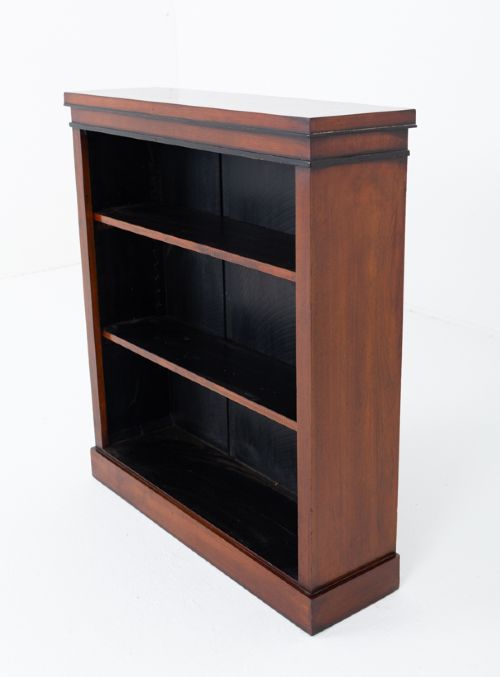
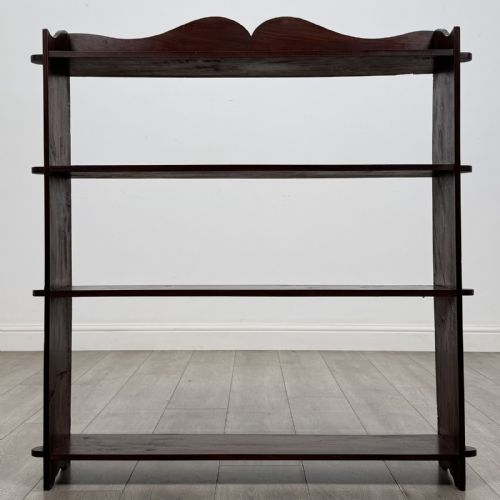
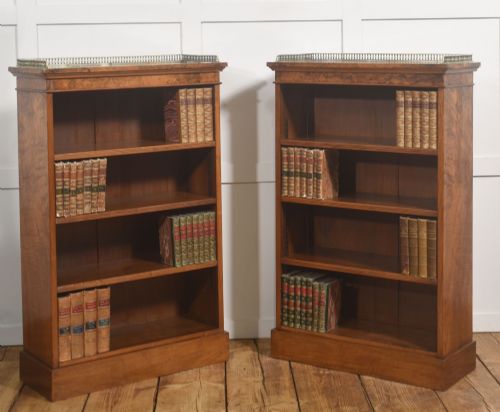
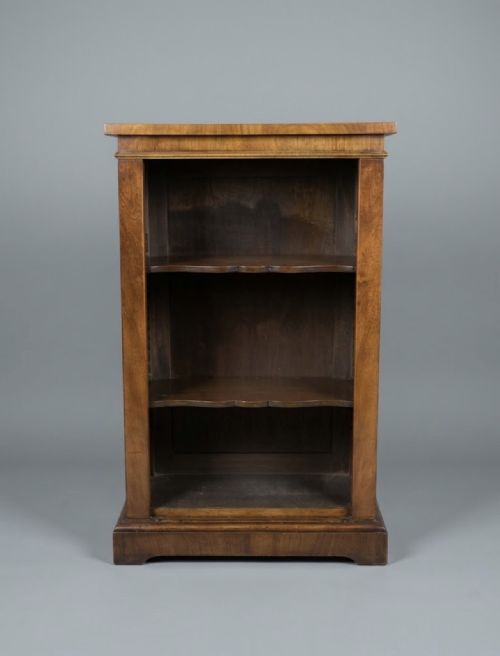
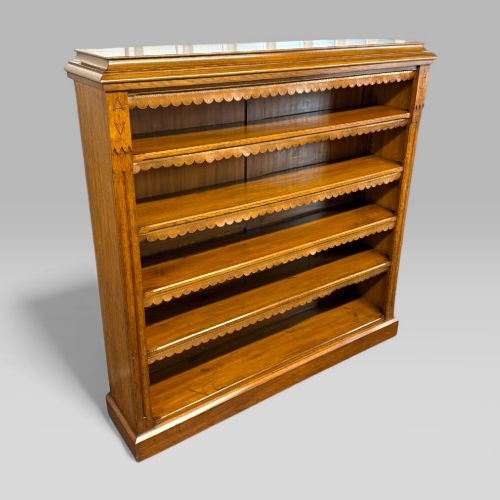
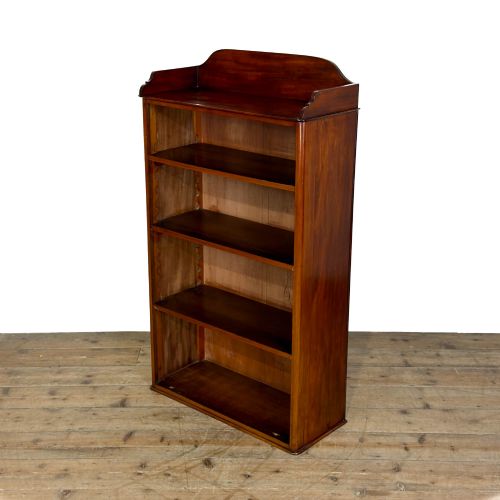
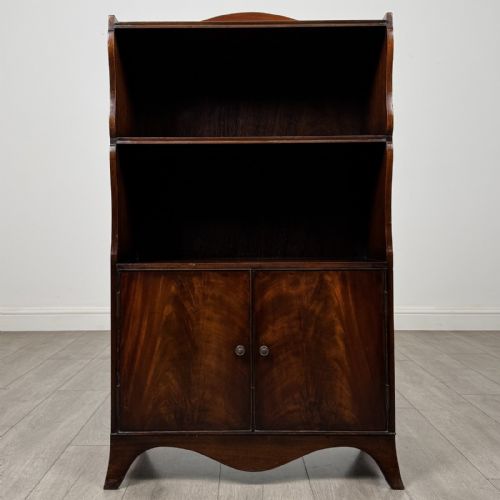
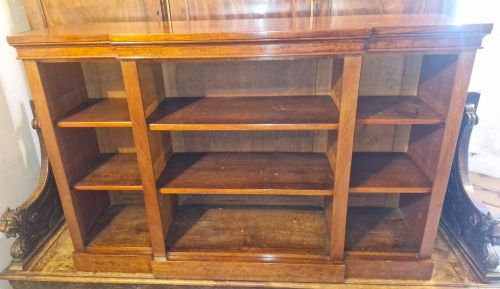
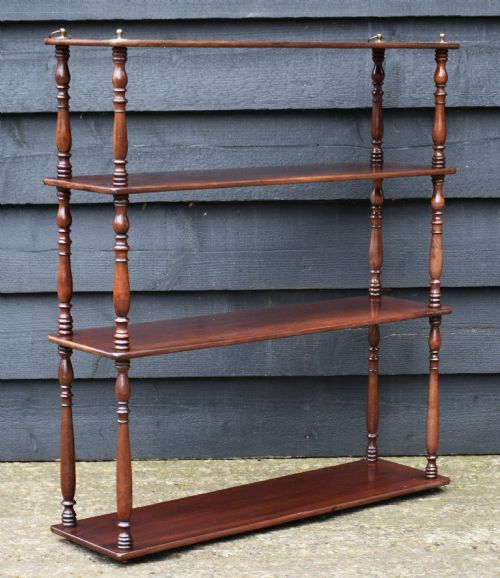
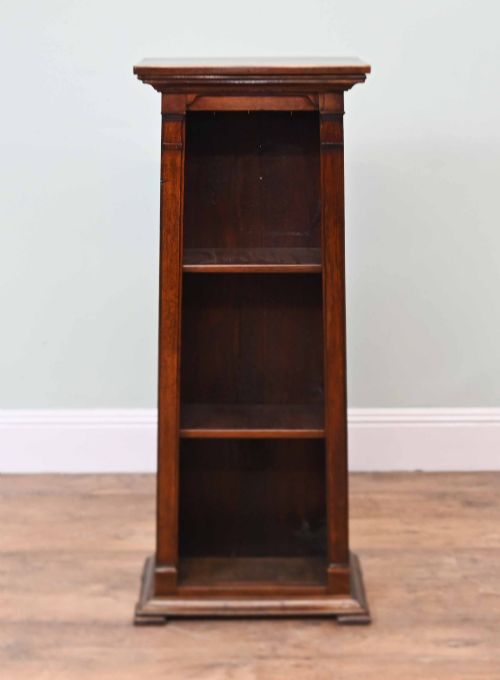
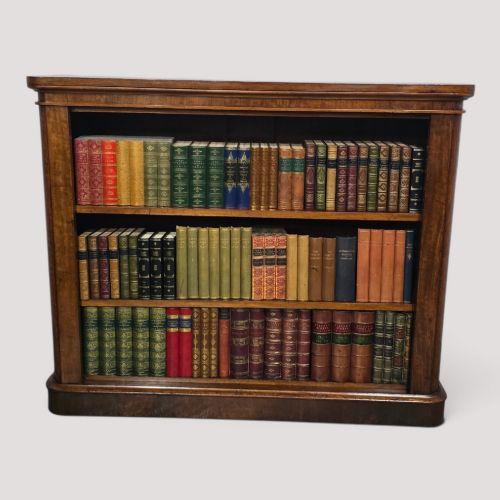
Victorian open bookshelves provide immediate access to volumes without the barrier of glass doors, functioning as library furniture or low dwarf cabinets across studies and sitting rooms. The selection includes tall library cases, low dwarf units, wall-hanging shelves, and multi-tier whatnots designed for domestic spaces.
Mahogany and walnut predominate among the surviving examples, complemented by oak, rosewood, burr walnut, and pine. Pieces originate from the broader nineteenth century, with strong representation from the late Victorian decades and occasional examples displaying Regency, Gothic Revival, Aesthetic Movement, or French Empire influences.
Assessing Distinction
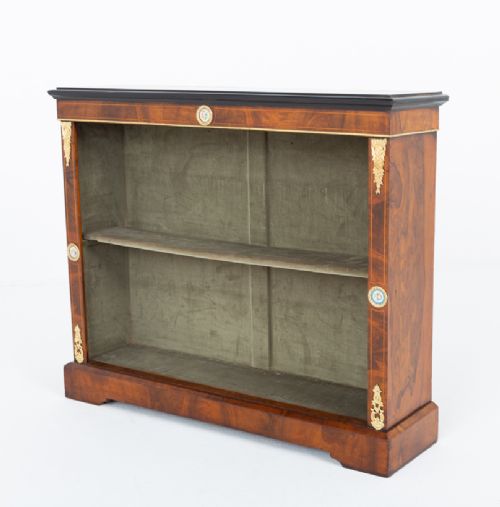
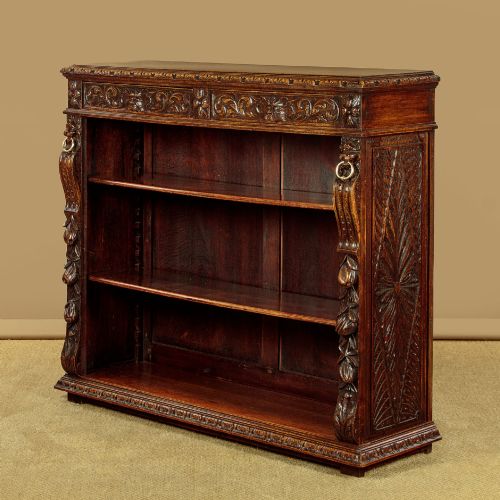
Quality rests in timber selection and the integration of decorative elements such as gilt mounts, intricate carving, or figured burr walnut veneers. Finer library pieces demonstrate refined proportions and robust carcase construction designed to support heavy rows of books.
The sophistication of the shelving adjustment mechanism and the integrity of secondary timbers like solid oak or mahogany distinguish standard workshop production from ambitious cabinet work.
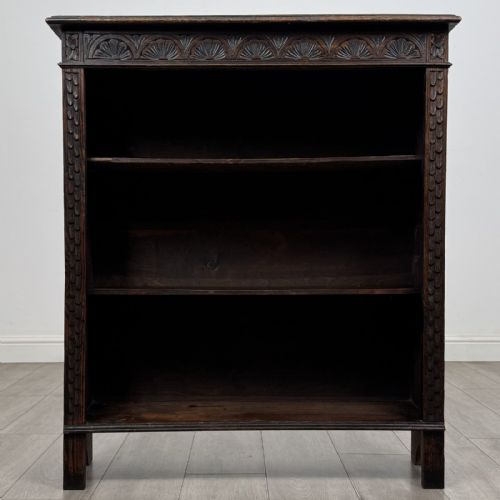
One ebonised dwarf bookcase arrives complete with a carved green man peering out from the timber.
Johnstone and Jeanes·George Edmund Street
The Victorian Open Bookshelves Glossary
- Breakfront
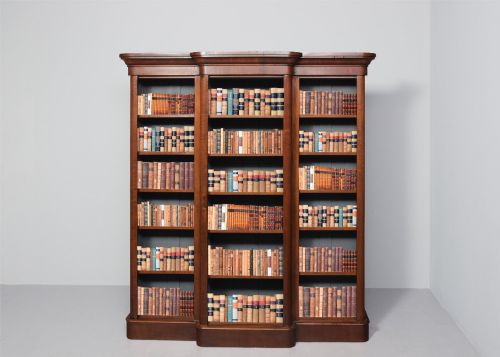
- A piece of furniture where the central section projects forward from the flanking wings. This architectural arrangement creates depth and visual variety in large library cases.
- Waterfall bookcase
- A set of open shelves where each tier steps back progressively from bottom to top, following a cascade profile. These pieces often feature graduated heights suitable for smaller volumes.
- Dwarf bookcase
- A low open bookshelf designed to sit beneath window height without obstructing light or views. These low units frequently incorporate adjustable shelving.
- Whatnot
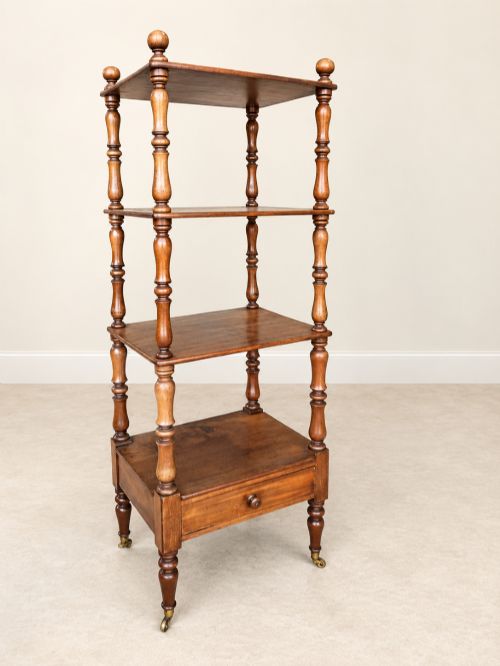
- An open multi-tiered piece of furniture used for displaying books and ornamental objects. These items typically feature vertical supports and several open shelves.
- Ormolu
- Gilt bronze mounts applied to furniture for decorative effect, often found on walnut and rosewood pieces. This metalwork adds bright metallic contrast to dark woods.
Victorian Open Bookshelves: Frequently Asked Questions
How do I adjust the shelves?
Most nineteenth-century open bookcases utilise vertical wooden ratchets, fixed peg holes, or brass studs set into the interior sides. Shelves lift out entirely to allow repositioning of the supporting pins into adjacent slots.
Care is required when shifting older pine or mahogany tracks to avoid splitting the interior lining boards.
Were these meant for libraries?
Lower dwarf cases and wall shelves served everyday sitting rooms, parlours, and bedrooms for active reading material. Larger library cases accommodated substantial private collections in dedicated study spaces.
Proportion and timber selection generally indicated whether a piece belonged in a formal library or a private parlour.
How do I distinguish late Victorian oak?
Late nineteenth-century oak furniture frequently displays darker fumed finishes, prominent grain patterns, and bolder carved motifs associated with Gothic Revival or Aesthetic Movement tastes. These pieces tend to be heavier and more robustly constructed than earlier mid-century examples.
Joinery techniques also shift towards standardised machine-assisted cuts by the close of the century.
Can these hold heavy books?
Solid mahogany, oak, and walnut carcases possess the structural strength required to support dense rows of octavo and quarto volumes. Adjustable shelves should be checked for thickness to prevent sagging under concentrated weight.
Shorter shelf spans naturally offer greater resistance to bowing over extended periods.