



Victorian Etruscan Revival Jewellery
Victorian Etruscan revival jewellery brings the classical archaeological ornament of antiquity into nineteenth-century goldwork, prized for its intricate granule and wire detailing.
Victorian Etruscan Revival Jewellery
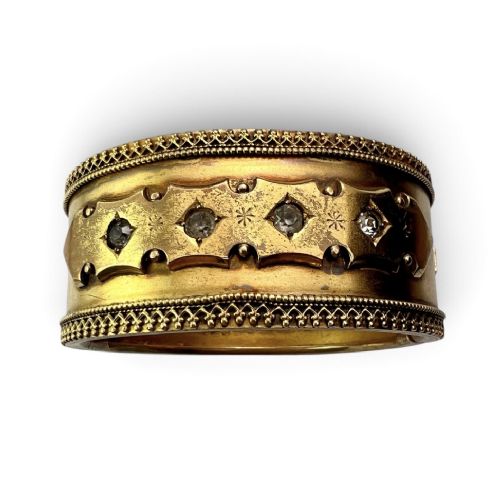
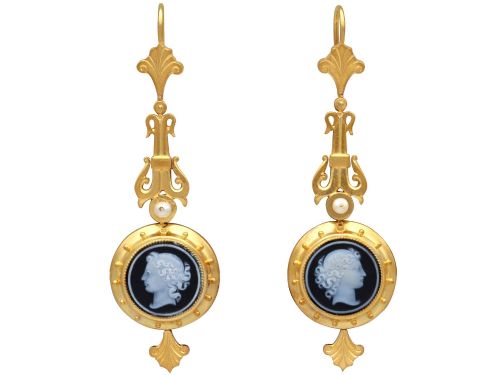
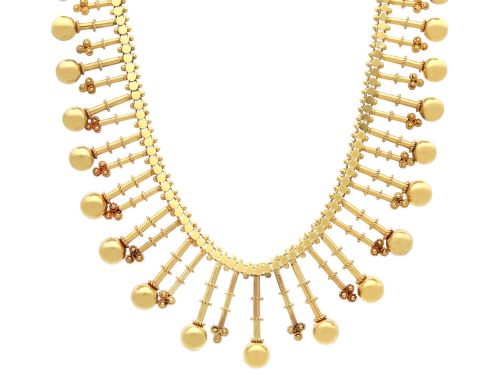
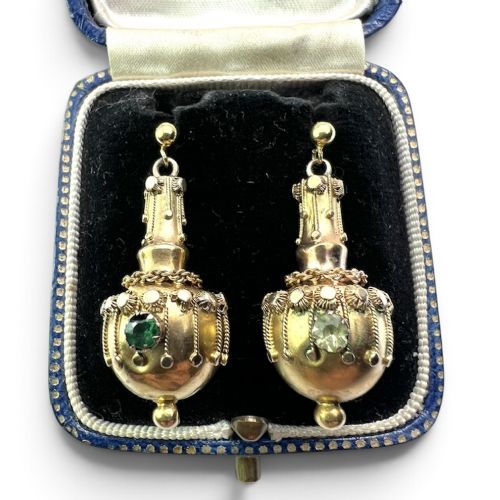
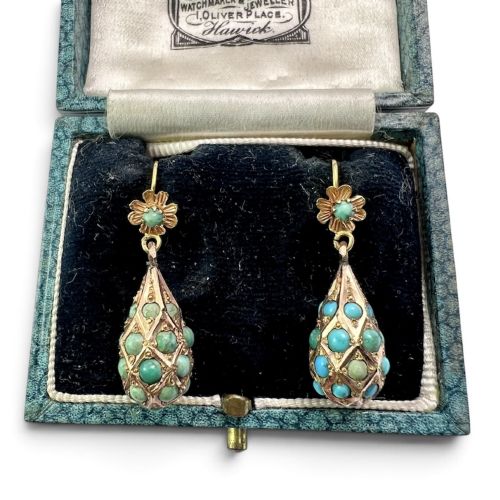
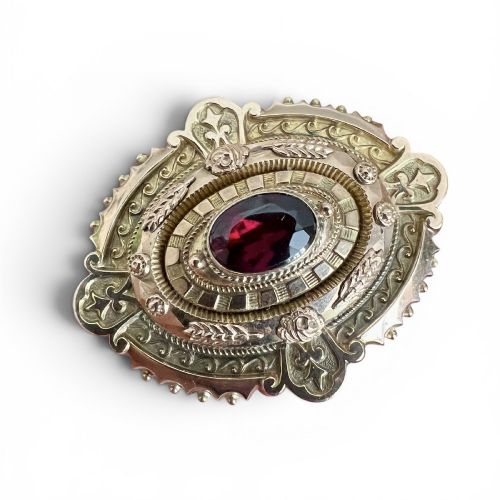
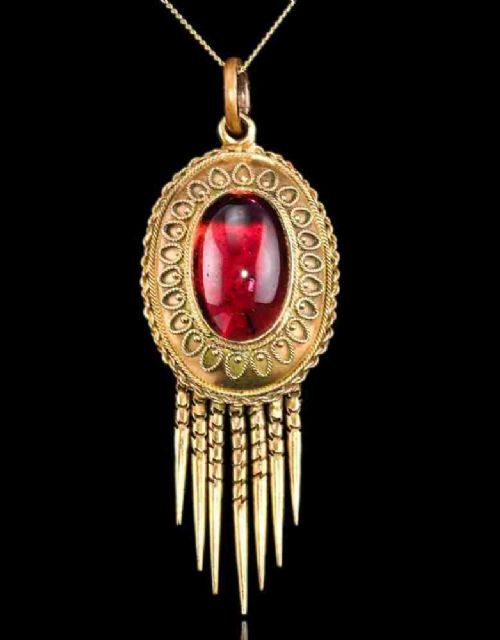
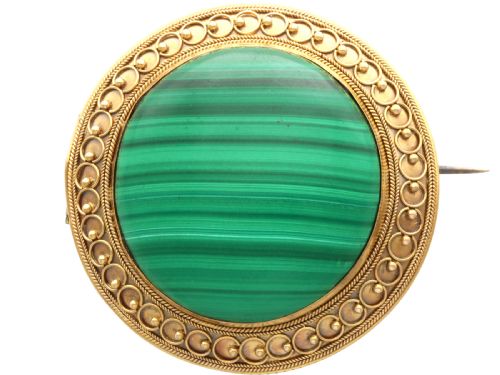
Victorian Etruscan revival jewellery comprises decorative items inspired by ancient archaeological discoveries, frequently taking the form of earrings, brooches, and pendant necklaces. The pieces seen here span the Victorian and Edwardian periods, including specific examples dated around eighteen-eighty and eighteen-ninety.
Buyers encounter distinct object types such as amphora earrings, locket brooches, and drop earrings. Forms often incorporate turquoise, garnet, diamond, and other gemstones alongside banded agate and malachite.
How They Were Made
These items rely principally on yellow gold, ranging in standard from nine carat and fifteen carat up to higher gold standards and silver gilt. Goldsmiths employed meticulous metalworking techniques to build the characteristic classical ornamentation.
Victorian Etruscan Revival Jewellery Retail Price Guide 2026
Typical asking prices for victorian etruscan revival jewellery among the pieces listed under this phrase on Sellingantiques today, from the lower quarter to the upper quarter. They describe what is for sale here now, not the wider market.
Listings feature Victorian and Edwardian pieces, incorporating nine carat gold, fifteen carat gold, silver gilt, and various gemstones including garnet and turquoise.
What Varies in Quality
The standard of execution in the goldwork marks the distinction between ordinary production and finer examples. Precision in the application of wirework and granulation defines the upper tier of these ornaments.
Selection of materials also dictates the grade of a piece, separating simple gilt or lower carat items from substantial fifteen carat gold and high-grade gemstone settings.
The Victorian Etruscan Revival Jewellery Glossary
- Etruscan Revival
- A nineteenth-century design movement inspired by ancient Mediterranean artefacts. It is characterised by applied wirework, tiny gold granules, and classical motifs.
- Amphora
- A two-handled ancient jar shape used as a decorative motif in earrings. This form directly mimics ancient pottery styles.
- Granulation
- A decorative technique involving tiny spheres of gold soldered to a metal background. This method creates textured geometric patterns typical of archaeological revival work.
- Silver Gilt
- Silver covered with a thin layer of gold. This material offers the appearance of solid gold while utilising a silver base.
- Foxtail
- A flexible chain type constructed from curved interlocking links. It provides a fluid drape for tassels and pendants.
Victorian Etruscan Revival Jewellery: Frequently Asked Questions
What is Victorian Etruscan revival jewellery?
Victorian Etruscan revival jewellery is ornamental metalwork produced in the nineteenth century that imitates ancient Etruscan and Greek artefacts. These pieces draw heavily on archaeological discoveries made during the period.
Items typically feature yellow gold construction embellished with granulation, wirework, and classical motifs such as amphora shapes. Gemstones like garnet and turquoise frequently accent the gold designs.
How do I date these pieces?
Dating relies on stylistic markers, materials, and assay marks where present. Most examples date from the Victorian era through to the Edwardian period.
Specific construction methods, such as the use of fifteen carat gold or particular gemstone combinations, help narrow the timeframe to decades like eighteen-eighty or eighteen-ninety.
What metals were used?
Maker workshops primarily utilised yellow gold in various purities, including nine carat, fifteen carat, and higher standards. Silver gilt also appears among the listings.
Rose and yellow gold combinations are occasionally found in larger earrings and brooches, providing contrasting colour tones within a single item.
How should I care for antique jewellery?
Antique jewellery requires gentle handling due to age and delicate construction techniques. Store pieces individually to prevent scratching between items.
Clean surfaces carefully with a soft cloth and avoid harsh chemical dips, particularly when dealing with softer organic stones like malachite or turquoise.