



Victorian Equestrian Rack
These nineteenth-century pieces gathered under the Victorian equestrian rack search phrase bring utilitarian stable design directly into the domestic hallway.
Victorian Equestrian Rack
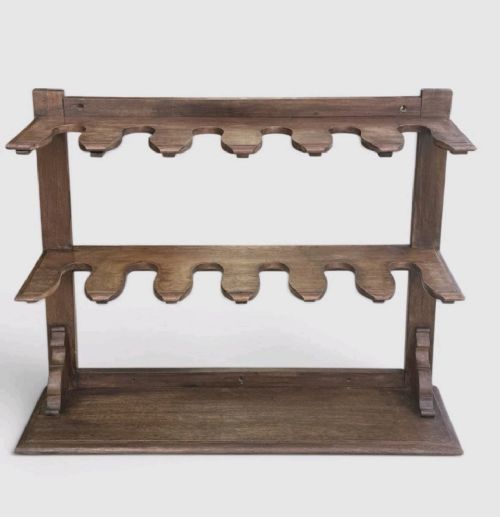
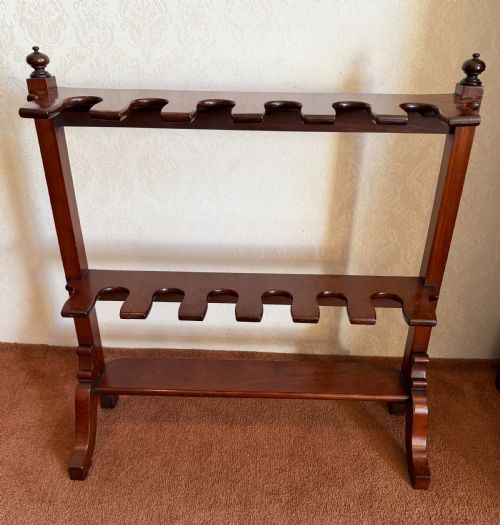
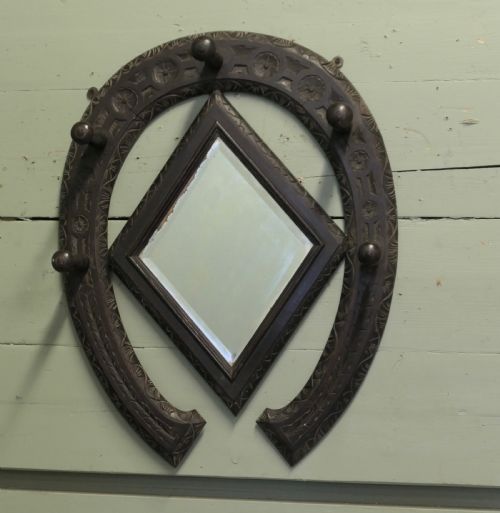
A Victorian equestrian rack encompasses functional items designed for mounting riding boots, crops, whips, and saddles within nineteenth-century homes and stables. The selection frequently includes mahogany boot stands, oak wall mirrors framed by horseshoes, and cast iron saddle rests originating from the middle and late nineteenth century.
Buyers meet variations ranging from revolving wooden boot stands and tack room whip holders to silver toast racks modelled on stable furniture. These forms reflect a period when equestrian pursuits influenced both utilitarian stable organisation and decorative hall furniture.
The objects serve as practical hallway storage while displaying the distinct material culture of Victorian horsemanship. Pieces span simple corner hay racks in iron and elaborate carved riding boot stands in mahogany.
How they were made
Makers utilised solid timbers such as mahogany, oak, and walnut alongside durable metals including cast iron, brass, and sterling silver. Wood was often hand carved, while metals were cast or forged to withstand the heavy daily use associated with tack rooms and stables.
Glass appears in deep bevelled mirror plates fitted within horseshoe-shaped wooden frames. Brass hooks and fittings were secured to timber backplates to hold riding crops, hats, and coats.
Victorian Equestrian Rack Retail Price Guide 2026
Typical asking prices for victorian equestrian rack among the pieces listed under this phrase on Sellingantiques today, from the lower quarter to the upper quarter. They describe what is for sale here now, not the wider market.
Materials across these listings span mahogany, oak, walnut, cast iron, brass, sterling silver, and glass.
What varies in quality
The distinction between standard utility items and finer pieces lies in the precision of the hand carving and the choice of materials. Superior examples combine dense mahogany or quarter-sawn oak with robust brass fittings and heavy bevelled glass.
Design complexity also separates pieces, with revolving boot stands and matched pairs of saddle racks demonstrating more advanced carpentry than simple wall hooks. The integration of equestrian motifs like horse heads and horseshoes shows varying levels of sculptural detail.
The Victorian Equestrian Rack Glossary
- Tack rack
- A wall-mounted or freestanding fixture designed for holding riding equipment such as bridles, reins, and saddles. These items were essential in nineteenth-century stables and tack rooms.
- Boot stand
- A specialist piece of furniture created to hold riding boots upside down to maintain their shape and aid drying. They appear in both stationary and revolving formats.
- Crop hook
- A wall fixture featuring one or more prongs used for hanging riding crops and whips. They often incorporate horseshoe or horse head motifs in brass or iron.
- Hay rack
- A metal or wooden basket designed to hold fodder for horses. In domestic contexts, antique variants are repurposed for wall storage.
- Bevelled plate
- A mirror glass with an angled, polished edge that adds depth to the reflection. This treatment is typical on better quality nineteenth-century wall mirrors.
Victorian Equestrian Rack: Frequently Asked Questions
What is a Victorian equestrian rack?
A Victorian equestrian rack is a nineteenth-century item connected to horse riding and stable management, repurposed for home use. These objects include boot stands, whip holders, and saddle rests made from timber and metal.
Such pieces brought functional stable equipment into the hallway or boot room of the Victorian household. They remain popular for interior decoration today.
Where were these pieces used?
Original locations included tack rooms, stables, and country house hallways. They were built to organise heavy riding gear and footwear.
Today, buyers place boot racks and coat hooks in entrance halls and utility rooms. The sturdy construction suits practical daily use.
How do I date a piece?
Dating relies on material selection, construction methods, and stylistic cues like Gothic Revival details or specific Victorian design motifs. Walnut and mahogany usage often points towards the mid to late nineteenth century.
Cast iron and brass components also display manufacturing traits characteristic of the eighteen-fifties through the eighteen-nineties. Maker marks or registry numbers can occasionally narrow the timeframe.
Are these pieces suitable for modern hallways?
The compact footprint of wall-mounted crop hooks and narrow boot stands makes them practical for contemporary entrance spaces. They offer robust hanging solutions for coats and accessories.
Solid wood and metal construction ensures durability for everyday modern living. Their distinct equestrian character adds period detail to an interior.