






Victorian Dress Studs
Victorian dress studs are small formal fasteners for gentlemen's shirts, bringing refined detail and traditional craftsmanship to traditional evening wear.
Victorian Dress Studs
The evidence shows these items appearing alongside related nineteenth century accessories such as cufflinks, shirt collar sets, and dress buttons. While the wider selection includes larger furniture like mahogany and rosewood stools, the specific dress studs and formal sets represent compact examples of period goldsmithing. Most surviving examples retain their original fitted presentation cases, indicating how carefully these personal items were preserved by their original owners.
Materials and construction
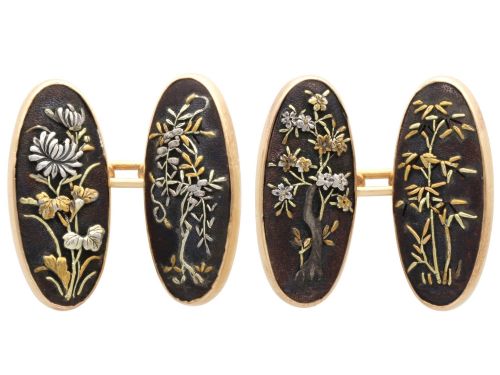
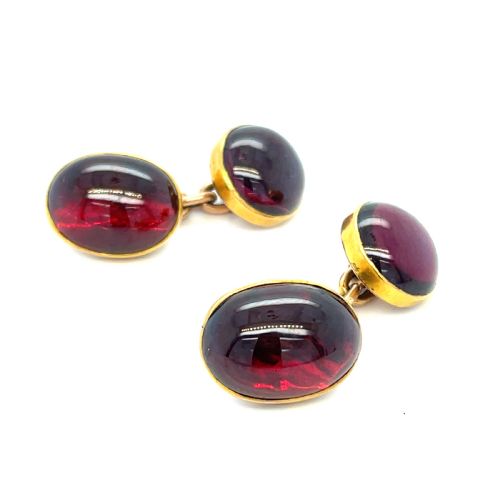
Makers utilised high-carat yellow gold, sterling silver, and platinum alongside specialised materials like tortoiseshell and enamel to construct these miniature items. Gemstones such as cabochon garnets, banded agate, rose cut diamonds, and multi-gem configurations were securely flush-set or bezel-set into the metal faces. The reverse mechanisms typically featured fixed posts, pivoting bars, or screw fittings designed to pass easily through stiff linen shirt fronts.
Cases for these items were constructed from wood frameworks lined with velvet, silk, or leather to protect the delicate metalwork and stones. The metal components often show hand-engraved borders, millegrain edges, or chased decoration characteristic of Victorian and Edwardian jewellers. Hallmarks stamped onto the precious metal parts provide clear indications of the assay office, standard of purity, and year of manufacture.
Victorian Dress Studs Retail Price Guide 2026
Typical asking prices for victorian dress studs among the pieces listed under this phrase on Sellingantiques today, from the lower quarter to the upper quarter. They describe what is for sale here now, not the wider market.
Victorian gentlemen apparently possessed remarkably steady fingers to fasten these tiny gold studs into starched linen shirts before a grand ball.
Evaluating quality and condition
Quality in these small accessories rests upon the crispness of the metalwork, the security of stone settings, and the preservation of any enamel decoration. Superior examples display precise hand-engraving and well-matched natural stones without chips or replacement elements. The presence of the original fitted case adds considerable merit, particularly when the interior lining remains clean and intact.
The integrity of the fastening mechanism is another indicator of superior manufacture, ensuring the posts remain straight and moveable parts function smoothly. Pieces bearing clear hallmarks and maker marks command greater attention from collectors due to their verified provenance. Conversely, worn gilding, cracked enamel, or replaced stones diminish the overall standard of a set.
Abraham Meyer Blanckensee
The Victorian Dress Studs Glossary
- Cabochon
- A gemstone shaped and polished with a smooth, convex dome rather than faceted edges. This style was frequently utilised during the Victorian period for garnets and agates.
- Hallmark
- An official stamp applied to precious metals indicating the purity standard, the maker, and the assay office of origin. These marks help verify the exact age and origin of nineteenth-century jewellery.
- Rose cut
- A diamond or gemstone cut featuring a flat base and a domed crown composed of triangular facets meeting at a peak. This historic style creates a soft, glittering reflection under candlelight.
- Millegrain
- A decorative jeweller's technique involving a border of tiny raised metal beads along the edges of a setting. It adds a refined, textured finish typical of Edwardian fine work.
- Chased
- Metalwork decorated by hammering punches into the front surface to push the metal and form raised patterns. This technique predates modern casting methods for intricate surface designs.
Victorian Dress Studs: Frequently Asked Questions
How were Victorian dress studs used?
These small fasteners were pushed through the buttonholes of stiffly starched gentleman's shirt fronts and detachable collars. They served both a practical fastening purpose and a decorative function during formal evening events.
Because formal shirts lacked attached buttons down the front placket, gentlemen relied on sets of matching studs. They were carefully inserted before the event and stored in velvet-lined boxes afterwards.
What metals are typical for these studs?
Yellow gold in various carat standards, particularly nine carat and eighteen carat, appears frequently alongside sterling silver. These metals provided a durable base that could withstand repeated handling and fastening.
Makers also incorporated precious gemstones and decorative enamel directly into the metal mountings. The choice of metal often matched other personal accessories worn by the gentleman, such as pocket watch chains and cufflinks.
Do dress studs usually come boxed?
Many surviving sets are found within their original hinged leather or velvet-covered presentation cases. These boxes were custom-made by the retailer to hold the exact number of studs required for a shirt.
Finding a complete set in its original fitted case is common for formal wear accessories. The interior silk and velvet linings often display the gilt stamp of the original fine goods merchant.
How do I care for antique dress studs?
Gentle cleaning with a soft, dry cloth is recommended to remove dust and skin oils from the metal and stones. Avoid harsh chemical dips, especially if the pieces contain soft stones, tortoiseshell, or delicate enamel.
Store the studs individually in their original case or a lined jewellery compartment to prevent the metal faces from scratching against each other. Handle the fastening posts carefully to avoid bending the historic metal.