



Victorian Cross Stitch Art
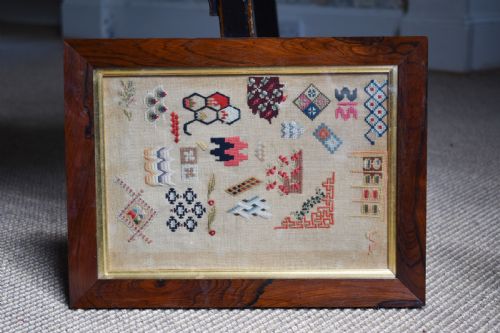
Victorian cross stitch art comprises needlework samplers and framed textile pieces worked in wool, silk thread and canvas during the nineteenth century.
Victorian Cross Stitch Art
When you search for victorian cross stitch art, you encounter nineteenth-century needlework samplers and framed textile art created by young makers. The pieces on this page span the Victorian period, including specific dates from the 1840s through to the 1890s.
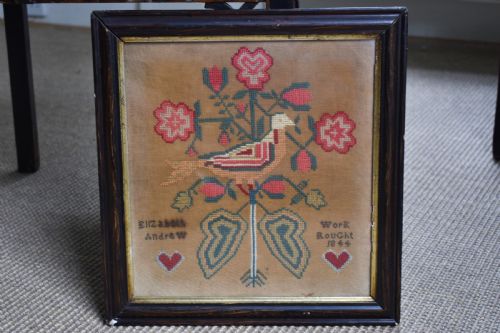
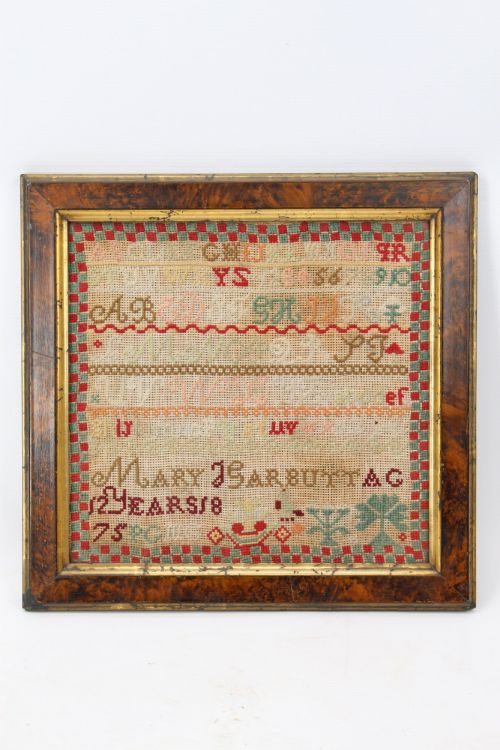
The commonest forms met here are alphabet samplers, pictorial wool work and embroidered panels. Makers such as Mary J Garbutt, Jane Wettmore, Ann Hodson and Maggie Muir recorded their names, ages and dates onto linen and canvas.
Framed wall art dominates the selection, frequently preserved behind glass in original wood or burr maple frames. These works function as both domestic decoration and records of nineteenth-century needlework education.
How they were made
These textiles rely on a foundation of linen or canvas stretched and worked with wool and silk thread. Stitchers utilised counted thread techniques to form alphabets, figures and pictorial scenes.
Finished embroideries were mounted into wooden surrounds, including maple wood and burr maple frames, often protected beneath glass. The survival of these pieces depends upon the durability of the natural fibres and the tightness of the original stitching.
Victorian Cross Stitch Art Retail Price Guide 2026
Typical asking prices for victorian cross stitch art among the pieces listed under this phrase on Sellingantiques today, from the lower quarter to the upper quarter. They describe what is for sale here now, not the wider market.
One Scottish sampler from 1880 proudly preserves a stitch error, proving that even Victorian schoolgirls unpicked their mistakes.
What varies in quality
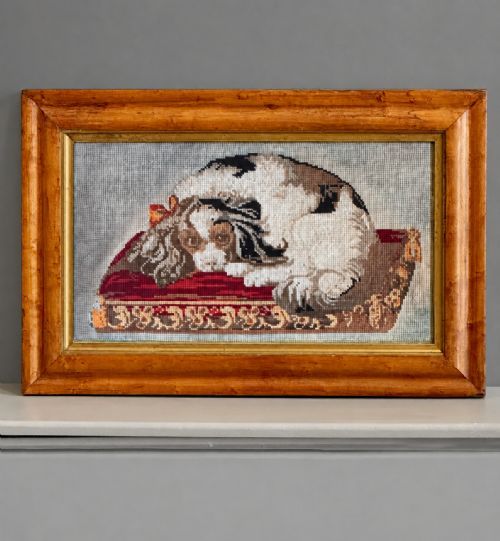
Quality in these textiles rests upon the precision of the stitching and the clarity of the composition. Pieces featuring detailed pictorial subjects, such as animals or figures alongside alphabets, display greater ambition than simpler panels.
The condition and originality of the frame contribute significantly to the piece. Surviving period surrounds, particularly burr maple frames, enhance the integrity of the textile art.
The Victorian Cross Stitch Art Glossary
- Sampler
- A piece of needlework produced to demonstrate proficiency in various stitches and patterns. These often include alphabets, numerals, names and dates.
- Berlin Work
- A style of nineteenth-century needlework executed in wool on canvas using patterned charts. This technique allowed for shaded pictorial designs like animal portraits.
- Canvas
- An open-weave fabric used as the foundational support for needlepoint and cross stitch embroidery. It provides the grid structure necessary for counted thread work.
- Burr Maple
- A highly figured timber used for decorative furniture and nineteenth-century picture frames. The knotted grain creates a distinctive mottled pattern.
Victorian Cross Stitch Art: Frequently Asked Questions
What is victorian cross stitch art?
Victorian cross stitch art consists of nineteenth-century embroidered textiles, predominantly needlework samplers and framed wall art. These pieces were worked by hand using wool and silk thread on canvas or linen.
The category encompasses alphabet samplers, pictorial works and named panels created during the Victorian era. Many retain their original frames, offering a direct link to domestic craft of the period.
Who made these samplers?
The majority of these needlework pieces were created by young girls as part of their education in domestic skills. Makers frequently stitched their names, ages and the date directly into the fabric.
Examples on record include works by Mary J Garbutt, Jane Wettmore and Maggie Muir. This personal documentation gives each piece a specific historical identity.
How should I display framed samplers?
Display these antique textiles away from direct sunlight to prevent the fading of wool and silk threads. Natural fibres are sensitive to UV exposure and sustained light over time.
Keeping them behind glass protects the delicate fabric from dust and atmospheric pollution. Ensure they hang in rooms with stable humidity levels to preserve both the textile and the wooden frame.
How do I identify the age of a sampler?
Age is frequently confirmed by stitched dates, maker names and ages included within the composition. Nineteenth-century pieces often display specific years such as 1847, 1855 or 1875.
Material clues, including the type of canvas, thread and frame construction, also help determine the period. Original burr maple frames and nineteenth-century glass provide additional contextual evidence.